China has reacted angrily to reports of possible talks between India and Taiwan on a trade deal at a time when there is a growing debate in New Delhi on whether the government should review its relationship with Taipei against the backdrop of the border standoff in Ladakh.
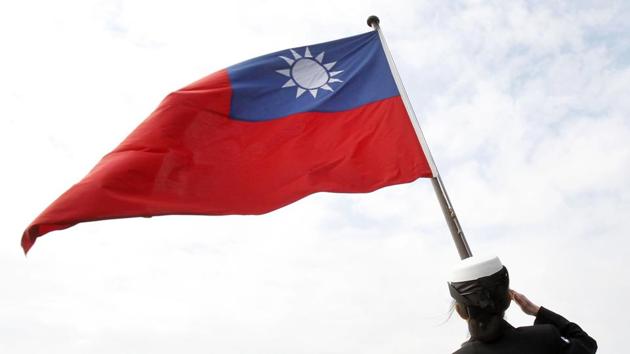
India’s relations with Taiwan: India and Taiwan do not have formal diplomatic relations but since 1995, both sides have maintained representative offices in each other’s capitals that function as de facto embassies. However, in a sign of the sensitivities involved, both offices don’t mention the word “Taiwan” in their names. Taiwan has the Taipei Economic and Cultural Center in New Delhi, and India has the India Taipei Association in Taipei.
India has backed the “one-China principle”, whereby countries formally recognise and have diplomatic ties only with China, and this has found mention in bilateral documents. In mid-2018, when relations between India and China were on the mend following the military standoff at Doklam, state-run Air India changed the name of Taiwan to Chinese Taipei on its website, in line with similar moves by other airlines following protests from Beijing. At the time, the external affairs ministry spokesperson had said the decision was “entirely consistent with international norms and our own position on Taiwan since 1949”.
Also Read: China’s shaky victory at United Nations elections reveals its great fall | Analysis
{{/usCountry}}Also Read: China’s shaky victory at United Nations elections reveals its great fall | Analysis
{{/usCountry}}However, India and Taiwan recently posted highly regarded diplomats as de facto envoys in each other’s capitals, signalling a desire to give impetus to their ties. India named Gourangalal Das, an up-and-coming diplomat handling relations with the US, as its representative in Taipei. Taiwan appointed Baushuan Ger, who was director general of the department of East Asian and Pacific affairs and had served in the US, as its representative in India. At the time, Taiwan News portal reported “the relationship with India is likely to become one of Taiwan’s most important diplomatic priorities in the future”.
China’s position: At the end of China’s civil war, the defeated nationalists made Taiwan their seat of government in 1949 and the island nation was known as “National China” before the name of “Republic of China” was chosen for it. The Communists, who established the People’s Republic of China on the mainland, have threatened to use force to reunify Taiwan. Against the backdrop of China’s increasingly aggressive actions in recent months, fears have grown among experts about a possible military action against Taiwan, largely because of the US ceding its dominant security role around the world, though it continues to have a strong military relationship with Taiwan. Taiwan’s defence minister Yen De-fa told Parliament this month the air force had scrambled 2,972 times against incursions by Chinese aircraft this year, reflecting the gravity of the threats.
Beijing has also been angered by the Indian media’s coverage of Taiwan in recent weeks, with the Chinese embassy sending a letter to journalists with dos and don’ts for covering Taiwan’s national day on October 10. President Tsai Ing-wen and foreign minister Jaushieh Joseph Wu have both raised their profiles in India with a string of tweets highlighting the need for closer ties between the two sides.
Also Read: China warns India on trading with Taiwan, slams US-Tibet govt-in-exile meeting
What’s next: These developments have coincided with a debate in New Delhi for a review of India’s ties with Taiwan in areas ranging from trade to Taipei’s presence at meetings of the World Health Organization (WHO), especially against the backdrop of the border standoff with China. The government has maintained a studied silence on the matter, though experts believe India needs to proceed with caution.
Sana Hashmi, Taiwan fellow at the Institute of International Relations at Taiwan’s National Chengchi University, said negotiating a possible trade deal with Taiwan wouldn’t violate India’s adherence to China’s one-China principle, since countries such as New Zealand and Singapore are benefiting from economic agreements with Taiwan.
Taiwan, she said, can be a perfect fit for India in its efforts to de-couple from the Chinese economy. “Considering strong complementarities and changing political equations, this is the apt time for India and Taiwan to engage in serious trade negotiations,” she added.
“India should de-hyphenate its Taiwan policy from its relations with China. Economic and cultural relations with Taiwan can go parallel with India-China ties. India is a sovereign country and Beijing should not dictate how New Delhi, or any country for that matter, manages its commercial relations,” she said.
“With a non-accommodative stance on the border and sending a diktat to Indian media on how to report on Taiwan, China is interfering in India’s internal affairs,” Hashmi said.