NEW DELHI: India on Thursday said it hopes Chinese authorities will facilitate the continued presence of Indian journalists, hours after Beijing contended it took “counter-measures” such as barring the return of two Indian reporters to safeguard the interests of Chinese media organisations.
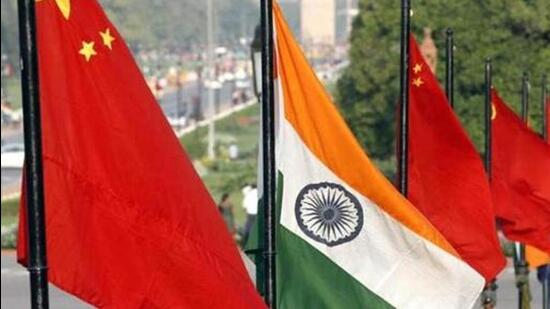
Reacting to China’s decision on Tuesday to effectively bar the return to Beijing of the correspondents of Prasar Bharati and The Hindu, external affairs ministry spokesperson Arindam Bagchi told a regular media briefing that the two sides are in contact to resolve the matter.
In Beijing, foreign ministry spokesperson Mao Ning told a briefing that China had “no choice but to take appropriate counter-measures” after the Indian side “ignored” issues with visas of Chinese journalists and their “unfair and discriminatory treatment in India”.
China’s move to “freeze” the visas of the correspondents of Prasar Bharati and The Hindu, who were both in India for personal reasons, came after India told a New Delhi-based reporter for state-run Xinhua news agency last month that his visa wouldn’t be renewed. The Chinese reporter subsequently returned home.
However, Bagchi said there are a “number of Chinese journalists who have valid Indian visas” for pursuing journalistic activities in India, and there are no limitations or difficulties for reporting or media coverage.
{{/usCountry}}However, Bagchi said there are a “number of Chinese journalists who have valid Indian visas” for pursuing journalistic activities in India, and there are no limitations or difficulties for reporting or media coverage.
{{/usCountry}}“As regards Indian journalists working in China, we would hope that Chinese authorities would facilitate their continued presence and reporting from China. We are in touch with Chinese authorities in this regard,” Bagchi said.
Two more Indian journalists posted in Beijing – the correspondents of Press Trust of India and Hindustan Times – have been told by Chinese officials that they can stay on for now. People familiar with the matter said these two Indian journalists were not expected to be allowed back into China if they leave the country. Steps can also be taken against them if the Indian side fails to reciprocate on the issue of Chinese journalists posted in India, the people said.
The people dismissed the Chinese foreign ministry’s contention that the validity of visas for Chinese journalists in India had been curtailed to just one month. They pointed out that several Chinese journalists holding valid Indian visas had gone back of their own accord, either during the Covid-19 pandemic or subsequently.
Chinese foreign ministry spokesperson Mao said India has refused to review and approve Chinese journalists’ applications for stationing in India since 2020. In December 2021, a CGTN journalist was told to leave within 10 days while the Xinhua journalist was asked to leave by March 31 on the ground that he had been in India for six years, she said.
Indian journalists in China hold residence permits valid for a year and two reporters have been stationed in Beijing for more than 10 years, she said.
“China’s ministry of foreign affairs and the Chinese embassy in India have expressed concerns to the Indian side on many occasions on the issue of Chinese journalists’ visas. Regrettably, however, the Indian side ignored this...Considering this, the Chinese side has no choice but to take appropriate counter-measures to safeguard the legitimate rights and interests of Chinese media organisations,” she added.
Mao said Indian journalists are “welcome to work in China” and if the Indian side “takes positive measures to correct their mistakes, China stands ready to head toward the same direction and continue to provide facilitation for Indian journalists”.
Responding to another question related to the military standoff on the Line of Actual Control (LAC), Bagchi said normalcy in India-China relations will require restoration of peace and tranquillity in the border areas, which have been disturbed since April 2020.
The presence of a large number of Chinese troops on the LAC, in contravention of agreements, is “an abnormality”, and till the situation in the border areas sees a return to peace and tranquillity, “we cannot foresee normalcy in the overall relationship”, he said.
Bagchi reiterated New Delhi’s rejection of Beijing’s efforts to rename locations in Arunachal Pradesh, which is claimed by China, saying the state is an integral part of India and such “invented names” won’t change the reality.