E-Paper



India joins other nations to assert govt forced on Afghanistan won’t be recognised
A statement issued by Qatar following a meeting of special envoys and representatives of India, Germany, Norway, Qatar, Tajikistan, Turkey and Turkmenistan in Doha on Thursday also highlighted the urgent need to accelerate the process to find a negotiated settlement in Afghanistan

 Prefer HTon Google


India has joined Germany, Qatar and Turkey in calling for an immediate ceasefire in Afghanistan and asserting that any government imposed by military force in Kabul will not be recognised.
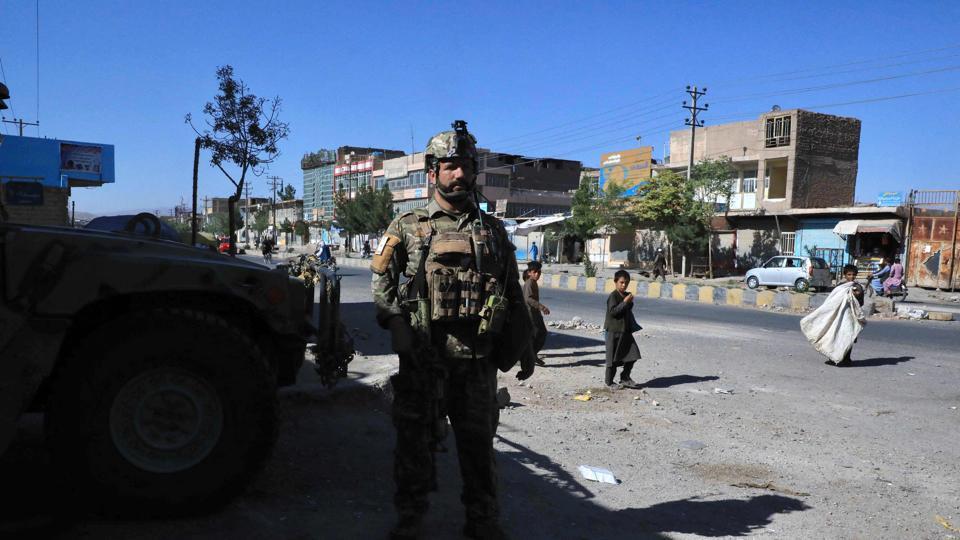
A statement issued by Qatar following a meeting of special envoys and representatives of India, Germany, Norway, Qatar, Tajikistan, Turkey and Turkmenistan in Doha on Thursday also highlighted the urgent need to accelerate the process to find a negotiated settlement in Afghanistan.
The Taliban captured Kandahar and Herat, Afghanistan’s second and third largest cities, and the strategic provincial capital of Ghazni on Thursday, increasing the pressure on the beleaguered government in Kabul weeks before the US completes the drawdown of its troops.
The Taliban have so far taken 12 out of 34 provincial capitals and the capture of Ghazni has cut off the highway between Kabul and the southern city of Kandahar.
Also Read | Kabul in Taliban’s cross-hairs make Doha peace talks redundant
The statement from Qatar’s foreign ministry said two separate meetings on Afghanistan – one joined by the representatives of China, Uzbekistan, the US, Pakistan, the UK, Qatar, the UN and the European Union on August 10, and another of the representatives of Germany, India, Norway, Qatar, Tajikistan, Turkey and Turkmenistan on August 12 – had agreed that the participants “will not recognize any government in Afghanistan that is imposed through the use of military force”.
The countries also agreed on the need to accelerate the Afghan peace process as a “very urgent and essential issue for negotiating concrete proposals from both sides”.
The participants urged the Taliban and the Afghan government to “build trust and accelerate efforts to reach a political settlement and comprehensive ceasefire as quickly as possible”, and to stop “violence and attacks immediately in and against provincial capitals and other cities”.
The countries also noted “converging statements” from both sides on certain principles for a political settlement, such as inclusive governance, respect for human rights, including the rights of women and minorities, a mechanism to deliver a representative government, a commitment to not allow any individuals or groups to use Afghan soil to threaten the security of other countries, respect for international law.
The meeting also expressed “grave concerns” about reports from across Afghanistan regarding continued violence, high civilian casualties and extra-judicial killings, widespread and credible allegations of human rights violations, and the destruction of physical infrastructure that perpetuate conflict and make reconciliation efforts more difficult.
As part of desperate efforts to counter the Taliban’s advance, UN Security Council members Estonia and Norway drafted a statement to condemn the group’s attacks on cities and towns that have resulted in high civilian casualties. According to Reuters, the draft statement, which is being discussed by Security Council members and has to be agreed by consensus by the 15-member body, also threatens sanctions for abuses and acts that risk Afghanistan’s peace and stability.
The text also “strongly affirms that the Islamic Emirate of Afghanistan is not recognised at the United Nations and declares that it does not and will not support the establishment of any government in Afghanistan imposed through military force or restoration of the Islamic Emirate of Afghanistan”.
This is largely in line with the position taken by India, which holds the rotating presidency of the UN Security Council for August.