
 E-Paper



Kabul in Taliban’s cross-hairs make Doha peace talks redundant
China is all set to recognise the Taliban if Kabul falls, posing serious questions on the US capability to take on Beijing, protect human rights and guard the Indo-Pacific.

 Prefer HTon Google


The rapid advance of the Taliban towards Kabul and its mounting atrocities on civilians, particularly the minorities, after the US-led coalition forces withdrawal and the pusillanimous retreat of the Afghan government security forces from Kandahar, Herat and Ghazni have not surprised the neighbours of this historically violence-prone country.
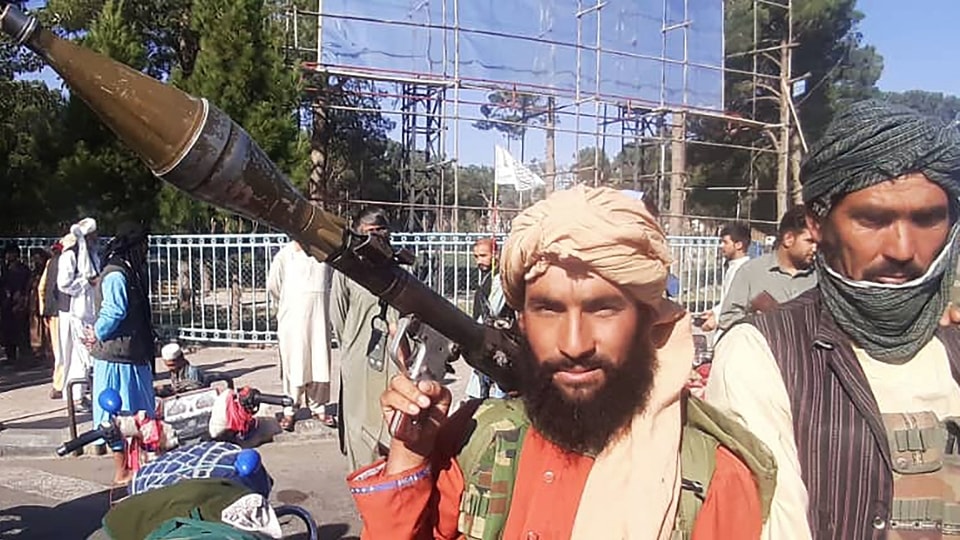
The military collapse of Afghan security forces makes the fall of Kabul imminent to the Taliban, the ultra-conservative Sunni Pashtun force, and the so-called peace dialogue in Doha, Qatar virtually redundant. The capture of Kabul willy-nilly portrays the US as an exhausted and weak superpower as also poses strong questions on its ability to take on the rising superpower in China. It is quite evident that US special envoy Zalmay Khalilzad proved to be no match for Henry Kissinger inspired withdrawal from Vietnam in the end as US forces literally ran away from Kabul without matching even the symbolic resistance in Saigon.
Also read | As Taliban captures major cities, reports of killings and torture pour in
With Kabul firmly in the crosshairs of the Taliban, Afghan watchers predict that China will initially follow the lead of Pakistan, the progenitor of the Islamist insurgent group, and recognise the Sunni force as the legitimate ruler of Afghanistan. With the Taliban, Pakistan and China on the same side, human rights will be thrown out of the window and all leverage that the US and its principal advisor the UK had on Afghanistan will be reduced to zero. The next thing to watch will be the launch of the Belt and Road Initiative via the Wakhan corridor to Afghanistan, which has humongous heavy metal resources like lithium used in making the long-range submarine batteries.
Also read | US to deploy over 3,000 troops to Afghanistan to help in evacuation of diplomats, special visa applicants
Taliban’s mentor or what is jokingly called the Rawalpindi shura will be the gainer in the short term as ideological leader Mullah Haibatullah Akundzada, military leaders Mullah Yaqoob and Sirajuddin Haqqani are all under the protection of Pakistan. Akundzada is said to be in Karachi military cantonment, Mullah Yaqoob is shuttling between Helmand and Quetta, and boss of Haqqani terrorist group and lately a newspaper columnist Sirajuddin is also in Quetta. Already, the best of US military equipment including Humvees, Cougars, Buffalo and Caimans along with shoulder-launched drones, area weapons and body armour have been captured by the Taliban and will be tactically moved to Pakistan from Afghanistan in a matter of time. Although UK agencies are said to have moved their communication surveillance equipment from Afghanistan, one should not be surprised if such technical equipment is now in the hands of ISI headquarters in Rawalpindi. This is predictable based on the situation on the ground but the doomsday scenario is not too far away even as the international community is ready for another talkathon at the UNGA in September 2021.
Also read | British men fighting for Taliban as it mounts offensive: Report
While New Delhi has no options but to be prepared, it was never really in the brutal power game in Kabul as it did not send troops on the ground or even give weapons to the Afghan government. Where power speaks from AK-47 and M-4 assault rifles and daisy cutter bombs, humanitarian and infrastructure assistance mean practically zilch. India’s main challenge, however, will come when Pakistan shifts the terror training camps of terrorist groups like Lashkar-e-Taiba and Jaish-e-Mohammed to Taliban-occupied Afghanistan for future terror strikes against India. Already, transnational terrorist groups like the al Qaeda, Islamic State, East Turkestan Islamic Movement and Islamic Movement of Uzbekistan are thriving under the protection of the Taliban in Afghanistan. With state of the art close-quarter US weapons available to the Taliban, the future terror strikes will be much more lethal and violent all over the world. And that includes Pakistan too, for it is only a matter of time when the fault-lines within the Taliban erupt over control of Kabul.
Also read | UNSC mulling over draft statement condemning Taliban offensive: Report
If India is going to be at the receiving end of radicalised Islamists, other countries in the region including Iran, Uzbekistan, Tajikistan, Turkmenistan, Bangladesh, Sri Lanka, Maldives and Myanmar will also not be secure in wake of a Sunni force taking over Kabul. The Central Asian Republics under the leadership of Russia and Shia Iran will not take things lying down and are waiting for the withdrawal of US forces and the fall of Kabul before their next move. Iranian President Ebrahim Raisi has already said it recognises India’s legitimate interest in Afghanistan. Maybe it is time for the resurrection of the Northern Alliance.


