E-Paper



100% tariffs on India soon? US Senate clears bill for sanctions over Russian oil
US Senate passes bill allowing tariffs of up to 100% on Russian oil buyers, naming India among five target economies while sparing US allies in Europe.

 Prefer HTon Google


The US Senate on Friday approved by 86 votes to 11 a bill that would authorise tariffs of up to 100% on countries buying Russian oil, gas and other exports, with India named as one of five target economies by the bill’s sponsors even as US allies in Europe are spared for similar purchases.
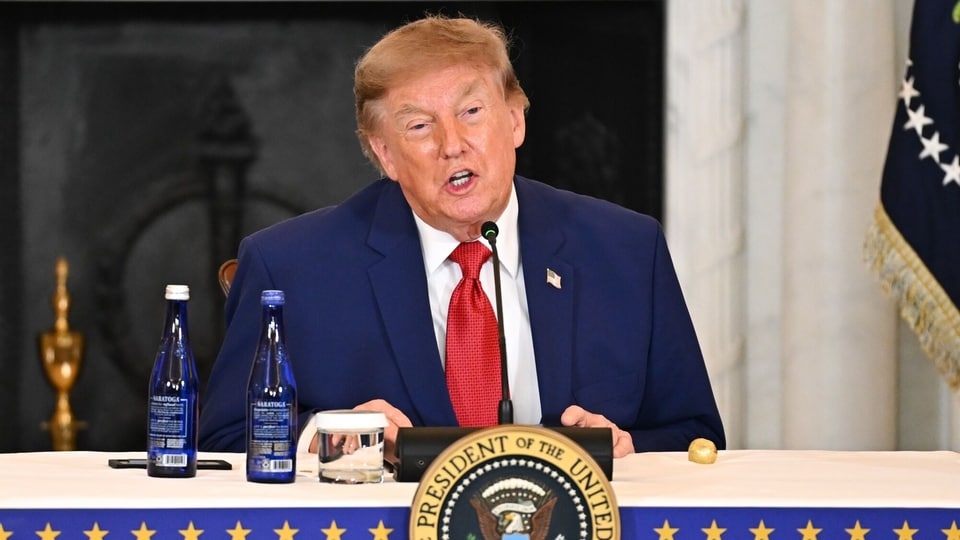
Bill leaves tariff rate to USTR, targets India's Russian oil purchases
The measure — known officially as the Lindsey O Graham Sanctioning Russia and Iran Act 2026 — sets a headline ceiling but leaves the actual rate to be set by the office of the US Trade Representative (USTR), and carries a presidential waiver requiring certification to Congress with reassessment every 180 days. The bill permits — but does not necessarily compel — the executive to act against the five named purchasers — China, India, Slovakia, Hungary and Azerbaijan — with sponsors saying the rate should be pitched high enough to deter Chinese and Indian buying.
India has in the past, when it was slapped with a 25% additional levy that has since been removed after trade negotiations, called such moves unfair since Russian exports are soaked up by a number of other countries. India has also stated that its energy purchases are guided by its energy security needs.
Also read: US Senate passes Russia sanctions bill; India risks tariffs over Russian oil
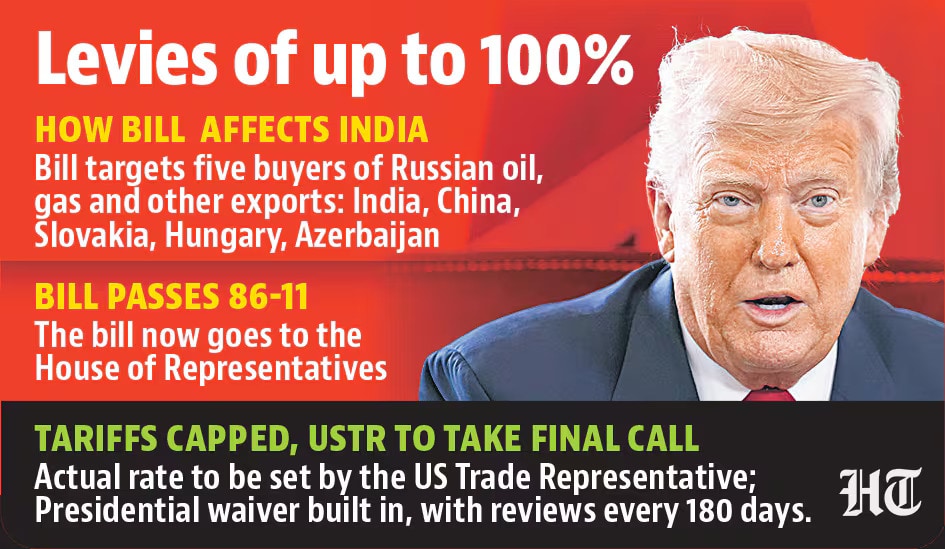
Senate vote puts India in tariff crosshairs
The bill now moves to the House of Representatives, where Republicans control the floor calendar and where its passage in identical form is the last hurdle before it reaches President Donald Trump for signature. Trump, whose officials helped shape the softened text now before Congress, has signalled support for House passage.
“Today, President Zelenskyy is watching from Ukraine — and Putin is watching from Moscow,” Senator Richard Blumenthal, a Connecticut Democrat who worked with Graham on the package, said on the Senate floor. “I would like to think Lindsey Graham is watching, too. Today we say to the people of Ukraine: You are not alone. And today we say to Vladimir Putin: You will not conquer Ukraine.”
For India, the vote comes as it and the US are attempting to hammer out a trade deal. It potentially offers Washington another lever over New Delhi even as the first — the Section 301 forced-labour tariff imposed last month, and the excess-capacity investigation still open — reshapes the arithmetic on which those talks proceed.
To be sure, Washington itself has tolerated purchases of Russian crude when it waived sanctions to ease an energy crisis its own actions in West Asia had created following the near-closure of the Strait of Hormuz. That waiver has since expired.
Also read: ‘America shooting itself in the foot’: US Senators Wyden, Paul oppose 100% tariffs on India, China
Bill gives Trump room to adjust tariffs
The bill’s mechanism gives both governments room. The USTR rate-setting discretion is the first pressure point: an executive branch that was involved in drafting the softening can, if it chooses, set the rate below the 100% ceiling, or invoke the presidential waiver on certified national interest grounds. Reassessment every 180 days keeps the instrument reversible.
Indian negotiators have pressed their American counterparts to offer New Delhi a competitive advantage to its trade rivals, such as Bangladesh and Indonesia.
Frequently Asked Questions