E-Paper



India monitoring 28 merchant ships in Persian Gulf, 10 million Indians in West Asia
India monitoring 28 merchant ships with over 770 seafarers in the Persian Gulf amid Iran-US conflict; steps taken to assist Indians stranded in West Asia


The government is closely monitoring 28 Indian-flagged merchant vessels currently in the Persian Gulf and taking steps to ensure the security of 10 million Indians living in West Asia and to facilitate the return of citizens stranded in the region because of the Iran-US conflict, senior officials said on Wednesday.
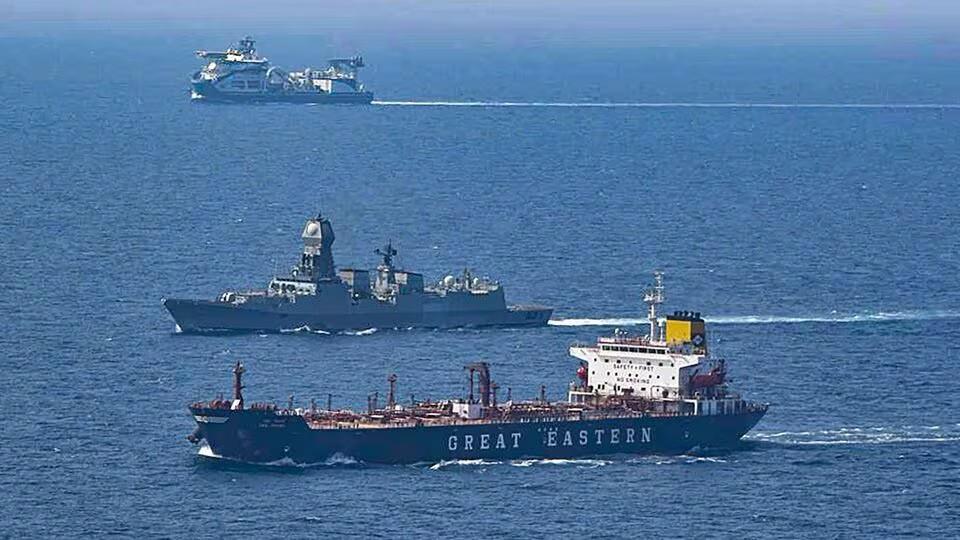
A total of 24 Indian-flagged vessels with 677 Indian seafarers are currently located to the west of the Strait of Hormuz, while four vessels with 101 Indian seafarers are to the east of the crucial waterway, Rajesh Kumar Sinha, special secretary in the shipping ministry, told a briefing on developments in West Asia.
Indians constitute almost 12% of the global seafaring workforce, with a total of more than 320,000 active sailors, and attacks on merchant vessels during recent conflicts in West Asia have resulted in Indian casualties. Two Indians were killed and another was reported missing following two recent attacks on oil tankers in the Persian Gulf.
“We are actively monitoring these vessels and their crew for their safety and security. Authorities, ship managers and recruitment agencies are closely coordinating with Indian embassies and local authorities to ensure safety and render medical assistance to them,” Sinha said.
Also Read: West Asia conflict hits 25% of India’s natural gas imports, govt says
The Directorate General of Shipping has issued advisories on precautionary measures to safeguard Indian seafarers and Indian-flagged vessels, including the adoption of enhanced security measures and strict compliance with reporting protocols.
Sinha said overall port operations across India were “stable”, and ports had been directed to extend assistance to minimise hardships for exporters and to ensure the continuity of exports and imports. Major ports have implemented measures such as the continuous monitoring of the movement of vessels in coordination with shipping lines and ship agents.
External affairs ministry spokesperson Randhir Jaiswal said two Indian nationals – one in Israel and another in Dubai – were injured in attacks and are recuperating in hospital. “The welfare of our diaspora is of utmost priority to us,” he said, adding that the PM has spoken to the leaders of Bahrain, Oman, Kuwait, Qatar, Saudi Arabia, Jordan, the United Arab Emirates (UAE) and Israel to ensure the well-being of the 10 million Indians in the region.
Steps are being taken to ensure the security of some 9,000 Indian nationals in Iran, with students and pilgrims being relocated to safer places. “Our embassy in Tehran is assisting people to cross the land border to Armenia and Azerbaijan and take commercial flights from there to come back home,” Jaiswal said.
Aseem Mahajan, additional secretary in the external affairs ministry responsible for West Asia, said Indian missions are coordinating with the governments of West Asian states to help Indian nationals stranded in the region because of the widespread closure of airspace. Indian nationals were assisted to travel from Bahrain, where the airspace is closed, to Dammam and Riyadh in Saudi Arabia so that they could get flights.
“Flight operations have continued to be ramped up in the UAE, including a lot of non-scheduled commercial flights, and they have been able to cater to most people who were in transit,” Mahajan said. Flights are also regularly operating from Jeddah, Medina and Riyadh in Saudi Arabia.
“There is very strong inter-ministerial coordination. Whenever any assistance is required, Indian missions are immediately reaching out to assist people,” he said.