New Delhi: Ahead of Prime Minister Narendra Modi’s visit to Kyiv this week, India has indicated that it may not directly mediate between Russia and Ukraine but can help in passing messages between the two countries, according to people familiar with the matter.
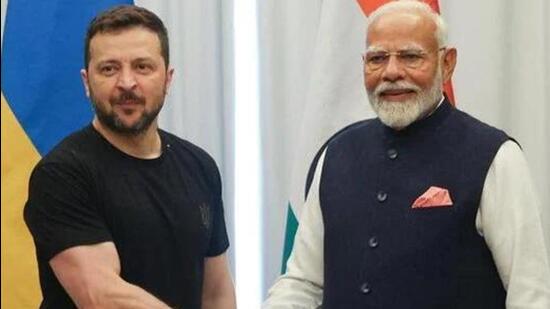
Modi is set to make a brief visit to Ukraine on August 23 – the first by a senior Indian leader since the start of Russia’s invasion in February 2022 and the first by an Indian premier since Ukraine became independent in 1991. In a phone call with India’s national security adviser last month, President Volodymyr Zelenskyy’s chief of staff Andriy Yermak said Modi could play a “significant role” in achieving peace in Ukraine.
The Indian side is not keen on any direct mediatory role between the two warring countries, the people cited above said, and has instead indicated that it can pass messages between the two sides.
“They have made it clear that they won’t mediate. But they have said they can pass messages,” a Western diplomat briefed on the discussions said on condition of anonymity. Another Western diplomat offered a similar account of the discussions.
There was no official word from India on the matter.
{{/usCountry}}There was no official word from India on the matter.
{{/usCountry}}India has refrained from publicly censuring Russia’s actions in Ukraine and voted against or abstained on most Ukraine-related resolutions at the United Nations. New Delhi has consistently said dialogue and diplomacy is the way forward in the Russia-Ukraine conflict, and said it will support all efforts aimed at finding a lasting solution.
At his meeting with President Vladimir Putin in Moscow last month for the annual India-Russia Summit, Modi stressed that a solution cannot be found on the battlefield and that talks will not be successful under the shadow of the gun.
India is reluctant to take any position that will be seen as going against Russia, with which it has good relations going back decades. Russia accounts for almost 60% of the arsenal of India’s armed forces and is one of the top suppliers of crude oil following sanctions imposed by the West in the wake of the invasion of Ukraine. However, the Ukrainian side has sought to push India to take on a larger role in ongoing peace efforts because of India’s proximity to Russia, the people said.
India has played a role in the past in passing messages on crucial issues between Russia and Ukraine, something that has been acknowledged by external affairs minister S Jaishankar on several occasions. Jaishankar has said in media briefings and interviews that the Indian side has interceded in matters such as the Black Sea grain deal and the security of the Zaporizhzhia nuclear power plant.
“We have... been the country who have the opportunity to talk to the Russians very frankly and bluntly on this issue [Russia-Ukraine conflict]. On different aspects, others have used us to pass messages,” Jaishankar said during an interaction with the Indian community in Malaysia on March 27.
While briefing the media in September 2023, Jaishankar said that India had contributed to “some bridging of viewpoints and concerns” between Turkiye and Russia for creating the Black Sea grain corridor and also worked with the UN secretary general on the issue in 2022. The grain corridor allowed Ukraine to export wheat and other items till Russia quit the deal in July 2023.
In February, Jaishankar said India played a role in relation to Ukraine’s concerns about the safety of the Zaporizhzhia power plant by passing messages to Russia and the International Atomic Energy Agency (IAEA). After the Ukrainian Prime Minister shared concerns about the safety of the nuclear power plant, Jaishankar said he spoke to Modi and “then got his approval to both engage the Russians and pass on some messages there and IAEA as well”.