The Indian strategic forces got a major boost on Sunday after the Defence Research and Development Organisation (DRDO) tested a 3,500-kilometre range submarine-launched K-4 ballistic missile off the Vizag coast, with the nuclear weapon meeting all its target objectives, officials with direct knowledge of the matter said.
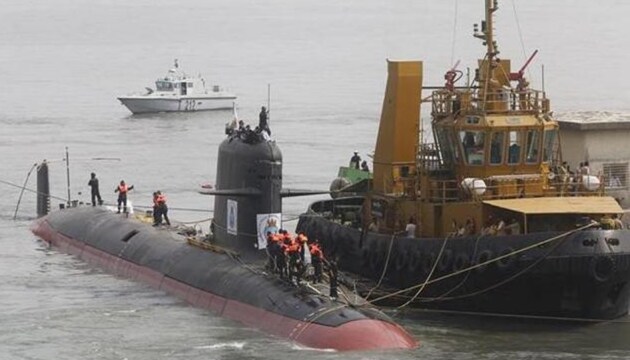
The three-metre-tall missile carries a nuclear warhead of over one tonne with a circular error probability (CEP) far lower than that of Chinese ballistic missiles. Only the US, Russia and China have submarine-launched ballistic missiles of 3,500-kilometre range. The INS Arihant is already equipped with a 700-kilometre range B-02 nuclear missile, with the second nuclear submarine INS Arighat on way to becoming operational.
Top government officials told Hindustan Times that with this test India has moved one more step towards the induction of this ballistic missile on the INS Arihant class of nuclear submarines. The missile was fired off a pontoon between 12 noon and 1pm off the Vizag coast in Andhra Pradesh and the delivery platform was tracked over 1,500 kilometres before it shifted to ship-based radars.
“The full results of the missile test will be known in the days to come after the tracking ships return to base. It is only on that basis that we will decide whether to conduct more tests before making the missile operational. Even in the case of the Agni-5 ballistic missile, the nuclear weapon was made operational after conducting two tests,” said a top official.
{{/usCountry}}“The full results of the missile test will be known in the days to come after the tracking ships return to base. It is only on that basis that we will decide whether to conduct more tests before making the missile operational. Even in the case of the Agni-5 ballistic missile, the nuclear weapon was made operational after conducting two tests,” said a top official.
{{/usCountry}}While the K-4 was to be tested last November, the test was delayed due to Cyclone Bulbul that made the weather conditions in the Bay of Bengal not conducive to the launch and tracking of the missile. DRDO missile scientists led by Satheesh Reddy were waiting for a window to open for the test.
DRDO scientists were happy with how the K-4 test went as the CEP of the Indian strategic missile is less than 100 metres as compared to the 1-2 kilometre range of the Chinese equivalent. The submarine-launched ballistic missile is the most important part of the air, land and sea nuclear triad and is at the front of India’s second-strike capability. With the K-4 and the Agni-5 missiles in its nuclear arsenal, Indian strategic forces now have a deterrent against all adversaries to the north and south, besides capability of protecting the Indo-Pacific.
While DRDO officials were tight-lipped about the details of the missile, the K-4 test met all classified mission objectives. With the DRDO having the capability to conduct laboratory missile tests, India has the ability to build nuclear delivery platforms with far more than officially stated ranges.