E-Paper



India summons US diplomat over State Department remarks on Arvind Kejriwal's arrest
India summoned US acting deputy chief of mission Gloria Berbena to protest US state department’s call for a fair legal process for arrested CM Arvind Kejriwal.

 Prefer HTon Google


NEW DELHI: India on Wednesday summoned a senior American diplomat to protest against the US state department’s call for a fair legal process for arrested Delhi chief minister Arvind Kejriwal, just four days after registering a similar protest with Germany.
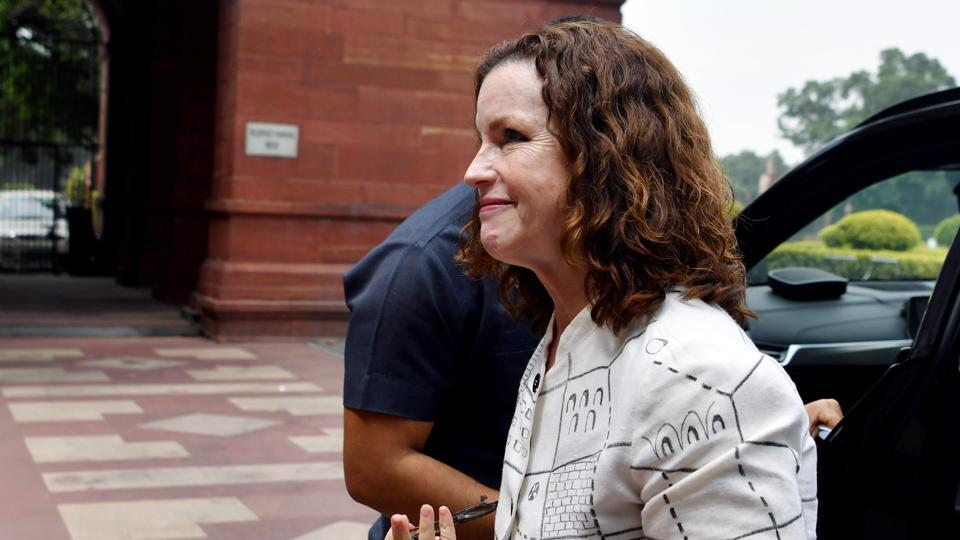
The external affairs ministry said in a statement that the government has taken a “strong objection” to a US state department spokesperson’s remarks on legal proceedings in India. The statement didn’t refer to the summoning of the American diplomat though people familiar with the matter said the US acting deputy chief of mission, Gloria Berbena, was called in to the external affairs ministry.
“In diplomacy, states are expected to be respectful of the sovereignty and internal affairs of others. This responsibility is even more so in case of fellow democracies. It could otherwise end up setting unhealthy precedents,” the statement said.
India’s legal processes are based on an independent judiciary that is committed to “objective and timely outcomes”, and casting aspersions on that is unwarranted, the statement added.
On Monday, a state department spokesperson told Reuters that the US is closely following reports of the arrest of Kejriwal and encourages a fair legal process. The Enforcement Directorate (ED) arrested Kejriwal last week for his alleged role in Delhi’s controversial excise policy for 2021-22 that was later scrapped. His Aam Aadmi Party (AAP) has rejected the corruption charges.
“We encourage a fair, transparent, and timely legal process for chief minister Kejriwal,” the state department spokesperson said.
On Saturday, the German deputy chief of mission, Georg Enzweiler, was summoned to the external affairs ministry for a protest against the position taken by the German foreign ministry on Kejriwal’s arrest. Enzweiler was told that Germany’s stance amounted to interfering in India’s judicial process.
Asked about the arrest at a media briefing on Friday, a spokesperson for the German foreign minister said that Kejriwal, like anyone facing accusations, is entitled to a fair and impartial trial.
“We assume and expect that the standards relating to independence of judiciary and basic democratic principles will also be applied in this case,” the German spokesperson said.
The external affairs ministry said such remarks were tantamount to “interfering in our judicial process and undermining the independence of our judiciary”. it added, “Biased assumptions made on this account are most unwarranted.”
The case against Kejriwal pertains to alleged corruption and money laundering in executing the Delhi government’s excise policy for 2021-22, which was subsequently scrapped. ED has claimed AAP leaders allegedly received kickbacks worth ₹100 crore in the excise policy.
Kejriwal’s name has been mentioned multiple times in charge sheets filed by the ED. The agency alleged the accused were in touch with Kejriwal to formulate the excise policy.