India has strengthened arrangements to deal with the deadly coronavirus amid its spread to other countries and reports of more deaths and new cases related to the outbreak from China, according to officials aware of the matter.
The Union health ministry has designated four more advanced laboratories for testing related to the virus along with the Indian Council of Medical Research-National Institute of Virology (ICMR-NIV) laboratory in Pune. The ICMR-NIV is testing four to six samples daily, and the number of suspected cases is on the rise.
So far ICMR-NIV has tested 20 samples of people quarantined across the country. None of the tests have been positive. “There is no coronavirus positive case in the country so far. We have added four more labs for testing and will soon add five more. All our labs are state of the art,” said Union health minister Harsh Vardhan.
The four ICMR labs designated for testing are in Alleppey (Kerala), Bengaluru, Hyderabad, and Mumbai.
Hundreds of Indians studying in Wuhan, the epicentre of the coronavirus outbreak, have returned to India this month for the Chinese Lunar New Year holidays.
{{/usCountry}}Hundreds of Indians studying in Wuhan, the epicentre of the coronavirus outbreak, have returned to India this month for the Chinese Lunar New Year holidays.
{{/usCountry}}The officials said a dedicated three-member central team of experts has been sent to various states to review preparedness at the ground level.
“Additional investigations are needed to determine how the patients were infected, the extent of human-to-human transmission, the clinical spectrum of disease, and the geographic range of infection,” said ICMR in a statement.
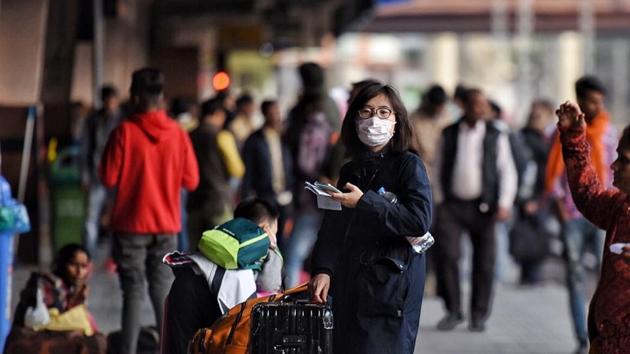
The government has also extended the screening facilities for travellers coming from China to 13 more airports. This takes the number of airports, where checking happens for symptoms of the coronavirus infection, to 20. The Union health ministry is procuring extra thermal body scanners to meet the need for more screenings.
“The PM [Prime Minister Narendra Modi] is personally monitoring the situation. We have put in place all the measures needed to stop the entry and spread of the infection in India. In 2014, we managed to keep the deadly Ebola infection away from India, and this time also our efforts will be to ensure the virus does not enter the country,” said Vardhan.
Amid the evacuation of 500-odd Indians citizens stranded in China’s Wuhan, the ministry is also making arrangements for keeping them in isolation. “These people if flown here would need to stay under quarantine to minimise the risk of infecting others. They will have to stay in isolation in a government health facility for at least 14 days even if there are no symptoms,” Vardhan said.
India has so far screened close to 35,000 passengers. “All necessary arrangements are being made to manage the situation. There is nothing to panic so far,” said Harsh Vardhan.