
 E-Paper



Indian Air Force allows women to join its elite Garud commando force
The Indian Air Force has allowed women officers to join its special forces unit, the Garud commando force, to promote gender equality within its ranks, provided they meet the criteria for selection, officials said.

 Prefer HTon Google


The Indian Air Force has allowed women officers to join its special forces unit, the Garud commando force, to promote gender equality within its ranks, provided they meet the criteria for selection, officials familiar with the development said on Monday, asking not to be named.
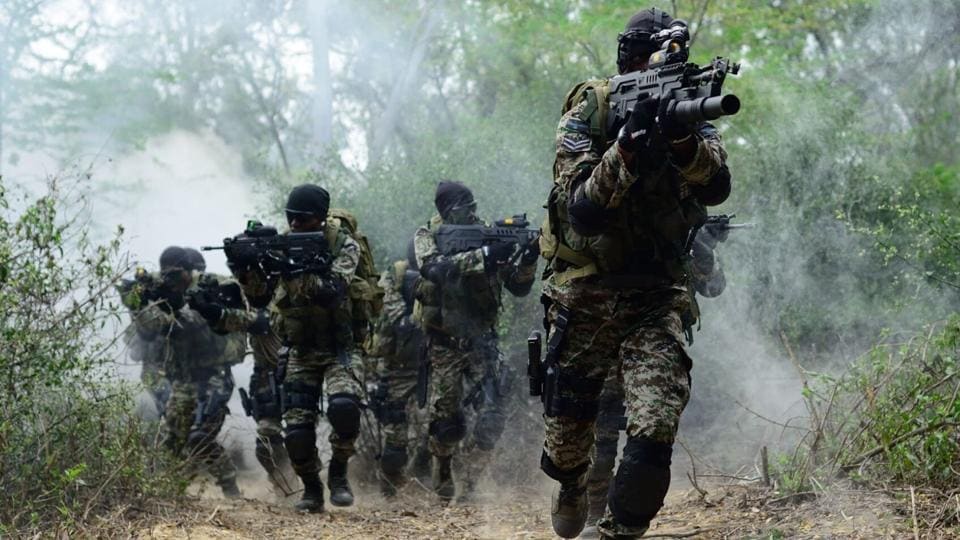
The decision to allow women into the elite wing was taken last year, said one of the officials, although the development has come to light only now.
The Indian Navy has opened the doors of its elite special forces to women, a development that will allow them to serve as marine commandos (Marcos) provided they make the cut for selection, Hindustan Times reported on Monday. While the air force and navy have allowed women to volunteer for their special forces, there will be no dilution in the selection or training standards, officials from the two services said.
The special forces of the army, navy and air force consist of some of the toughest soldiers who undergo rigorous training, are capable of mounting a swift and stealthy response in denied territories, and have thus far been a male preserve. Soldiers are not directly assigned to special forces units, and have to volunteer for it.
The air force raised the Garud commando force in 2004. The move came three years after four terrorists, armed with Kalashnikovs and grenades, attempted to force their way into the its Awantipora fighter base near Srinagar in broad daylight. They were all killed.
Physiological, psychological and cultural factors were often cited to deny more military roles to women in the past. However, one of the turning points came in 2015 when the air force decided to induct them into the fighter stream.
The navy is also giving them more opportunities to serve on board warships alongside their male counterparts. The army has allowed them to fly helicopters. To be sure, tanks and combat positions in infantry are still no-go zones for women.
The option of volunteering to become Marcos will be open to women officers, and sailors who are currently undergoing training at INS Chilka in Odisha, and will join the navy as Agniveers next year. The air force will begin inducting women in the personnel below officer rank (PBOR) cadre under the Agnipath model next year onwards, though the recruitment process has already started.
Three decades after the military commissioned its first batch of women officers in the short-service stream, the armed forces have come a long way and are now offering them a raft of opportunities that have given them new hard-earned identities, empowered them and helped bridge the gender gap significantly in a traditionally male-dominated field, as previously reported.
Women in uniform are no longer on the fringes but are being assigned central roles on a par with their male counterparts – they are flying fighter planes, serving on board warships, being inducted in the PBOR cadre, eligible for permanent commission, and the first batch of women candidates is currently undergoing training at the National Defence Academy.


