India’s power sector carbon dioxide (CO2) emissions fell by 1% year-on-year in the first half of 2025 and by 0.2% over the past 12 months, only the second drop in almost half a century, a Centre for Research on Energy and Clean Air (CREA) and Carbon Brief analysis has found. The last drop was during the Covid-19 pandemic in 2020.
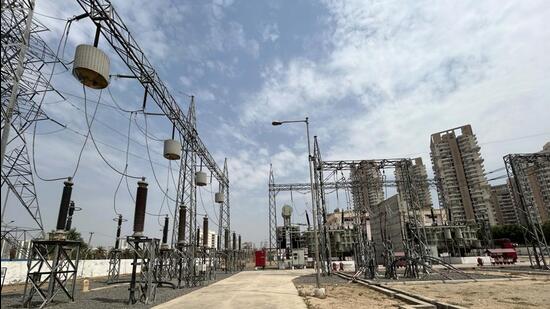
The analysis of the Helsinki-based non-profit think tank and British website specialising in the science and policy of climate change showed that emissions from the power sector could peak before 2030 if clean energy capacity and electricity demand grow as expected.
“The future of CO2 emissions in India is a key indicator for the world, with the country – the world’s most populous – having contributed nearly two-fifths of the rise in global energy-sector emissions since 2019,” the analysis said.
India’s CO2 emissions from fossil fuels and cement grew by 8% per year from 2019 to 2023, rebounding from a 7% drop in 2020 due to the pandemic. Before the pandemic, emissions growth had averaged 4% per year from 2010 to 2019. Emissions in 2023 and 2024 rose above the pre-pandemic trendline, the analysis found.
“A turnaround came in the second half of 2024, when emissions only increased by 2% year-on-year, slowing down to 1% in the first half of 2025,” the analysis said.
{{/usCountry}}“A turnaround came in the second half of 2024, when emissions only increased by 2% year-on-year, slowing down to 1% in the first half of 2025,” the analysis said.
{{/usCountry}}The power sector was the largest contributor to the slowdown. It contributed to 60% of the drop in emissions rates compared to the first half of 2025 and the years 2021-23. Oil demand growth slowed sharply, contributing 20% of the slowdown. Steel and cement were the only sectors whose emissions grew in the first half of 2025.
There was zero growth in oil product use in the first half of 2025 after rising 6% annually in 2021-23. Gas consumption fell 7% year-on-year. There were reductions across the power and industrial sectors. This was a sharp reversal of the 5% average annual growth in 2021-23.
Cooler conditions
Analysis of government data showed that 65% of the fall in fossil-fuel generation can be attributed to lower electricity demand growth, 20% to faster growth in non-hydro clean power, and the remaining 15% to higher output at existing hydropower plants.
“Slower growth in electricity usage was largely due to relatively mild temperatures and high rainfall, in contrast to the heatwaves of 2024. A slowdown in industrial sectors in the second quarter of the year also contributed,” the analysis said. It added that increased rainfall drove the jump in hydropower generation.
The analysis noted that India received 42% above-normal rainfall from March to May 2025. “Lower temperatures and this abundant rainfall reduced the need for air conditioning, which is responsible for around 10% of the country’s total power demand. In the same period in 2024, demand surged due to record heatwaves and higher temperatures across the country.”
India in July said it has surpassed its target of installing 50% of its power capacity from non-fossil fuel sources, achieving a key nationally determined contribution under the Paris Agreement five years ahead of the 2030 target.
The power sector has previously been the main driver of emissions growth. So far, fossil-fuel demand and emissions from the sector have continued to rise.
The analysis said this dynamic looks likely to change. “In 2021, India set a target of having 500GW of non-fossil power generation capacity in place by 2030. Progress was slow at first, so meeting the target implies a substantial acceleration in clean-energy additions,” the analysis said.
India had 234 GW of renewable capacity in the pipeline as of April 2025, according to the government. This includes 169 GW in awarded contracts, of which 145GW is under construction, and an additional 65 GW has been put out for tenders. There is also 5.2 GW of new nuclear capacity under construction.
Strong continued clean-energy growth is expected in India’s target of 500 GW of non-fossil fuel capacity by 2030.
In July, new and renewable energy minister Pralhad Joshi said that India’s achievement of 50% non-fossil fuel installed capacity ahead of the target year is a testament to its ambition, innovation, and commitment to sustainable development. “It affirms that development and decarbonisation are not contradictory goals, but can in fact reinforce each other. As the country moves toward the goal of 500 GW of non-fossil capacity by 2030 and net-zero emissions by 2070, the path forward must be bold, inclusive, and technology-driven.”
The Central Electricity Authority has projected that the share of non-fossil power generation will rise to 44% in the 2029-30 fiscal year, up from 25% in 2024-25. From 2025 to 2030, power demand growth, averaging 6% per year, is entirely covered from clean sources.
The CREA and Carbon Brief analysis said the growth in non-fossil power generation would need to accelerate over time to accomplish this. This means the growth in clean-power supply would clearly outstrip demand growth towards the end of the decade. “...so power generation from fossil fuels would fall,” the analysis said.
The analysis ahead of the UN Climate Meeting (COP30) positions India as a leader in the renewable energy transition.
A CREA and Carbon Brief analysis for China showed clean-energy growth helped the country’s CO2 emissions fall by 1% year-on-year in the first half of 2025, extending a declining trend that began in March 2024. The growth in clean-energy capacity reached a record 25.1 GW, up 69% year-on-year.
The CO2 output of China’s power sector fell by 3% in the first half of the year, as growth in solar power alone matched the rise in electricity demand. The growth in clean power generation, some 270 terawatt hours excluding hydro, significantly outpaced demand growth of 170TWh in the first half of the year for China.
Solar capacity additions set new records, and solar is likely to set an annual record for growth in 2025, becoming China’s single-largest source of clean power generation in the process.