The legislative process of reviewing the 153-year-old colonial law on sedition in India is in the “final stages”, the Union government on Monday informed the Supreme Court, adding “the government is keen on pushing reforms” and that something may be in works as early as the coming monsoon session of Parliament.
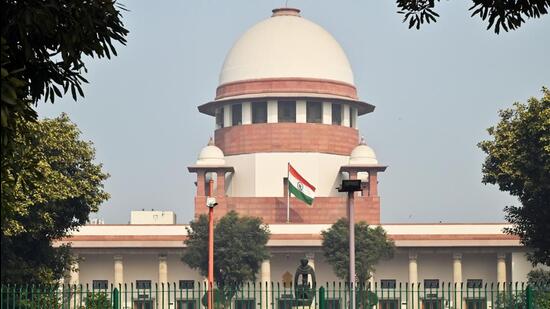
Appearing before a bench headed by Chief Justice of India (CJI) Dhananjaya Y Chandrachud, attorney general R Venkataramani submitted that the government has set up a committee to review Section 124A of the Indian Penal Code and that the deliberation with the stakeholders was on.
“After the order of this court on May 11, 2022, the process of re-examination has been set in motion. The consultation among all the stakeholders is in the final stages. After that, it will go to Parliament. But before it goes to Parliament, it will be shown to me. The government is keen on pushing reforms,” Venkataramani told the bench, which also comprised justice JB Pardiwala.
Also Read| ‘Heart-warming action…’: Kiren Rijiju lauds CJI Chandrachud's order
{{/usCountry}}Also Read| ‘Heart-warming action…’: Kiren Rijiju lauds CJI Chandrachud's order
{{/usCountry}}The operation of Section 124A in the IPC — a non-bailable offence punishable with jail term ranging from three years to life, and one that activists and jurists have alleged is often misused to muzzle dissent, is currently on hold due to a continuing interim order of the top court passed on May 11, 2022.
On Monday, the AG’s submissions came as the court mulled whether it should consider a larger bench for determination of the validity of the sedition law since a five-judge bench had in 1962 upheld the legality of Section 124A.
Venkataramani, on his part, suggested that the court should defer its decision on the strength of an appropriate bench to hear the bundle of petitions that have challenged the validity of the sedition law in the wake of the ongoing exercise by the government.
“Why conduct this exercise here and now when the government is already looking at it. Please keep it after the Monsoon session. Probably, something may happen by then,” the AG said.
Also Read: Divorce can be granted without waiting period: SC
Accepting Venkataramani’s plea for the time being, the bench adjourned the hearing of the case to the second week of August. The court also recorded A-G’s statement in its order. “The learned AG states that in pursuance of the May 11, 2022 order of this court, the government has initiated the process of reconsideration and the consultation is at a fairly advanced stage,” said the order, fixing the next hearing in August.
Earlier, advocate Kanu Agrawal, assisting solicitor general Tushar Mehta, appeared in the matter and informed the bench that the government is pondering over several issues. “We need to also see if a change will apply prospectively or retrospectively,” Agrawal had said while requesting the bench to wait for the S-G to show up. Later the AG appeared and made the statement on behalf of the Centre.
On May 11, 2022, the Supreme Court in a historic judgment effectively put on hold the colonial-era penal provision, and asked the Centre and states to desist from arresting people or prosecuting them under the contentious provision until the Union government reviews it.
Asserting that the sedition law in India “is not in tune with the current social milieu”, the court in May last year emphasised that “it will be appropriate not to continue the usage of the provision of law by the governments” when the Centre itself has conveyed a desire to “reconsider and re-examine” the contours and validity of Section 124A.
Two days before the top court had suspended the operation of the sedition law, the Union government had filed an affidavit stating that it was willing to review the sedition law but urged the court to pause the ongoing judicial scrutiny of the penal provision.
The Supreme Court, however, passed an interim order even as it allowed the Centre to conclude ts exercise. “It is clear that the Union of India agrees with the prima facie opinion expressed by this court that the rigors of Section 124A of IPC is not in tune with the current social milieu, and was intended for a time when this country was under the colonial regime. In light of the same, the Union of India may reconsider the aforesaid provision of law,” said the top court in its May 2022 order.
Putting in place a protective apparatus till the time the central government takes a call on the fate of the sedition law, the top court in May 2022 said that Centre and states will restrain from lodging new first information report (FIRs) under Section 124A while all court proceedings under the law should also be suspended.
It further clarified that if any fresh case is registered under Section 124A despite the court’s imprimatur, affected parties should approach the concerned courts, which should pass suitable orders, “taking into account the present order passed (by the Supreme Court) as well as the clear stand taken by the Union of India.”
About cases where the sedition charge has been invoked against the accused along with a set of other penal provisions, the court in its May 2022 order left it to the wisdom of trial courts and high courts to decide if such cases can proceed in relation to other charges, without causing any prejudice to the rights of the accused.
That order came on a set of petitions filed by an array of individuals including Trinamool Congress member of Parliament Mahua Moitra, Editors Guild of India, individual journalists, NGO Peoples Union for Civil Liberties, and some members of civil society.
India’s sedition law has an interesting past. IPC was brought into force in colonial India in 1860 but had no section concerning sedition. It was introduced in 1870 on the grounds that it was dropped from the original IPC draft by mistake. The UK, incidentally, would repeal the law in Britain only in 2009 (with effect from early 2010).
Under Section 124A of IPC, the offence of sedition is committed when any person by words or otherwise brings or attempts to bring into hatred or contempt, or excites or attempts to excite disaffection towards the government established by law. Sedition is a cognisable, non-bailable and non-compoundable offence under the law, entailing life imprisonment as maximum punishment, with or without a fine.