
 E-Paper



Indo-Pacific in mind, Navy pitches for six nuclear attack submarines
The nuclear powered attack submarines will give Indian Navy the much needed long legs for deterrent patrols and access denial in the Indo-Pacific without giving away its position.

 Prefer HTon Google


With Quad, European Union and the United Kingdom recognising the Indo-Pacific as the new strategic frontier, the Indian Navy has apprised the government of its requirement to build six nuclear-powered attack submarines (SSNs) to counter the challenge on high seas in a post pandemic world.
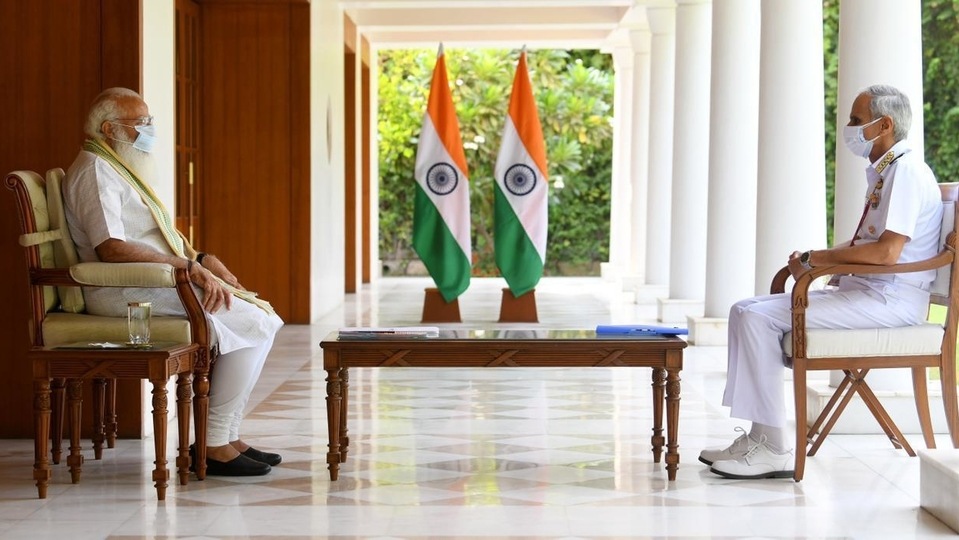
After the March 4 Combined Commanders Conference at Kevadia in Gujarat, Navy Chief Admiral Karambir Singh mentioned the requirement of SSNs to Prime Minister Narendra Modi on May 3 while discussing the Indian Navy’s operation Samudra Setu II to garner much-needed oxygen from India’s close allies in West Asia. The Naval warships are also involved in providing medical support to its Island territories in Lakshwadweep and Andaman and Nicobar Islands.
The nuclear powered attack submarines will give Indian Navy the much needed long legs for deterrent patrols and access denial in the Indo-Pacific without giving away its position. "The future not only lies in the Indo-Pacific but also the arctic route that will open up due to receding snow fields," said a serving admiral.
The SSNs only need to surface for food supplies and other logistics and can go for long distance patrols with conventional weapons and missiles on board. As of now, India has one Akula class SSN, which is on lease from Russia, and one indigenously build ballistic missile submarine (SSBN) with another joining the strategic forces command next year.
While the Navy is still to approach the Union ministry of defence for acceptance of necessity, a term for need to buy, the national security planners are concerned about China adding 12 SSNs to its fleet apart from seven ballistic missile submarines to its strike force.
It is not for any other reason that French SSNs base at Toulon and French SSBN base at Brest was on the agenda of Prime Minister Narendra Modi during his now cancelled visit to France around the May 8 India-EU summit at Lisbon. While the India-EU summit was reduced to virtual summit, the physical bilateral visit to France was postponed to a later date.
ALSO READ: ‘Flag follows trade,’ Navy chief on China operating in Indian Ocean
Although the Indian Navy has no preferences, the national security planners are looking at France, the UK, the US and Russia as possible partners for joint development of SSNs in India under Atmanirbhar Bharat programme.
The French Naval Group is one of the key contenders for the SSN project as France is one of the most trusted allies of India since post 1998 nuclear tests sanction days. Unlike the US, France does not have any regulatory regime that can stall the on-going program using international traffic in arms regulations (ITAR). Finally, France has offered to jointly develop the SSN with India with full transfer of technology. It is already building six diesel attack submarines (called Kalvari class) for India which will be retrofitted with air independent propulsion technology developed by the Defence Research and Development Organization (DRDO).
Earlier this week, Admiral Singh called on Prime Minister Modi and briefed him about various initiatives being taken by the Indian Navy to assist the people of the country during the pandemic.
The Admiral said the Navy has reached out to all state administrations and have offered help to set up hospital beds, transportation and conduct of vaccination drives and deploying its ships to ferry oxygen containers and essential medical supplies from various countries.


