Twenty-two deaths caused by contaminated water in Madhya Pradesh's Indore last December resulted from a series of failures dating back over three decades, according to an investigation by a one-member judicial commission that has jolted the administration into action.
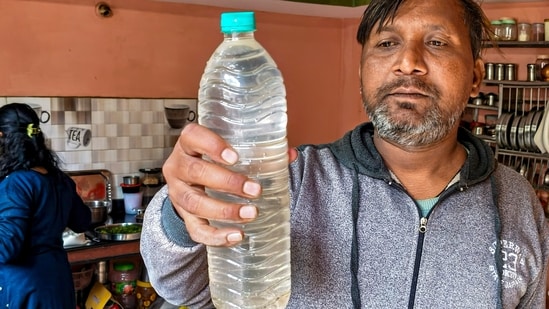
A 112-page report by Justice Sushil Kumar Gupta was submitted to the Madhya Pradesh High Court's Indore bench on August 18, exposing the lapses.
The court, on January 27, appointed Justice Gupta as the one-member commission to probe complaints of water contamination in Indore's Bhagirathpura and some other parts of the city. It noted that, prima facie, the case raised questions related to Article 21 of the Constitution, which guarantees the right to life.
The report by Justice Gupta, a former high court judge, found three layers of lapses in the system from 1990 to 2026. It held at least eight officers of the Indore Municipal Corporation responsible for ignoring complaints and for delays in the tender process.
Also Read | 24 people in Indore died drinking sewage-tainted water via municipal lines: Probe
{{/usCountry}}Also Read | 24 people in Indore died drinking sewage-tainted water via municipal lines: Probe
{{/usCountry}}According to the report, the sewerage project (1990-95) and water pipeline (1999-2004) laid by the Indore Development Authority violated the Central Public Health and Environmental Engineering Organisation (CPHEEO) Manual, which provides guidelines issued by federal authorities for the management of public infrastructure.
Over the years, both the pipeline and the sewerage project developed cracks, the report found, resulting in drinking water being contaminated with sewage. Eventually, that contaminated water reached households.
Water sample reports obtained from authorities/laboratories reveal the presence of contaminants, including coliform bacteria such as E. coli, Salmonella, Vibrio cholerae and other impurities, rendering the water unfit for human consumption. “Such scientific evidence clearly establishes that the quality of supplied drinking water did not conform to prescribed safety standards,” says the report.
In 2004, the Asian Development Bank gave $200 million to Bhopal, Indore, Jabalpur and Gwalior for water quality improvement. The Comptroller and Auditor General of India (CAG)'s 2019 report had warned the government of water related issues. “Of 9.41 lakh families in Bhopal-Indore, only 5.3 lakh had taps in 2019. There were 4,481 water samples that were found unfit between 2013 and 2018. There were also 5.45 lakh waterborne disease cases,” reads the CAG report.
Also Read | 24 people in Indore died drinking sewage-tainted water via municipal lines: Probe
The problem was not limited to Indore. Similar complaints were found in Bhopal, where, on January 14, 2026, faecal coliform was found in Chhota Talab, Shahpur and Motia Talab, which supply water to 5 lakh people, according to Bhopal Municipal Corporation reports.
But officials ignored the warnings about supplying of contaminated water, according to activists. “Ignoring this warning is equivalent to a criminal act. They need to be booked, as it was not a sudden outbreak or natural calamity,” said an activist the Malwa region.
Urban Development Additional Chief Secretary Sanjay Dubey said the tragedy forced a complete reset of water management measures in the city. After the incident, the Madhya Pradesh government launched the Jal Suraksha Campaign in February this year.
It became mandatory to monitor water quality at three critical points—at the treatment plant, at distribution sites and through random sampling at the consumer end—along with regular cleaning of overhead tanks and ensuring water purity through chlorination.
"The major issue which we have also found out is that the pipeline and sewage line were going together, and leakage in both led to contamination," Dubey said.
Officials said that going ahead, water pipelines would always be laid above sewage lines, with mandatory vertical and horizontal distances, so there would never be a chance of contamination.
"We have introduced a robot [a remote-controlled crawler] that is going inside the pipeline to detect leakage. It is GPS-fitted, so it would detect the exact location of the leakage; we don't need to dig up the whole pipeline," Dubey said.
The faulty pipeline in Bhagirathpura was replaced with a new one within two months of the tragedy.
The case is pending before the Indore bench of the high court, which will decide the action against eight officers held responsible by the probe commission. The state government had suspended them in January.