Famed sand artist Sudarshan Pattnaik tweeted a picture of a tiger-shaped sand sculpture on a beach in Odisha’s Puri to mark International Tiger Day. Observed every year on July 29, this day is worth observing, as only a few thousand tigers remain in the wild as a result of animal poaching and trafficking, according to a United Nations Environment Program (UNEP) report.
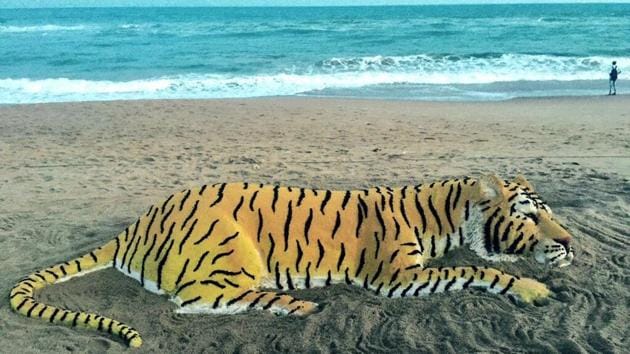
The picture, that is a plea to protect the national animal and has been liked over 1.5K times, has garnered praise on social media. Sample some reactions:
India is home to nearly 70% of the world’s tiger population and has 2,226 tigers according to the last national census in 2014. The country now has 50 functioning tiger reserves as opposed to nine when Project Tiger was launched in 1983.
{{/usCountry}}India is home to nearly 70% of the world’s tiger population and has 2,226 tigers according to the last national census in 2014. The country now has 50 functioning tiger reserves as opposed to nine when Project Tiger was launched in 1983.
{{/usCountry}}Threats to the species owing to increasing habitat loss and demand for their skins, bones and other derivatives in China and other parts of Asia for ornamental and traditional medicine purposes puts the tiger at extreme risk of extinction.
According to a report released by the forest department on Wednesday, Uttarakhand has recorded a massive jump in tiger numbers with the Corbett Tiger Reserve becoming home to 215 tigers in 2016 from 163 tigers in 2015. The hill state has the country’s second highest tiger population after Karnataka.
On the other hand, tiger deaths too have steadily gone up in recent years. In 2015, officials reported 80 tiger deaths, and 78 in the previous year, according to the National Tiger Conservation Authority (NTCA).
Tigers are now on the International Union for Conservation of Nature (IUCN) red list of endangered animals.
Here’s a look at how India is leading the world in conserving the big cats: