E-Paper



Intersection between India’s democracy and demography
The state-wise distribution of seats in Parliament was not meant to be cast in stone when the Constitution was adopted.

 Prefer HTon Google


Indian democracy has been based on the principle of universal franchise from independence. The actual manifestation of popular will into government, however, is mediated by two simultaneous processes: the first-past-the-post (FPTP) system and state-wise distribution of seats in Parliament. The FPTP system means that a constituency-level winner need not poll a majority of votes to win an election. Being first among the others is enough. The second means that a given vote in a state can have different values as far as sending an MP in the Lok Sabha is concerned. The FPTP was a conscious choice our Constituent Assembly made.
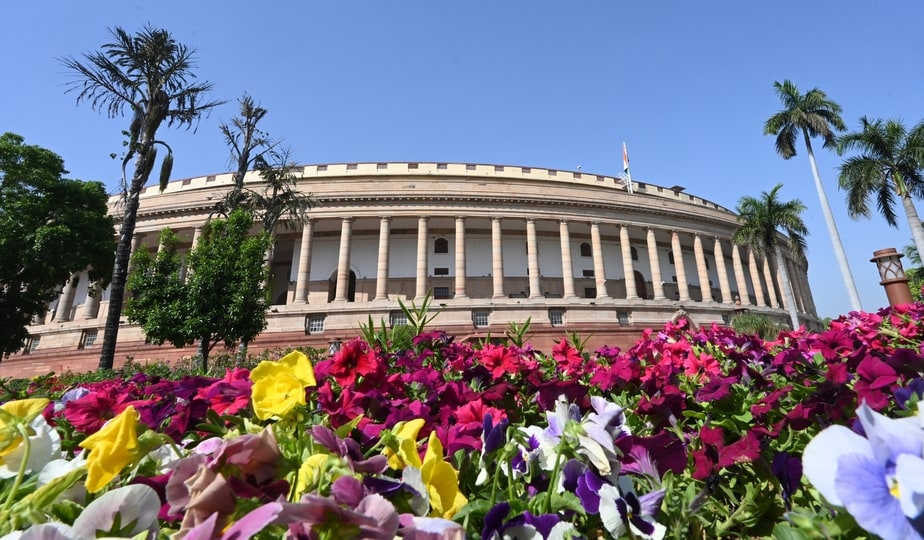
The state-wise distribution of seats in Parliament was not meant to be cast in stone when the Constitution was adopted. The reason this distribution was kept unchanged for the last five-and-a-half decades was political consideration of accommodating the concerns of the southern states about being politically short-changed.
This debate is political. What is not political is the question of how the present state-wise distribution of seats fares when it comes to doing justice to the principle of one man, one vote, one value.
Here is what an HT analysis of the data shows.
India’s latest census was in 2011. This makes the state-wise population numbers dated. While we do have population projections at the state-level, they have proved to off the mark in the past. HT has compared the number of electors in 2024 Lok Sabha elections to calculate the number of electors per parliamentary constituency (PC) to compare how representative an MP is from a state of its electors.
Kerala, which had 27.8 million electors and 20 MPs, had 1.39 million electors per MP, the lowest among large states and Union territories. It was followed by Tamil Nadu where this number was 1.6 million per MP. Bihar and Uttar Pradesh had 1.93 million electors per MP. This number was the highest for Delhi at 2.17 million electors per MP. Among large states, Rajasthan has the highest number of electors per MP.
How has this balance changed between 1971 and 2024?
This is the operative part of the debate. The current state-wise distribution of Lok Sabha seats was done on the basis of the 1971 census figures. If one were to compare the change in electors per MP between 1977 (this was the first Lok Sabha election held after the first delimitation based on the 1971 census figures) and 2024, some states have seen much larger growth than others.
The number of electors per MP has increased by six times for Delhi (the highest among 15 states and Delhi after merging new states with their parent ones in 1977) and only 2.3 times for Tamil Nadu. To be sure, among big states, the highest growth has been in Gujarat, where the number is now 3.5 times than in 1977. This difference in growth rate has also changed where this number is the highest and lowest. In 1977, Tamil Nadu was at the top of the table and Delhi was at the bottom. Tamil Nadu is now at the second position from the bottom and Delhi is at the top. (See Chart 1)

How does this state-wise imbalance reflect in political representation?
The controversy over the re-adjustment of state-wise allocation of Lok Sabha MPs in keeping with 2011 census data –– this is what the draft of the delimitation bill circulated to lawmakers says, although the government insists there will be no change in proportionate representation of states –– has been criticised on two grounds: that it penalises the states which have done well to manage their population growth (most of them are in the south) and that an increase in share of non-southern states will benefit the BJP because its support is limited in the south. How representative is the representation of political parties in the current Lok Sabha vis-à-vis actual electors in the country?
One way to look at this question to compare each party’s Lok Sabha MPs in relation to the total number of electors in the constituencies from which they have been elected. The BJP is currently ranked fifth in the number of electors per MP among parties that have at least five MPs . Top four parties on this list are the Nationalist Congress Party (Sharad Pawar), Shiv Sena, Janata Dal (United) and the Samajwadi Party. The Dravida Munnetra Kazhagam (DMK) has the lowest number of electors per MP. The Congress is ranked just above the DMK on this count. (See Chart 2)

To be sure, it will be simplistic to jump to conclusions by comparing just the number of electors per MP at the level of states in India’s inter-state distribution of Lok Sabha seats. There is a large divergence among electors per parliamentary constituency even within states. (See Chart 3)

As is obvious, any effort which tries to strike a complete balance between universal franchise and state-wise or political representation in India’s Parliament is unlikely to stay effective for a long time. This is exactly why the exercise needs to be based on a broad-based consensus rather than one-upmanship.