E-Paper



‘Introspect on your own prejudices’: Indian ambassador on US religious freedom body’s Sharjeel Imam post
Ambassador Vinay Kwatra said that the USCIRF has “no locus standi” to pass a judgment over the constitutional rights of Indian citizens.

 Prefer HTon Google


Indian ambassador to the United States Vinay Kwatra on Friday (local time) criticised the US Commission on International Religious Freedom (USCIRF), a body constituted by the US government, after it made a post on X referring to jailed activist Sharjeel Imam.
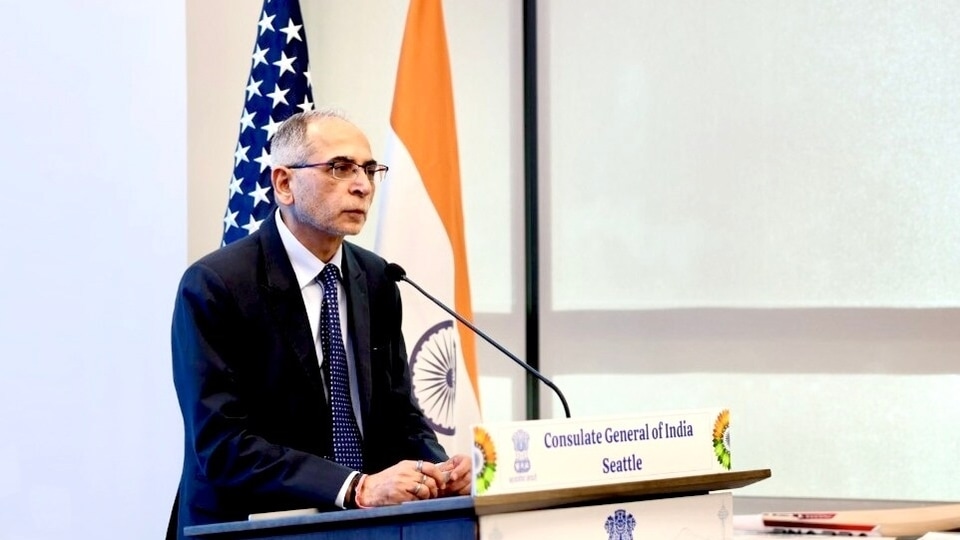
Kwatra said that the USCIRF has “no locus standi” to pass a judgement over the constitutional rights of Indian citizens.
“Its habitual partisan, ill-informed, and jaundiced assessments cannot diminish India’s constitutional commitment to religious freedom and equal rights for all faiths. India flourishes, defying the agenda-driven partisan narratives of the USCIRF. Taking the same liberty that USCIRF so readily assumes, a word of advice: introspect on your own prejudices and stop lecturing others, “ Kwatra said in a post on X.
Kwatra’s response comes after a series of posts made by USCIRF on religious freedom in India, including on jailed Dalit activist Jyoti Jagtap and Arun Pannalal, president of the Chhattisgarh Christian Forum, who was arrested in 2026 for allegedly making comments on social media perceived as religiously offensive.
Created in 1998 by an act of Congress, the USCIRF describes itself as an independent, bipartisan legislative branch entity, although its nine commissioners are appointed by the US President and the leaders of both the Democratic and Republican parties in the House and Senate.
Not the first time
Earlier this year, USCIRF stirred up controversy when it recommended targeted sanctions against India’s external intelligence agency and the RSS. It also called for the US government to link security assistance and bilateral trade policies towards India to India's religious freedom, while recommending that India be designated a “country of particular concern”.
To be sure, these recommendations are not binding on the United States government and have not, thus far, played a significant role in the bilateral relationship.
The ministry of external affairs had responded to USCIRF’s call for sanctions on the RSS and the Research and Analysis Wing
“We categorically reject its motivated and biased characterisation of India. For several years now, USCIRF has persisted in presenting a distorted and selective picture of India, relying on questionable sources and ideological narratives rather than objective facts. Such repeated misrepresentations only undermine the credibility of the commission itself. Instead of persisting with selective criticism of India, USCIRF would do well to reflect on the disturbing incidents of vandalism and attacks on Hindu temples in the United States, selective targeting of India, and growing intolerance and intimidation of members of the Indian diaspora in the United States, which merit serious attention,” MEA spokesperson Randhir Jaiswal had said at the time.