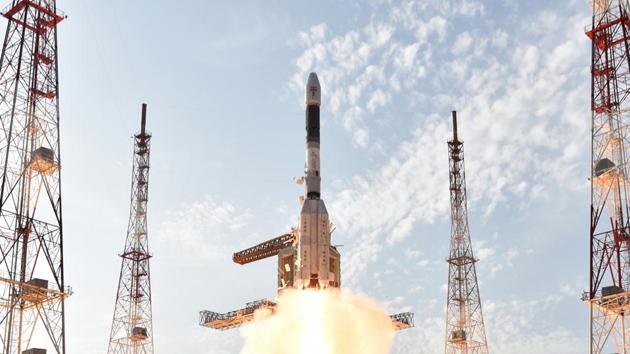
India will launch the Geosynchronous Satellite Launch Vehicle (GSLV-F09) carrying the GSAT-9 or the “South Asia” satellite, which Prime Minister Narendra Modi said will be a “priceless gift” to neighbouring countries, from the Satish Dhawan Space Centre in Sriharikota in Andhra Pradesh on Friday.
“Our dream is that this Saarc satellite will work in the welfare of all our neighbouring countries. And that’s why I have proposed in front of you today that we offer a valuable gift to our Saarc countries through a Saarc satellite launch so that we also become partners in their welfare,” Modi said in 2014.
The launch is being widely seen as a display of India’s soft power and regional influence.
The process of bringing all Saarc countries on board has not been smooth. Nepal, Bhutan, Afghanistan, Maldives, Bangladesh and Sri Lanka agreed but Pakistan is not a part of the project that was initially christened the Saarc satellite.
The launch was scheduled for December 2016 but was delayed.
The satellite will lift off from the Satish Dhawan Space Centre in Sriharikota, Andhra Pradesh. The lift-off mass of about 2,230kg includes the satellite and its launch vehicle. The mainframe of the satellite is cuboid in shape, built around a central cylinder. The mission life is 12 years and it cost ₹235 crore.
{{/usCountry}}The satellite will lift off from the Satish Dhawan Space Centre in Sriharikota, Andhra Pradesh. The lift-off mass of about 2,230kg includes the satellite and its launch vehicle. The mainframe of the satellite is cuboid in shape, built around a central cylinder. The mission life is 12 years and it cost ₹235 crore.
{{/usCountry}}The GSAT-9 is a Geostationary Communication Satellite and data from it will be shared with the other five countries. It will help to meet the growing telecommunications and broadcasting needs of the region. All participating nations will have access to at least one transponder using which they can telecast their own programming.The countries will develop their own ground-level infrastructure.
The satellite is expected to provide communication channels between countries for better disaster management as the region is prone to natural disasters.