NEW DELHI: India on Friday said it has been sharing flood data with Pakistan through diplomatic channels purely on a humanitarian basis after the suspension of the Indus Waters Treaty in retaliation for the Pahalgam terror attack in April.
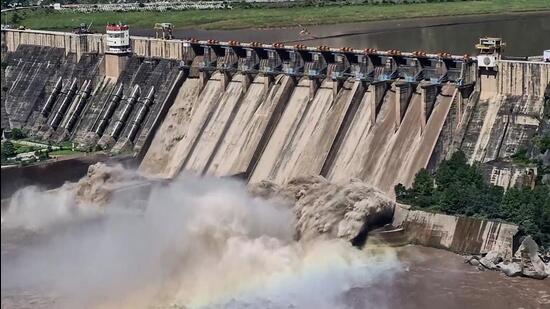
Both India and Pakistan have witnessed unusually heavy rainfall in recent weeks that have triggered heavy floods in parts of the two countries. The rainfall has also led to an increase in the level of several trans-border rivers, which were under the now-suspended Indus Waters Treaty of 1960.
India decided to put the Indus Waters Treaty in abeyance as part of a package of punitive diplomatic and economic measures adopted soon after the Pahalgam terror attack in April that killed 26 civilians. Indian officials have said the attack was carried out by The Resistance Front (TRF), a proxy for the Pakistan-based Lashkar-e-Taiba (LeT). In May, India launched Operation Sindoor to target terrorist infrastructure in Pakistan in response to the terror attack.
“We have been sharing high flood data with Pakistan through our diplomatic channels as and when it is required. This sharing of data is happening through our high commission in Islamabad,” external affairs ministry spokesperson Randhir Jaiswal told a regular weekly media briefing.
{{/usCountry}}“We have been sharing high flood data with Pakistan through our diplomatic channels as and when it is required. This sharing of data is happening through our high commission in Islamabad,” external affairs ministry spokesperson Randhir Jaiswal told a regular weekly media briefing.
{{/usCountry}}“You’ve seen the kind of rainfall that is happening in that part of India and that part of the world. And this is being done based on humanitarian considerations,” he said while explaining the rationale for the sharing of the flood data.
Despite the suspension of the Indus Waters Treaty, India shared information about severe weather and potential heavy flooding with Pakistan in August, out of concern for public safety, as several cross-border rivers were in spate.
After the treaty was suspended, India didn’t share any hydrological data under any mechanism of the pact, including the Indus Waters Commission.