The Delhi high court in a special hearing on Wednesday declined to entertain Cockroach Janata Party (CJP) leaders Saurav Das and Ashutosh Ranka’s petition challenging Special Executive Magistrate’s (SEM) order extending their judicial custody in an alleged bond-of-peace violation case, following their decision to withdraw the same.
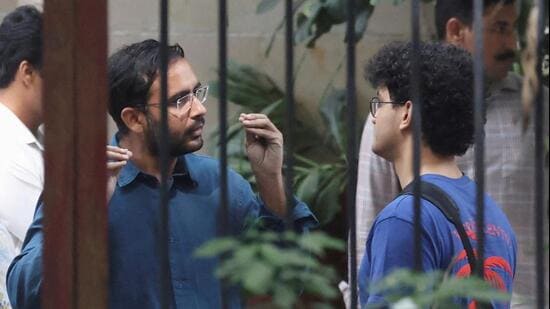
The CJP leaders decided to withdraw the plea after justice Subramonium Prasad raised questions concerning the maintainability of the petition. The Delhi police represented by additional solicitor general Chetan Sharma and standing counsel Ashish Dixit, also opposed its petition.
The court observed that the appropriate remedy for the two CJP leaders was to challenge the SEM’s order before the sessions court. Emphasising that personal liberty is sacrosanct, the court noted that when a prescribed legal remedy is available, one should follow the established procedure rather than approach the high court directly.
Deep Dive
Why did the Delhi High Court decline to hear Saurav Das and Ashutosh Ranka’s plea against their custody extension?
What legal remedy did the Delhi High Court say was available to Das and Ranka?
Why did Saurav Das and Ashutosh Ranka withdraw their custody-extension petition?
“Your remedy actually lies in revision. There is difference between maintainability and entertainability. When the matter is coming again (before the SEM)... why are you here? Why can’t the same be challenged in trial court? Why can’t you withdraw this, wait for what happens and then file it following the procedure of law? Instead of arguing now, why don’t you keep your powder dry? First before the revisional court (trial court) and then HC,” the judge told their lawyer Abhik Chimni.
He added, “Are you not firing your gun today when it might not be required in law? For all of us, liberty is sacrosanct, but when there is a procedure as per the code.. you generally don’t come (to HC) and file an appeal ..Appeal is better … all these arguements before me might be open to you in appeal and might not be before me in Article 226.”
{{/usCountry}}He added, “Are you not firing your gun today when it might not be required in law? For all of us, liberty is sacrosanct, but when there is a procedure as per the code.. you generally don’t come (to HC) and file an appeal ..Appeal is better … all these arguements before me might be open to you in appeal and might not be before me in Article 226.”
{{/usCountry}}Das and Ranka approached the high court against SEM’s October 19 order to extend their custody by two days. The executive magistrate at Mandir Marg police station cited concerns over public peace and security, and said the CJP leaders showed “no respect for law” by repeatedly calling for protests at de-notified sites, supporting Delhi Police’s contention that their release could pose an imminent threat to public order.
Seeking immediate release on personal bond rather than a surety, the two said that the order was contrary to a Delhi high court’s ruling in Aldanish Rein vs State of NCT of Delhi & Anr, in which it was held that an arrested person should be released on a personal bond once surety bonds are submitted, pending their verification.
Das and Ranka said they had been in custody for six days despite submitting multiple sureties and challenged the grounds for rejecting the sureties, including that they had “no control over the respondents” or could not recall their parentage.
“When you go again, the challenge to denotification is pending in the Supreme Court. Notification is yet not stayed. You go there and take a step again. When all these questions are there… The two petitioners out here are at the forefront, correct? When you go there and break a barricade, the chances of 10 or 20 more people in violation of Section 163 BNSS is very bright. Again I am not saying good or bad. There may be persons who might not be in your control and who may do things. We are seeing what is happening outside our country. What started as a student protest has now gone into arson, looting, burning. You started with something that you say is peaceful. The point is you cannot then control. For that purpose, you take police permission. Police permission is not just to stop you. Police permission is also to prevent persons who are unwanted elements to join your group and spoil your name,” the court said.
The court said the Delhi Police had shown “benevolence” by issuing a fresh notice to the duo despite their alleged breach of the bond. “They (Delhi police) are more benevolent to you by giving fresh notice. The reason for the first bond came true: you had a tendency to break the peace for a second time, which you did. Are the authorities not right in putting you to stricter rule?” the court said.
The case stems from CJP demonstrations demanding the resignation of chief election commissioner Gyanesh Kumar over alleged irregularities in the Special Intensive Revision (SIR) of electoral rolls.
On October 10, Das and Ranka were detained at Terminal 3 of Indira Gandhi International Airport, and police initiated preventive action under Sections 126 and 170 of the BNSS. They initially furnished bail bonds of ₹750,000 each.
On October 11, Delhi Police de-notified Jantar Mantar as a designated protest site, a decision that has been separately challenged before the Supreme Court and the Delhi high court.
On October 13, the two leaders visited Jantar Mantar carrying the national flag and were detained the following day.
The SEM, a police officer designated as an executive magistrate, subsequently remanded them to five days of judicial custody, citing apprehensions of a breach of peace. On October 19, the magistrate rejected their sureties over concerns about their control over the petitioners and discrepancies in identity documents, and extended their custody by another two days. They will be produced before the SEM again on Wednesday.