
 E-Paper





Follow the latest breaking news, major developments and agenda-setting stories from India and around the world with the newsdesk at Hindustan Times. Operating round the clock, the desk brings together experienced editors, reporters and correspondents to deliver fast, accurate and contextual reporting across subjects that influence public policy, governance, business, society and international affairs. The HT News Desk covers politics, elections, government policies, the economy, business and markets, science and technology, the environment, law and order, infrastructure, education, climate issues and geopolitics, while closely tracking developments across states, institutions and global capitals. The team also leads coverage of major breaking news events, policy announcements, court proceedings, natural disasters, public emergencies and significant international developments. Reports published by the newsdesk are based on information gathered from reporters on the ground, official statements, government agencies, court records, regulatory filings, recognised institutions and other authoritative sources. Stories undergo editorial scrutiny and verification processes to ensure accuracy, fairness and relevance, and are updated as events evolve and additional information becomes available. Whether covering a key political decision in New Delhi, an economic policy shift affecting millions, a landmark court ruling or a major global event, the HT News Desk aims to provide readers with reliable, fact-based journalism that delivers not only the latest developments but also the context and analysis needed to understand their wider implications.
Kumbh Mela to be first big test for Centre’s plans to promote inland waterways to ferry people and cargo
The NDA‘s plans to promote the use of inland waterways for ferrying people and cargo will be on full display during the upcoming Kumbh Mela at Allahabad in Uttar Pradesh from January 15 to March 15 next year.


The National Democratic Alliance’s (NDA) plans to promote the use of inland waterways for ferrying people and cargo will be on full display during the upcoming Kumbh Mela at Allahabad in Uttar Pradesh from January 15 to March 15 next year.
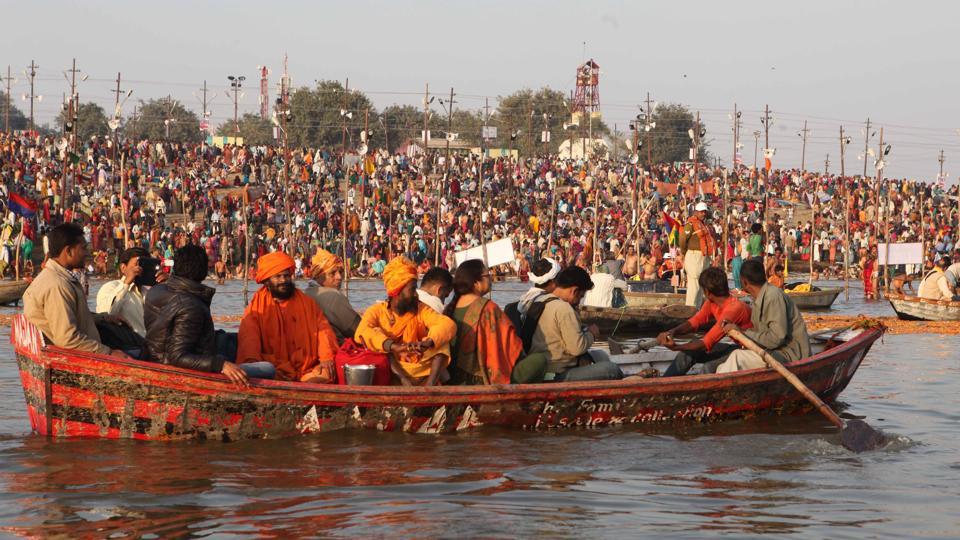
The Inland Waterways Authority of India (IWAI), the government’s water transportation arm, has been tasked with facilitating safe passenger movements for the festival scheduled to be held in 2019.
“IWAI has always contributed towards safe and comfortable pilgrim movement during large social congressions. The facilities being raised at Kumbh Mela will prove critical and help the Mela Authority. In the past, we have run our vessels and done channel markings at Ganga Sagar Mela in West Bengal and Parakash Parv at Patna,” IWAI vice-chairman Pravir Pandey’s told HT.
“IWAI has set up four floating terminals, one each at Kilaghat, Sarasvati Ghat, Naini Bridge and Sujawan Ghat. Further, two vessels namely CL Kasturba and SLKamla will be deployed for pilgrim movement,” the IWAI said in a statement on Saturday.
The ships will ferry the passengers between these terminals and also between Varanasi and Allahabad, a distance of 60 km.
The Kumbh Mela is a religious Hindu pilgrimage that is celebrated four times over a course of 12 years. The geographical location spans four locations (each hosts a Mela every 12 years): Haridwar on the Ganges in Uttarakhand, Ujjain on the Shipra in Madhya Pradesh and Nashik on Godavari in Maharashtra (apart from Allahabad).
The festival is known to be the largest congregation of religious pilgrims in the world and draws tens of millions of pilgrims over the course of approximately 55 auspicious days. The pilgrims bathe at the sacred confluence of the Ganga, Yamuna and Saraswati.
An estimated 120 million people visited the Maha Kumbh Mela in 2013. The Maha Kumbh happens once every 144 years.
To facilitate the movement of pilgrims, a fairway or deep water channel with navigational aids will be maintained between Allahabad and Varanasi with a targeted least available depth (LAD) of 1.0 m (CHECK). In addition, five temporary jetties at Chatnag, Sirsa, Sitamarhi, Vindhyachal and Chunar have also been setup for embarkment and disembarkment of passengers
“IWAI has the mandate to provide safe and efficient mode of transport through Inland navigation. As part of development of National Waterway-1 (Allahabad to Haldia), IWAI is making substantial interventions to make navigable the Allahabad -Varanasi stretch of River Ganga,” the IWAI statement added.
In November, Union minister of shipping, water resources, river development and Ganga Rejuvenation Nitin Gakari said that the government is exploring possible use of hybrid aeroboats during the Kumbh Mela so as to provide an alternative transportation mode.
“Hybrid aeroboats from top Russian companies could be roped in for Kumbh and we may start a pilot project next year,” the minister had said.


