Three years after the abrogation of Article 370 and 35 A by the Narendra Modi government, the security situation in the union territory of Jammu and Kashmir has shown marked improvement if a comparison is drawn between 2016-2018 and 2019-2021 data recorded by the Home Ministry and J&K police.
Despite Pakistan observing a Black Day and separatists giving out a bandh call, the situation is normal in the valley barring incidents of some posters being put up by subversives in Sopore and a grenade attack against a Muslim labourer from Bihar in Pulwama last night. Till now there has been no incident of stone pelting, street violence or closure of schools and colleges.
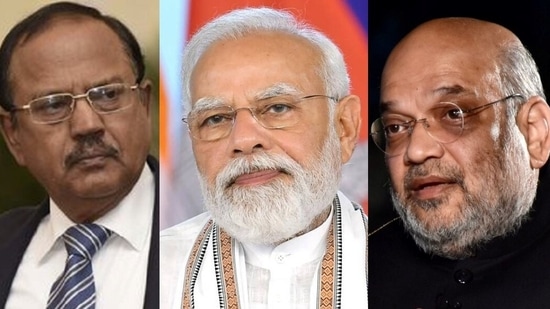
With Home Minister Amit Shah, National Security Advisor Ajit Doval and JKP police led by DGP Dilbagh Singh putting up continuous pressure on the separatists and religious extremists in the valley, there has been a 600 per cent decline in law and order incidents between three years before August 5, 2019 and three years after the abrogation. According to data compiled by the Home Ministry and the JKP, extremist-related incidents have shown a decline of 21 per cent if the two three-year periods are compared. While as of July 31, 2022, there are 166 terrorists (86 locals and 80 foreign nationals) active in Kashmir and Jammu zones, as many as 44 top commanders were killed in year 2021 and 18 top terror commanders have been killed to date. The uptick in counter—insurgency operations also manifests in the detection of no less than 11 tunnels in the past decade with seven cross-LoC tunnels detected in Samba, two in Kathua and two in Jammu sector.
However, the key indicator of improvement in law and order situation is that such incidents in Kashmir have dropped by 600 per cent in three years since the abrogation of Article 370 in Jammu and Kashmir compared to the preceding three years. Data shows from August 5, 2016, to August 4, 2019, the Valley witnessed 4,894 law and order incidents. However, for the three years from August 5, 2019 – when the Narendra Modi government revoked Jammu and Kashmir's special status and bifurcated it into two Union territories – the Valley recorded only 804 such incidents.
{{/usCountry}}However, the key indicator of improvement in law and order situation is that such incidents in Kashmir have dropped by 600 per cent in three years since the abrogation of Article 370 in Jammu and Kashmir compared to the preceding three years. Data shows from August 5, 2016, to August 4, 2019, the Valley witnessed 4,894 law and order incidents. However, for the three years from August 5, 2019 – when the Narendra Modi government revoked Jammu and Kashmir's special status and bifurcated it into two Union territories – the Valley recorded only 804 such incidents.
{{/usCountry}}The data also show while 126 civilians were killed in terror-related incidents in Kashmir in the three years prior to August 5, 2019, there had been 116 civilian deaths in the next three years.
Similarly, there had been a 51 per cent drop in the killing of police personnel in Kashmir in the last three years. As many as 93 police personnel were killed from August 5, 2016, to August 4, 2019, as compared to 46 deaths in the preceding three years (refer to the table).
There had been also a success in the killing of militants' top commanders belonging to Pakistan-based terrorist groups like Lashkar-e-Toiba and Jaish-e-Mohammed. Till July 31 this year, 18 top militants, including 11 from LeT, 5 from JeM and 2 from Hizbul Mujahideen, have been eliminated. Last year, a total of 44, including 26 from LeT, 10 from JeM, 7 from HM and 1 from Al-Badr, were killed by the security forces in the Valley. There had been a 21 per cent drop in militant-related incidents in the last three years.