A Public Interest Litigation (PIL) has been filed in the Delhi High Court seeking mandatory use of body-worn cameras (BWCs) by Delhi Police and Rapid Action Force (RAF) personnel deployed for crowd control and protests. This comes amid allegations of misconduct by security personnel during recent demonstrations held at the Jantar Mantar.
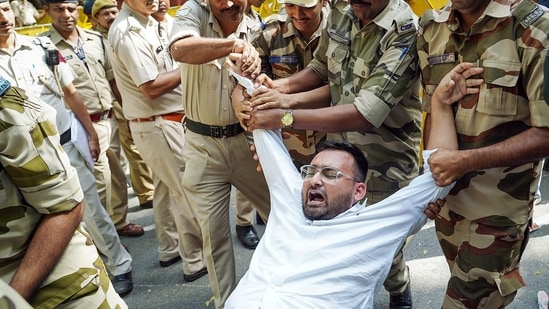
The plea asks the court to direct authorities to frame rules or a Standard Operating Procedure (SOP) requiring personnel on crowd-control duty to wear body cameras, ANI reported. It also seeks clear rules on how the recorded footage should be stored, protected and kept for a specified period, and how it can be used as evidence.
Cameras have been issued to personnel handling crowd management and security around protest sites, as well as those deployed along roads leading to the Election Commission office, PTI reported. Police said the devices would record interactions with protesters in real time and provide an objective record of events in case complaints are made against officers or demonstrators.
Women raise complaints
Deep Dive
What are the proposed rules regarding the use of body-worn cameras by Delhi Police during protests?
Why are female journalists raising complaints against police at protests in Delhi?
How can journalists ensure their safety while covering protests according to the new guidelines by Delhi Police?
The decision follows complaints by three women journalists who alleged sexual harassment and manhandling by police while covering a protest against chief election commissioner (CEC) Gyanesh Kumar at Jantar Mantar. One of the journalists alleged that ACP Vivek Bhagat sexually assaulted her while she was recording police action during the demonstration.
{{/usCountry}}The decision follows complaints by three women journalists who alleged sexual harassment and manhandling by police while covering a protest against chief election commissioner (CEC) Gyanesh Kumar at Jantar Mantar. One of the journalists alleged that ACP Vivek Bhagat sexually assaulted her while she was recording police action during the demonstration.
{{/usCountry}}The journalists approached the police after the alleged incidents and underwent medical examinations. Delhi Police said the three complaints were transferred to the Crime Branch. The allegations have triggered protests outside Parliament Street police station. Journalists, activists and others demand an FIR and action against the cop named in the complaints.
On October 5, police detained a group, including journalists and one of the complainants, that gathered outside the station after they spent the night there. They said the gathering violated restrictions in force in the New Delhi district.
The police have also issued guidelines for journalists covering protests, asking them to carry valid identity cards issued by their organisations or PIB/DIP accreditation cards and keep them visibly displayed. They have been advised to ensure their reporting does not obstruct police operations or the movement of security personnel.
The deployment of bodycams comes amid heightened security following demonstrations linked to the functioning of the Election Commission and the Special Intensive Revision (SIR) of electoral rolls. Police and paramilitary forces have been deployed in large numbers, with multilayered barricades installed around sensitive locations.
INDIA bloc march against Gyanesh Kumar
The security arrangements were further tightened on Tuesday as INDIA bloc MPs marched from Parliament towards the Election Commission headquarters, demanding CEC Gyanesh Kumar's resignation and raising allegations of irregularities in the SIR exercise.
The march began from Makar Dwar around 11 am and included Congress leaders Rahul Gandhi, Priyanka Gandhi Vadra and Mallikarjun Kharge, along with Abhishek Banerjee and Samajwadi Party chief Akhilesh Yadav. Track live updates
Delhi Police stopped the protesters near the NITI Aayog office, preventing them from reaching Nirvachan Sadan. Rahul Gandhi climbed a barricade and waved the Tricolour as opposition MPs raised slogans before sitting on the road in protest.
Priyanka Gandhi Vadra and other leaders later joined the dharna near Akashvani Bhawan. Several opposition leaders, including Rahul Gandhi and Akhilesh Yadav, were detained by police as security personnel maintained a heavy presence across central Delhi.