
 E-Paper





Follow the latest breaking news, major developments and agenda-setting stories from India and around the world with the newsdesk at Hindustan Times. Operating round the clock, the desk brings together experienced editors, reporters and correspondents to deliver fast, accurate and contextual reporting across subjects that influence public policy, governance, business, society and international affairs. The HT News Desk covers politics, elections, government policies, the economy, business and markets, science and technology, the environment, law and order, infrastructure, education, climate issues and geopolitics, while closely tracking developments across states, institutions and global capitals. The team also leads coverage of major breaking news events, policy announcements, court proceedings, natural disasters, public emergencies and significant international developments. Reports published by the newsdesk are based on information gathered from reporters on the ground, official statements, government agencies, court records, regulatory filings, recognised institutions and other authoritative sources. Stories undergo editorial scrutiny and verification processes to ensure accuracy, fairness and relevance, and are updated as events evolve and additional information becomes available. Whether covering a key political decision in New Delhi, an economic policy shift affecting millions, a landmark court ruling or a major global event, the HT News Desk aims to provide readers with reliable, fact-based journalism that delivers not only the latest developments but also the context and analysis needed to understand their wider implications.
Mamata Banerjee’s stipend for Hindu priests a move to woo voters, says Opposition
Banerjee announced on Monday that the government will give a monthly stipend of Rs 1,000 to 8,000 Brahmin priests facing financial crisis and also provide houses to those who need one.


West Bengal chief minister Mamata Banerjee’s decision to give a monthly stipend and houses to Brahmin priests has triggered a debate with the Congress, Left Front and Bharatiya Janata Party (BJP) calling it a desperate move to secure Hindu votes before the crucial assembly polls next year.
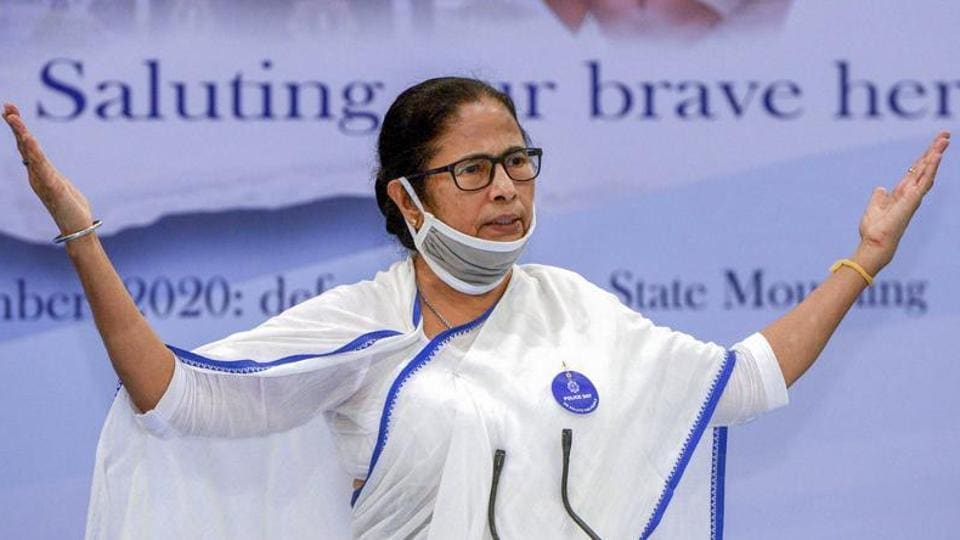
Banerjee announced on Monday that the government will give a monthly stipend of Rs 1,000 to 8,000 Brahmin priests facing financial crisis and also provide houses to those who need one.
The announcement instantly brought under focus Banerjee’s 2012 decision to give a monthly stipend of Rs 2,500 to the Imams of all mosques. The government started the scheme a year after Banerjee ousted the 34-year-old Left Front government in West Bengal.
“She thought she could buy Muslim votes with the stipend for Imams and now she thinks Hindu votes can be secured this way. This cannot be a government’s mode of functioning,” said Bengal Congress president Adhir Ranjan Chowdhury.
Arguing that Banerjee was no different from the BJP government at the Centre, Communist Party of India (Marxist) politburo member Md Salim said, “Both ask people to be economically independent but make them dependent on the government. When Hindu and Mughal emperors ruled India they didn’t have to offer monthly stipends to priests and Imams. They ensured a strong economy.”
“Rs 1,000 is a paltry sum for running a home but big enough to appear as an act of benevolence,” quipped Salim.
Chairman of West Bengal Imams Association Md Yahiya reacted to the political comments saying Banerjee started the stipend for Imams a year after coming to power in 2011 and it was not her electoral promise.
“This is simply a welfare scheme because not all Hindus are priests. But even if one accepts for argument’s sake that she wants to secure Hindu votes then one should ask if the BJP and Congress have exclusive rights to Hindu votes. Can’t Hindus vote for the TMC?” said Md Yahiya.
“I feel that Rs 1,000 is a small amount. The stipend for priests and Imams should be equal and substantial,” he added.
BJP national secretary Rahul Sinha accused Banerjee of being partial. “If all Imams in West Bengal are getting the stipend then why is the government selectively helping only 8,000 priests? There are thousands more. Why not help all?” he said.
Amitabha Chakraborty, a priest from the northern outskirts of Kolkata, said, “Most people do not know how low a priest’s income can be. I have seen many suffering miserably in their old age when they couldn’t work anymore. This is a good initiative by the government. Some help is better than nothing.”


