
 E-Paper



‘Mayday’ call, then silence: AAIB probe reveals moments before Air India crash in Ahmedabad
The AAIB probe into the Ahmedabad Air India crash is ongoing, with more data being gathered from stakeholders.

 Prefer HTon Google


The Aircraft Accident Investigation Bureau (AAIB) has revealed that one of the pilots of Air India flight AI171 issued a distress call, “Mayday, Mayday, Mayday”, moments before the aircraft crashed in Ahmedabad on June 12, killing 260 people.
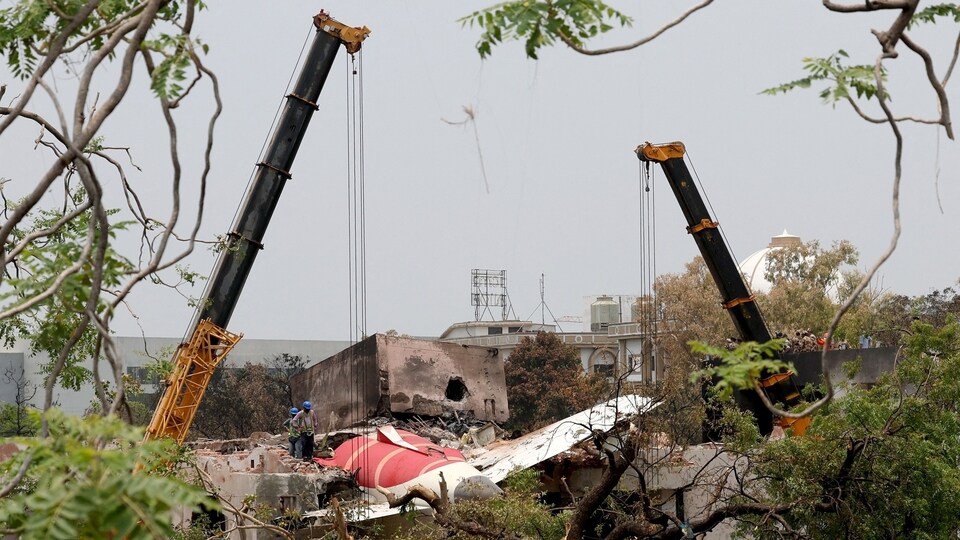
The Air Traffic Controller (ATCO) responded but received no reply before witnessing the plane go down.
According to the AAIB’s 15-page preliminary report, the Boeing 787-8 aircraft experienced critical engine failure shortly after take-off from Sardar Vallabhbhai Patel International Airport.
The flight, bound for London Gatwick, was carrying 241 passengers and crew. Only one person survived. Nineteen people on the ground were also killed when the aircraft crashed into a medical hostel near the airport, bringing the total death toll to 260.
“At about 08:09:05 UTC, one of the pilots transmitted ‘MAYDAY MAYDAY MAYDAY’. The ATCO enquired about the call sign but did not receive any response and observed the aircraft crashing outside the airport boundary. The emergency response was activated. At 08:14:44 UTC, the crash fire tender left the airport premises for rescue and firefighting, joined by fire and rescue services of the local administration,” the AAIB said in its preliminary report.
Fuel switches moved to 'Run' seconds before crash, says AAIB report
The report said that at 13:38:52 IST (08:08:52 UTC), Engine 1’s fuel cutoff switch transitioned from ‘Cutoff’ to ‘Run.’ The APU inlet door began opening two seconds later, consistent with the auto-start sequence. At 13:38:56 IST (08:08:56 UTC), Engine 2’s switch also moved to ‘Run’.
These actions triggered the aircraft’s Full Authority Digital Engine Control (FADEC) system to initiate relight and thrust recovery. Exhaust Gas Temperature (EGT) began to rise in both engines. Engine 1 showed signs of core recovery, while Engine 2 relit but could not stabilise despite repeated fuel reintroductions.
The Engine and Aircraft Flight Recorder (EAFR) data stopped recording at 13:39:11 IST (08:09:11 UTC). Cockpit audio also captured a brief exchange where one pilot asked, “Why did you cut off?” and the other replied, “I did not do so,” indicating possible confusion over the switch activations.
The AAIB report also added that both engines’ N2 values, a critical indicator of engine core speed, had dropped below minimum idle levels. While both engines were later recovered and quarantined, the aft EAFR was too damaged to retrieve data using conventional means.
As of now, the AAIB has issued no safety recommendations for Boeing 787-8 aircraft or GE GEnx-1B engines. The investigation is ongoing, with additional data being gathered from stakeholders.


