A “black-flag” motorcycle rally by an influential student organisation in Meghalaya’s Shillong, demanding recruitment reforms and implementation of security acts, degenerated into violence, with protesters vandalising and setting ablaze vehicles, mostly government-owned. The glass panel of a statue of philosopher Swami Vivekananda was also damaged.
The Khasi Students’ Union (KSU) organised the rally as it stepped up its agitation against what it called the state government’s indifferent attitude towards its five-point charter of demands, including the full implementation of the Meghalaya Residents Safety and Security Act, which was passed in 2016 to check illegal infiltration and verify tenants, until an Inner Line Permit system (ILP) is put in place. An ILP allows an Indian citizen to visit protected or restricted areas for a short time in the northeastern states of Arunachal Pradesh, Nagaland, Mizoram, and Manipur.
Police said vehicles bearing registration numbers of Meghalaya and Assam were targeted during the rally. Police superintendent Vivek Syiem said they were assessing the extent of the damage and working out an appropriate response. “Our priority is to respond firmly and responsibly, while ensuring that the situation does not escalate further or exacerbate tensions.”
Deep Dive
What sparked the violence during the KSU motorcycle rally in Shillong?
Why is the Khasi Students' Union demanding the full implementation of the Meghalaya Residents Safety and Security Act?
How did the KSU plan to escalate their agitation if the government did not respond to their demands?
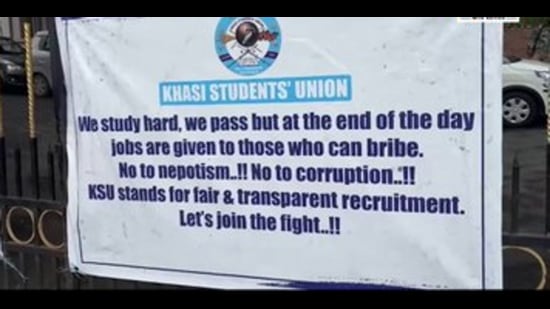
KSU activists first staged a demonstration outside the Main Secretariat, putting up banners accusing the government of nepotism and corruption in recruitment. Police removed the banners within minutes and tightened security around the secretariat. One of the banners read: “We study hard, we pass, but at the end of the day jobs are given to those who can bribe.”
{{/usCountry}}KSU activists first staged a demonstration outside the Main Secretariat, putting up banners accusing the government of nepotism and corruption in recruitment. Police removed the banners within minutes and tightened security around the secretariat. One of the banners read: “We study hard, we pass, but at the end of the day jobs are given to those who can bribe.”
{{/usCountry}}The rally followed a series of public meetings across Shillong on Monday and Tuesday, with KSU setting a 15-day deadline for the government to act on its demands. KSU leader Reuben Najiar had said the Union would take its agitation to the streets if the government failed to respond.
The KSU took out the “black-flag” march across Shillong. Najiar called it a way to pressure and condemn the government and to take their agitation to the streets.
The KSU has sought action against the deputy commissioner, police superintendent, and officials of the Meghalaya State Pollution Control Board for allegedly obstructing public participation at a July hearing on a cement manufacturing plant in East Jaiñtia Hills. It has been demanding the establishment of facilitation centres at all 18 entry points in the Khasi and Jaiñtia Hills for the implementation of the Meghalaya Residents Safety and Security Act.
The KSU has sought immediate implementation of the amended Meghalaya Migrant Workmen Act, 2020, including measures to regulate migrant workers and strengthen safeguards for local employment. It has sought an 80:20 female-to-male ratio for nurses and reservation for Khasis, Jaiñtias and Garos. The fifth demand relates to reform of the government recruitment process and Standard Operating Procedures for all recruitment boards.
Meghalaya minister and government spokesperson Wailadmiki Shylla said they are open to discussing all issues raised. “We are ready to listen and to have a dialogue,” Shylla said. “That is the way forward.”
The KSU took out the “black-flag” motorcycle rally on the day job aspirants and student unions, agitating against alleged irregularities in Jharkhand recruitment exams for nearly a month, announced a 60-day suspension of their sit-in after the state government conceded to almost all of their key demands. On July 25, Union education minister Dharmendra Pradhan resigned amid student protests over examination irregularities.