The National Commission for Minorities (NCM) has told the Supreme Court that minorities have to be treated as the “weaker sections” in India, where Hindus are “predominant,” as the body justified the Union government’s various schemes for religious minorities.
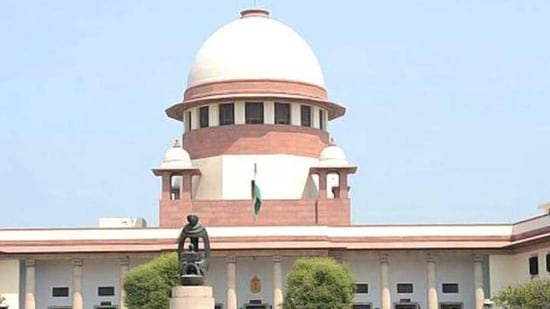
“In our country like India where the majority community is predominant, the minorities have to be treated as the weaker sections within the meaning of Article 46,” said NCM’s affidavit submitted in the Supreme Court before a bench headed by justice Rohinton F Nariman. Article 46 obligates the State to promote educational and economic interests of the weaker sections.
Responding to a petition filed jointly by six members of the Hindu community against the creation of the commission and special schemes meant exclusively for religious minorities, NCM maintained that “numerically smaller or weaker classes are bound to be suppressed and overpowered by the dominant majority groups” if special provisions and schemes were not framed by the government.
It added that the pertinent constitutional provisions on framing special schemes could not be limited to caste-based identities and must include in its fold religious minorities to ensure practical and empirical equality of all groups and classes in the society.
The Centre and the NCM have notified Muslims, Christians, Sikhs, Buddhists, Jains and Parsis as minority communities in India. Contending that only Hindus, Sikhs and Buddhists could get benefits as scheduled castes, the commission argued that if these special provisions were valid despite being religion-specific, special provisions for religious minorities were also justified in the same manner.
{{/usCountry}}The Centre and the NCM have notified Muslims, Christians, Sikhs, Buddhists, Jains and Parsis as minority communities in India. Contending that only Hindus, Sikhs and Buddhists could get benefits as scheduled castes, the commission argued that if these special provisions were valid despite being religion-specific, special provisions for religious minorities were also justified in the same manner.
{{/usCountry}}The commission emphasised that the interpretation of the Constitution coupled with judicial trends would demonstrate that religious and linguistic minorities “have to be” treated as specific identities entitled to special protection by the state.
Creation of NCM, the affidavit said, was the manifestation of a pre-existing human rights organisation to oversee the enforcement of the human rights of religious minorities and that there was nothing in the Constitution that made it doubtful whether minorities based on religion or language could be lawfully identified as particular classes of citizens requiring special protection and safeguards. Rejecting a contention in this regard by the petitioners, NCM submitted that it was for the government to declare any community as a minority and it was unlikely that the government resorted to “instigation” of any community to claim minority status to benefit from various schemes.
The petition filed through advocate Vishnu Shankar Jain contended that the petitioners were being unconstitutionally deprived of benefits available to similarly situated members of religious minorities in violation of their fundamental rights
Earlier, the Centre also defended the welfare schemes for religious minorities. The case came up for hearing on July 30, when the Centre sought time to file some additional documents. The court will examine the replies of NCM and the Centre on August 23.