Three of five ATMs in India use outdated technology and lack basic security features, making them prime targets for fake currency, banking experts say.
Cash loaders don’t use the “one-time combination” (OTC) method –technology that is commonplace in developed countries – to operate most of these machines. Making things worse is the fact that most of the country’s 220,000 ATMs are not monitored by working closed-circuit television cameras (CCTV).
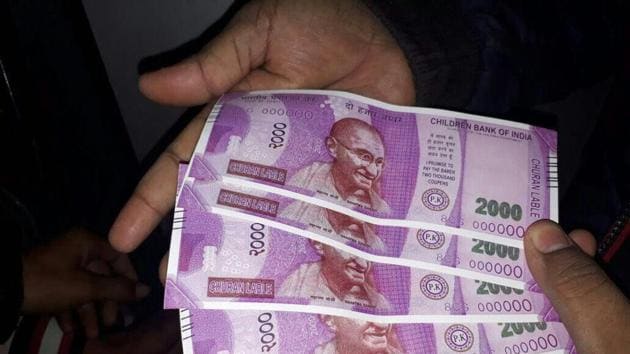
The poor security allows cash loaders to use the ATMs whenever they want, without any monitoring. This, experts say, indicates that crises such as the recovery of five fake Rs 2,000 notes carrying the “Children’s Bank of India” mark from a south Delhi ATM last week are disasters waiting to happen.
“We have urged the banks several times to install OTC locking system at the ATMs so that monitoring improves, unfortunately most banks do not pay heed,” said NSG Rao, secretary of Cash Logistics Association. He said that banks had no data on whether the CCTVs installed in ATMs were in working condition.
ATM security is under the spotlight after a string of cases of fake currency recovery from various parts of the country – some of the banknotes photocopied or high-quality replications – months after the government introduced new Rs 2,000 notes after scrapping old Rs 500 and Rs 1,000 notes.
The unsecured ATMs have also seen a spike in reports of theft, from 596 cases in 2013-14 to more than 900 in 2015-16. Last week, a man complained to Uttar Pradesh Police that he received a photocopy of a Rs 2,000 note from a State Bank of India ATM in Shahjahanpur.
{{/usCountry}}The unsecured ATMs have also seen a spike in reports of theft, from 596 cases in 2013-14 to more than 900 in 2015-16. Last week, a man complained to Uttar Pradesh Police that he received a photocopy of a Rs 2,000 note from a State Bank of India ATM in Shahjahanpur.
{{/usCountry}}Cash is usually loaded not by banks but logistics companies, who are responsible for transportation from bank currency chests to branches and ATMs. These firms also take care of the maintenance of these machines. About Rs 14,000 crore is carried everyday by cash vans across India.
Under the OTC locking system, the loaders are given a one-time combination number – a kind of password – to access the ATM. Once loading is complete, the combination expires completely and cannot be used anymore. This helps in tracking the exercise and minimises fraud.
Typically five people -- including a driver, two security personnel and two “cash custodians” -- travel in a cash van. While the security guards wait outside the ATM kiosks, the two “custodians” have two different passwords that they use to open the ATM.
However, these combinations are often not kept a secret and both custodians know each other’s passwords. “As a result, these people can come back anytime to indulge in mischief without anybody’s knowledge and operate the ATMs,” said Rao.
While all ATMs were recalibrated after demonetisation, pending security issues continue to be a threat, a senior bank official who did not wish to be identified, said.