India marks the 80th death anniversary of the great Bengali polymath Rabindranath Tagore on August 7, a date which is known in West Bengal and Bangladesh as 'Baishe Srabon', solemnly marking the day when the poet and playwright passed away. Tagore, the first non-European person to win a Nobel Prize in Literature, was known for reshaping the structural framework of Bengali literature and music, along with other Indian art forms with the advent of modernism in the late 19th and early 20th centuries.
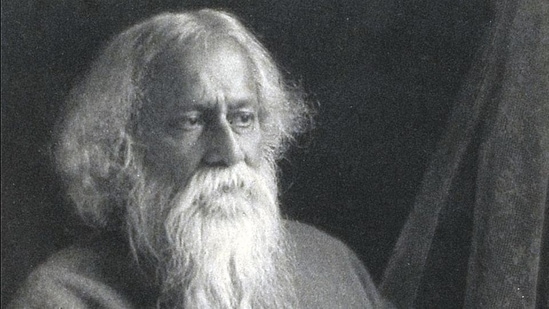
Tagore not only composed India's national anthem "Jana Gana Mana" but also composed Bangladesh's "Amar Shonar Bangla" anthem. In addition to that, he is also believed to have inspired the national anthem of Sri Lanka.
On Tagore's 80th death anniversary, the nation's leaders took to their official handles on Twitter to observe the day with solemn remembrance.
Rabindranath Tagore was born to Debendranath Tagore and Sarada Devi on May 7, 1861, in the Jorasanko mansion of Calcutta. He lost his mother at the young age of 14, later travelling across India with his father. On returning, Tagore completed a set of major works by 1877, one of them being a long poem in the Maithili style of Vidyapati.
{{/usCountry}}Rabindranath Tagore was born to Debendranath Tagore and Sarada Devi on May 7, 1861, in the Jorasanko mansion of Calcutta. He lost his mother at the young age of 14, later travelling across India with his father. On returning, Tagore completed a set of major works by 1877, one of them being a long poem in the Maithili style of Vidyapati.
{{/usCountry}}Tagore, at the age of 17, enrolled at a public school at Brighton in East Sussex, England. He briefly studied law at University College London, but again left school. It was then that he started studying the works of William Shakespeare and was inspired by English, Irish, and Scottish folk tunes. Wanting to reconcile European novelty with Bengali traditions, Tagore returned to his homeland in 1880 and continued his literary career.
In 1913, Tagore was awarded the Nobel Prize in Literature for his translated work of poetry, 'Gitanjali: Song Offerings', published a year prior. He was also awarded a knighthood by King George V in 1915, but the poet later renounced it following the Jallianwala Bagh massacre.
A combination of Tagore's life experiences gave us the gift of his immense talent in poetry, prose, songwriting, and art. From mystical romanticism to patriotism, Rabindranath Tagore left no stone unturned in the realm of artistic expression.