India’s green mobility transition is set for a major leap, with leading automakers expected to launch flex-fuel vehicles capable of running on 100% ethanol within the next one to two months, Union minister for road transport and highways Nitin Gadkari said on Wednesday at the HT Auto Leaderboard Awards and Summit 2026.
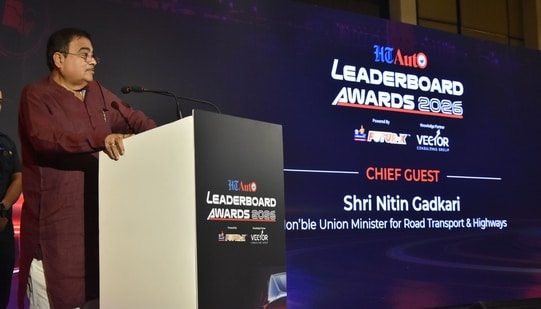
“Mahindra, Toyota, Suzuki and Hyundai will probably launch flex engines within one to two months, in which you can use 100% ethanol or petrol,” Gadkari said. He said the rollout was part of a broader push to reduce India’s dependence on imported fossil fuels and create new markets for agricultural produce. Maruti Suzuki launched a flex-fuel variant of the Wagon R in June.
“Our policy is import substitution, cost-effectiveness and pollution-free mobility. We want to diversify agriculture towards the energy and power sectors,” he said, adding that India currently spends ₹22 lakh crore on fossil-fuel imports.
Also Read | ‘My dream is to make India’s automotive industry the world’s No. 1’: Nitin Gadkari at HT Auto Awards
Deep Dive
What are the benefits of flex-fuel vehicles in India?
How is the government supporting the ethanol economy in India?
What progress has been made in India's EV market according to Nitin Gadkari?
Gadkari also highlighted the impact of ethanol production on farmers, saying the government’s decision to allow ethanol production from corn had helped raise prices for growers. “When the government took a decision to make ethanol from corn, the price of corn in the commercial market was ₹1,300 per quintal,” he said. Commercial rates subsequently rose to ₹2,600 per quintal, resulting in a direct benefit of ₹45,000 crore to farmers in Uttar Pradesh and Bihar, he added.
{{/usCountry}}Gadkari also highlighted the impact of ethanol production on farmers, saying the government’s decision to allow ethanol production from corn had helped raise prices for growers. “When the government took a decision to make ethanol from corn, the price of corn in the commercial market was ₹1,300 per quintal,” he said. Commercial rates subsequently rose to ₹2,600 per quintal, resulting in a direct benefit of ₹45,000 crore to farmers in Uttar Pradesh and Bihar, he added.
{{/usCountry}}The minister also defended the nationwide rollout of E20 fuel, which contains 20% ethanol blended with petrol, despite the controversy having reached the Supreme Court. “From 2022, we have had 4 crore four-wheelers and 20 crore two-wheelers on E20, and we have never received a single complaint,” he said.
Turning to electric mobility, Gadkari said India’s EV market could reach ₹20 lakh crore by 2030, driven by annual vehicle sales of 10 million and the creation of 50 million jobs. He highlighted the segment’s rapid growth, including a 146% year-on-year surge in electric two-wheeler sales.
Also Read | 'Reduce the rate': Gadkari tells auto industry to lower EV prices in consumers' interest
He also cited key government measures, including the reduction of customs duties on lithium-ion batteries from 21% to 13% and the PM E-DRIVE scheme. Gadkari said Jammu and Kashmir’s six-million-tonne lithium reserves, estimated at 6% of global reserves, would be a vital asset for domestic battery manufacturing.
The Union minister also spoke about major safety and technological advancements transforming the automotive sector. He cited the success of the Bharat New Car Assessment Programme, which provides automotive safety ratings, noting that local crash testing costs just ₹60 lakh per model — a 75% saving compared with global testing costs of ₹2.5 crore.
On safety and pollution control, the minister praised new vehicle-to-vehicle (V2V) communication technology that could cut road crashes by 80%. He also highlighted the rollout of compressed bio-gas (CBG) plants that convert agricultural stubble into fuel to help curb air pollution.
Gadkari further urged industry leaders to invest in the voluntary vehicle-scrapping ecosystem, which recovers raw materials such as steel, copper and aluminium. The process can lower vehicle-component manufacturing costs by up to 30% while generating seven million jobs, he said.