The ruling BJP might be pursuing the goal of a ‘Congress-mukt Bharat’ as a solution to the country’s problems, but a government report prepared by the NITI Aayog — its think tank — feels otherwise.
The report credits economic reforms initiated by the Narasimha Rao government in 1991 and the UPA’s rural employment guarantee scheme with improving India’s development indices.
The Voluntary National Review Report, which maps the progress India has made on sustainable development goals (SDGs), will be discussed at the UN’s High Level Political Forum on Sustainable Development in New York next month.
“There is compelling evidence that the rapid growth India has achieved following the economic reforms initiated in 1991 has led to significant reduction in poverty. Poverty has fallen across all economic, social and religious groups nationally and in all states in the post-reform era.
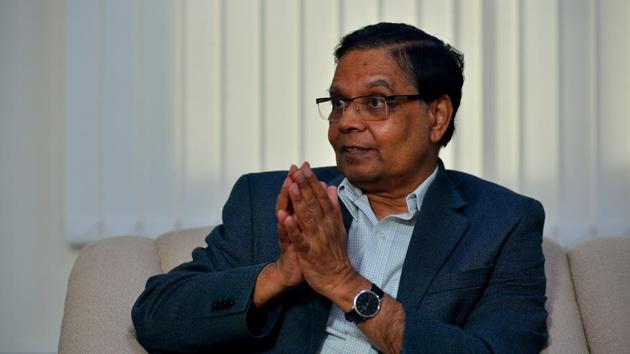
Sustained growth (6.2% from 1993-94 to 2003-04 and 8.3% from 2004-05 to 2011-12) has created gainful employment and helped raise wages,” the report, authored by Aayog vice-chairman Arvind Panagariya says.
The report also praises a number of initiatives of the current government, ranging from the Pradhan Mantri Jan Dhan Yojana, the Clean India campaign to providing soil health cards to farmers. “Over 130 million people have accessed life and accident insurance under the programmes. Efforts are underway to universalise access to basic services. In order to achieve the goal of housing for all by 2022, direct financial assistance is being extended to poor households,” it says.
{{/usCountry}}The report also praises a number of initiatives of the current government, ranging from the Pradhan Mantri Jan Dhan Yojana, the Clean India campaign to providing soil health cards to farmers. “Over 130 million people have accessed life and accident insurance under the programmes. Efforts are underway to universalise access to basic services. In order to achieve the goal of housing for all by 2022, direct financial assistance is being extended to poor households,” it says.
{{/usCountry}}In February 2015, Prime Minister Narendra Modi had mocked the Mahatma Gandhi National Rural Employment Guarantee (MGNREGA) programme, dubbing it “a living monument” of the UPA’s failures.
“After 60 years, you are still making people dig holes,’’ he had said. But in the last budget, the government announced plans to improve the existing scheme and allocate more funds for it.
“Several large-scale anti-poverty programmes have been implemented. The Mahatma Gandhi National Rural Employment Guarantee Act, for instance, has generated over two billion person-days of employment during 2016-17 alone, largely for the disadvantaged sections of society,” the report now says. It goes on to list a number of initiatives for poverty eradication. Initiatives like the Make in India campaign “accelerated Foreign Direct Investment (FDI) inflows and helped the country sustain an average growth of 7.5 percent during the last three financial years (2014-15 to 2016-17)”, the report points out.
Apart from notable progress over the last decade, the statistics in the report also point to the problem areas. For instance, stunted growth among children remains an issue, though it is down from nearly 50% in 2005-06 to 38.4% a decade later. Similarly, less than half of Indian households (43.8%) have access to clean fuel.