
 E-Paper



Not my business to decide on successor: Dalai Lama
In an interview with Hindustan Times, Dalai Lama said the dialogue process for reincarnation had not even started. He said that this should be decided through an international conference after his natural death.

 Prefer HTon Google


The temporal and spiritual world of Tibetan Buddhism seems headed for a period of uncertainty and possible turmoil in the near future with Lobsang Yeshi Tenzin Gyatso, the 14th Dalai Lama, leaving the question of his reincarnation and the continuation of the very institution of the Dalai Lama to Buddhists living in the Himalayan belt, Mongolia, and outside Tibet.
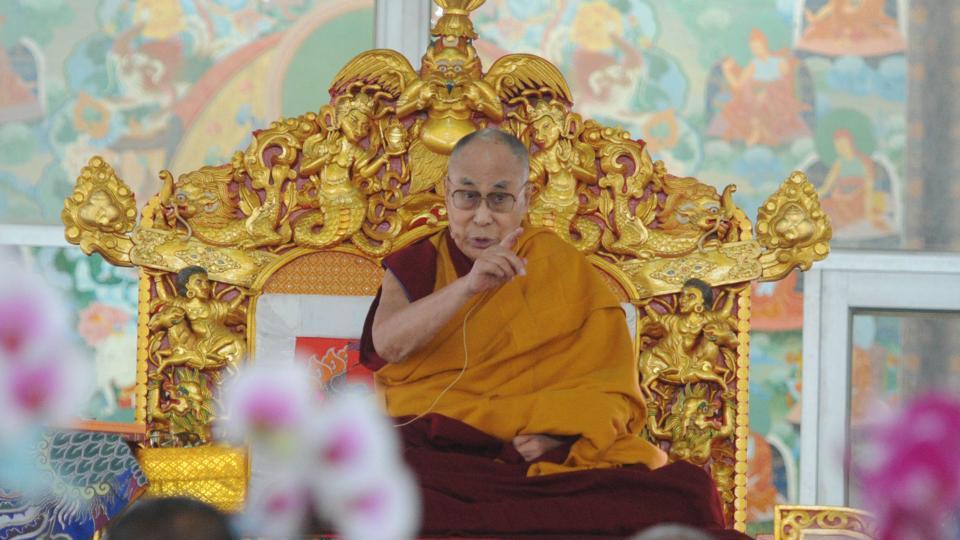
In an interview, he said this should be decided through an international conference after his natural death and that it is “ not his business” to decide on his successor through either reincarnation or emanation. He admitted the dialogue process for reincarnation had not even started.
Talking exclusively to Hindustan Times, the Dalai Lama said that his anointed 17th Karmapa Ogyen Trinley Dorje “most probably” would return to India.
But that, he said, was a concern of the Karma Kagyu school head and the Indian government as he had no role to play in the matter.
While the highest lama and head of Gelug school of Tibetan Buddhism called the meeting of Ogyen Dorje and co-claimant Trinley Thaye Dorje in France this year a “ rightful beginning”, he said he did not want to play the mediator between the two reincarnations of the 16th Karmapa.
Thaye Dorje, who was anointed by rival regent Shamar Rinpoche, is currently preaching in Bodh Gaya to a large number of foreigners from the US and Europe and has not met the 14th Dalai Lama.
Ogyen Trinley Dorje, supported by both the Dalai Lama and China, left for the US in May 2017, ostensibly for medical reasons. He then acquired a Dominican passport in March this year without informing India. He has been laying down conditions for his return – for instance, that he be allowed to visit the Rumtek Monastery in Sikkim which is the seat of the Karmappa outside Tibet and also at the heart of the Karmappa controversy, with the two rival factions laying claim to its ownership – but New Delhi isn’t playing ball.
While he said that it was possible for the 16th Karmapa to have a few reincarnations, the Dalai Lama made it amply clear that there should be only one holder of the seat of the 17th Karmapa. The 14th Dalai Lama chose to remain quiet as to who will decide on the holder of the heads of Tibetan schools of Buddhism with the presence of two Panchen Lamas, two Karmapas and the Chinese government already initiating the process of anointing the 15th Dalai Lama.
The Dalai Lama confirmed that his anointed Panchen Lama Gedhun Choekyi was alive with another co-claimant. Gyaltsen Norbu is sponsored by the Chinese regime and said to be sitting on the throne in Shigatse and mostly stays in Beijing.
The Dalai Lama confirmed that there was only informal dialogue on with the Chinese government through retired officials and businessmen after all formal channels were closed in June 2010. He said that he did not want an independent Tibet since 1974 but wanted protection of Tibetan people living even outside Tibetan Autonomous Region of China in terms of language, culture, religious affairs and environment. He said he was committed to “middle approach” when dealing with Beijing and admitted that the Tibetan people will gain financially from the rise of China.
The Dalai Lama dismissed news reports about Dr Lobsang Sangay, President of the Central Tibetan Administration in Dharamshala, not heeding his advice as “ small rumours” and said that the politically elected leader trusted and believed in him.
The 84-year-old head of Yellow Hat Gelug school of Buddhism confirmed that he had been successfully treated for what he called “traces of prostrate cancer” through radiation but added that he is in good health.


