Nearly 20 lakh voters have been removed from Odisha’s draft electoral rolls published on Sunday following the month-long special intensive revision (SIR) exercise. Biju Janata Dal (BJD) have alleged that the exercise has excluded far more eligible electors than the Election Commission acknowledges.
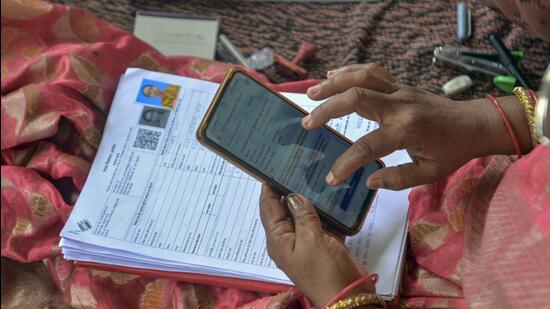
The draft electoral rolls, published after a door-to-door verification drive across the state, show that Odisha’s electorate has declined from 3.33 crore (33.3 million) to 3.13 crore (31.3 million), a reduction of 20.14 lakh (2.014 million) voters.
Chief electoral officer (CEO) of Odisha, R Sant Gopalan said the deletions were largely on account of deaths, migration and duplicate enrolments, while the BJD claimed the exercise left out “around 27 lakh (2.7 million) voters” and demanded a revision of the draft rolls.
According to the CEO, 8.32 lakh (0.832 million) names were removed after the electors were found to be deceased, while 10.07 lakh (1.007 million) voters had either shifted from their registered addresses or could not be traced during the verification exercise.
Another 1.58 lakh (0.158 million) names were deleted after being identified as duplicate entries, while around 14,000 were removed under other categories.
{{/usCountry}}Another 1.58 lakh (0.158 million) names were deleted after being identified as duplicate entries, while around 14,000 were removed under other categories.
{{/usCountry}}The draft electoral roll comprises 3,13,87,034 voters, including around 1.60 crore (16 million) men and 1.53 crore (15.3 million) women.
CEO Gopalan said the draft electoral roll had been shared with all recognised political parties.
Also Read:UP SIR: 28.9 million names deleted from draft roll, deletions highest among big states
Voters whose names do not appear in the list can file claims and objections through their Booth Level Officers until August 4. They can also verify their enrolment on the websites of the CEO, Odisha, and the Election Commission of India (ECI).
Gopalan said all claims and objections would be disposed of by September 2, after which the final electoral rolls would be published on September 6. He added that nearly 1.98 lakh (0.198 million) new voters had been enrolled during the ongoing revision exercise.
BJD vice-president Debi Prasad Mishra alleged that the number of excluded voters was substantially higher than the official estimate.
“When the notification for the SIR was issued on May 14, there were 34 million registered voters. However, the CEO has now released a draft list containing only 33 million voters. This means forms have not been collected from about 6% of the electorate. The gap is not 20 lakh as claimed, but rather 27 lakh,” Mishra said.
He alleged that in 75 assembly constituencies, more than 10,000 voters each had been removed from the rolls and urged the ECI to revise the draft list and simplify the process to ensure that no eligible voter was left out.
Mishra further claimed that in some assembly constituencies, as many as 50,000 electors had been marked under “anomalies”.
“If these anomalies are not properly addressed and the process is not simplified, a large number of eligible voters will be excluded from the electoral rolls,” he said.