The Indian Army is opposed to a unilateral ceasefire in Jammu and Kashmir, given an increase in the number of militant-initiated strikes in the state during the last truce, announced by then prime minister Atal Bihari Vajpayee, between December 2000 and May 2001. The army is worried that something similar could happen in the event of a ceasefire now.
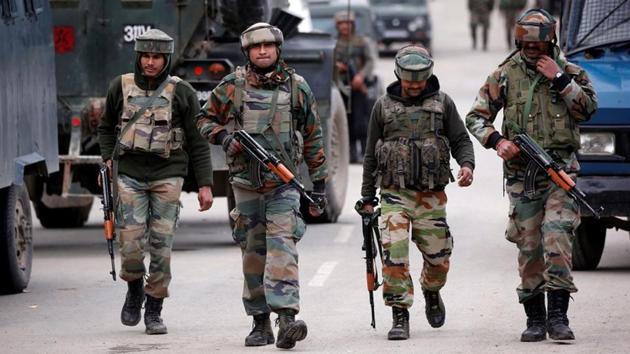
Jammu and Kashmir chief minister Mehbooba Mufti on May 9 urged the Narendra Modi government to take a leaf out of the previous National Democratic Alliance (NDA) government’s book and declare a unilateral ceasefire from the holy month of Ramzan in mid-May to the Amarnath Yatra in August.
The Indian Army and national security planners say that the so-called Non-Initiation of Combat Operations, or NICO, initiative will only work if Pakistan-based terrorist groups active in Kashmir also simultaneously announce a ceasefire. Army officials also add, just to get things straight, that the use of the term ceasefire doesn’t make sense because it isn’t as if Indian and Pakistani armies are fighting a war in Kashmir.
Senior defence ministry officials say that so far nothing has been put down on paper on even the proposal of such a ceasefire. It is all speculation driven by the local politics of the state, they added. Still, a senior army officer said, on condition of anonymity, that the matter will be discussed after the Prime Minister returns from Nepal on the basis of a memorandum or all-party resolution sent by the Mehbooba Mufti regime.
Indian Army data indicates that before NICO was announced by Vajpayee, the total number of terrorist -initiated attacks in 2000 stood at 446. The number increased to 712 during the ceasefire and then went down to 708 (from June 2001 to December 2001), 542 in 2002, and then 450 in 2003. Army brass told Hindustan Times that terrorists used the 2000 NICO to regroup and plan future operations in the Valley. Pakistani Jaish-e-Mohammed terrorists attacked the Indian Parliament on December 13, 2001 and prior to that, Jaish terrorists attacked the J&K Assembly complex in Srinagar on October 1, 2001. India nearly went to war with Pakistan after the 2001 Parliament attack and May 2002 Kaluchak massacre.
{{/usCountry}}Indian Army data indicates that before NICO was announced by Vajpayee, the total number of terrorist -initiated attacks in 2000 stood at 446. The number increased to 712 during the ceasefire and then went down to 708 (from June 2001 to December 2001), 542 in 2002, and then 450 in 2003. Army brass told Hindustan Times that terrorists used the 2000 NICO to regroup and plan future operations in the Valley. Pakistani Jaish-e-Mohammed terrorists attacked the Indian Parliament on December 13, 2001 and prior to that, Jaish terrorists attacked the J&K Assembly complex in Srinagar on October 1, 2001. India nearly went to war with Pakistan after the 2001 Parliament attack and May 2002 Kaluchak massacre.
{{/usCountry}}According to the army , the number of terrorists killed pre-NICO in 2000 was 506; the figure came down to 461 during the ceasefire, climbed to 14,21 in the rest of 2001, touched 1,520 in 2002 and slid to 1,391 in 2003. This, army officers say, reveals that the number of militants in the state went up during NICO, leading to the army and security forces mounting counter insurgency operations against them in the post-NICO phase.
Civilian casualties in the pre-NICO period stood at 278, rose to 391 during the NICO period, climbed further to 415 in the remaining part of 2001, and escalated to 852 in 2002 with the terrorist strike in Kaluchak and other places.
A second army officer said that a unilateral ceasefire at a time when the militants are being neutralized will be counter-productive as Pakistan-based terror groups are in full operational mode to create mayhem in Kashmir.