E-Paper



Only Dalai Lama can decide on his reincarnation: CTA head Penpa Tsering
Penpa Tsering said in an interview that China’s efforts to play a decisive role in the selection of the next Dalai Lama amounted to “politicisation of the whole reincarnation issue”.

 Prefer HTon Google


The Dalai Lama alone can decide the matter of his reincarnation and the Chinese government has no say in the matter, the head of the Central Tibetan Administration (CTA), Penpa Tsering, has said against the backdrop of Beijing’s assertions that it will choose the next Tibetan spiritual leader.
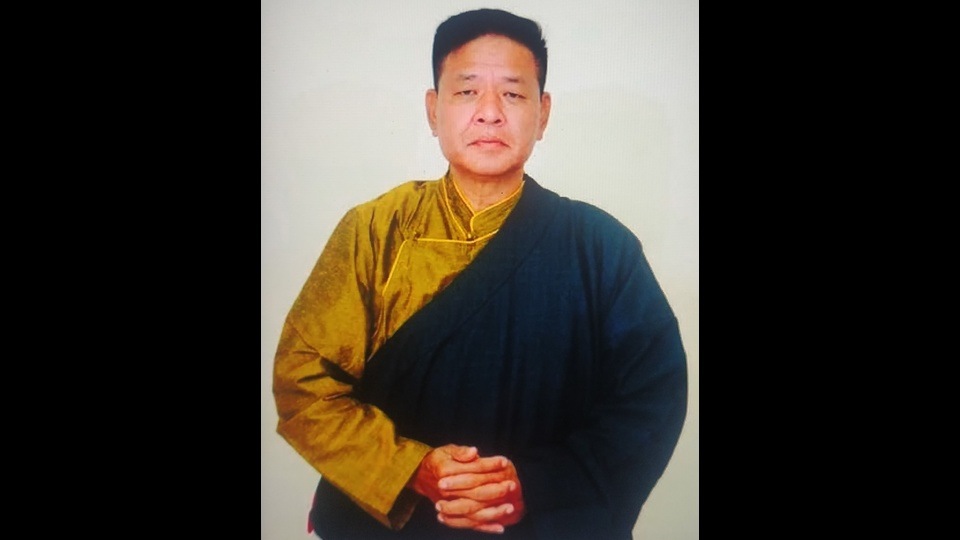
Tsering said in an interview that China’s efforts to play a decisive role in the selection of the next Dalai Lama amounted to “politicisation of the whole reincarnation issue”. The Dalai Lama’s reincarnation is a spiritual issue whereas China’s communist regime doesn’t even believe in religion, he said.
The current impasse in the Tibetan parliament-in-exile – where 22 of the 45 members have not taken oath in line with the official charter – provides an opportunity for “the Chinese government to create trouble” within the Tibetan community and affect the image of the Tibetan movement, Tsering said.
Tsering, who was elected the Sikyong or head of the executive branch of the CTA in May, said if the Chinese government is serious about the Dalai Lama’s reincarnation, it “should be giving more attention to the living 14th Dalai Lama than the future 15th Dalai Lama”. He said, “And as a communist regime which does not believe in religion or life after death, this is purely a spiritual matter.”
He added, “When you talk about reincarnation, it’s the person who’s going to be reincarnated who decides where or how he or she should be born...We are talking about [the Dalai Lama’s] reincarnation, so it’s completely up to his holiness to decide where he will be born, not the Chinese government.”
Amid growing concerns about the health of the current Dalai Lama – he turned 86 in July – Tsering said he personally believed the CTA shouldn’t have any role in the issue of reincarnation. “This is a purely spiritual and a religious process. So it’s up to the religious leader, particularly his holiness the Dalai Lama, to decide, not the administration, but once his reincarnation is recognised, then the role of the CTA comes into being,” he said.
With 22 of the 45 lawmakers of the Tibetan parliament-in-exile not having taken oath in line with the Tibetan Charter because of political differences, Tsering said the impasse had created “a lot of space for the Chinese government to create trouble within the [Tibetan] community, and it also affects the image of the Tibetan movement”.
He added, “But whenever you have a problem, there are also opportunities. This creates more awareness within the public about the laws and the system and all that. So I believe now people are more aware of what is happening within the community and I think the elected leaders should be about of where it’s heading to.”
Tsering said the elected members would have to play a key role in ending the impasse as there was no clarity on how to resolve the matter, “other than the role of the election commission”, since the Tibetan Charter doesn’t specify “as to what happens if some members do not take oath of office as per the laws”.
He also said the devotees of the Karmapa Rinponce, Ugyen Trinley Dorje, are very concerned about the issue of his return to India. “But at the same time, there has to be mutual understanding between the government of India and Karmapa Rinpoche himself. We are talking about how to smoothen things out and look at ways where there could be a mutual consensus on how he should return and how he will be treated in India,” he added.
The Karmapa Rinpoche, who fled from Tibet to India in January 2000, left the country in May 2017 and travelled to Europe and then the US using his Identity Certificate, a document issued by the Indian government to stateless citizens from the Tibetan Autonomous Region of China. Since then, Dorje has cited various reasons for not returning to India.
Tsering also spoke about the CTA’s plans for restructuring in the years to come in response to social and demographic changes in the Tibetan community in India. This will focus on “the integration of settlements and integration of schools, because we are scattered in more than 45 different communities” across India.
“So in the long run, when more people move out of the settlements, then it becomes expedient on us to integrate the settlements into more compact, larger communities so that it becomes administratively more manageable for us,” he said, adding this will also enable the Tibetan community to preserve its language, culture, religion and way of life.