
 E-Paper



'Other steps could happen': S Jaishankar on thaw in India-China relationship
S Jaishankar said that the Indian side would have to see what is the direction "we go" after the disengagement.

 Prefer HTon Google


External affairs minister S Jaishankar said on Sunday that India and China's recent disengagement in eastern Ladakh may open up "possibilities" of "other steps".
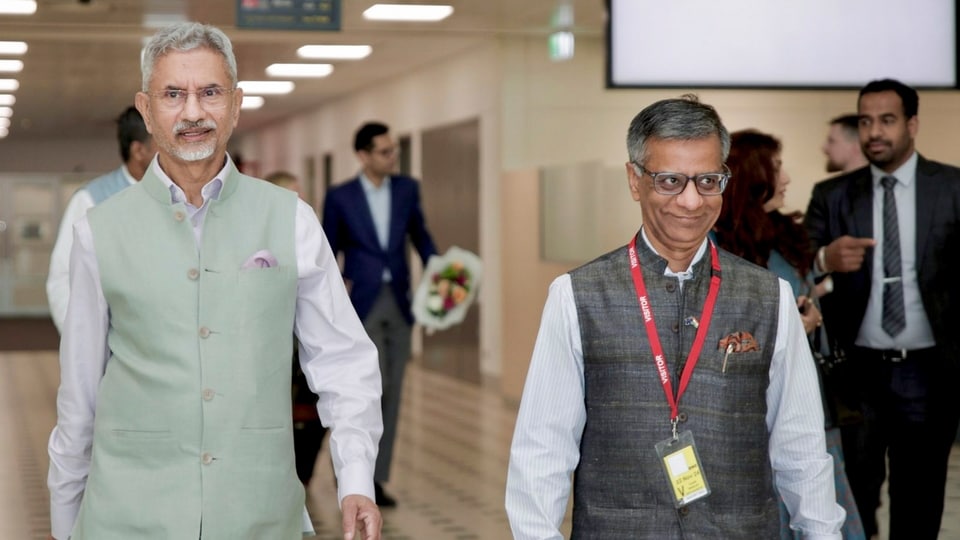
Addressing the Indian diaspora in Australia, S Jaishankar said India and China have made some progress in bilateral relations.
"In terms of India and China, we have made some progress. You know, our relations were very, very disturbed for reasons all of you know. We have made some progress in what we call disengagement," he said.
He said that the Indian side would have to see what is the direction "we go" after the disengagement.
"There are very large numbers of Chinese troops deployed along the Line of Actual Control who were not there before 2020 and we, in turn, have counter-deployed. There are other aspects of the relationship which also affected during this period. So clearly, we have to see after the disengagement, what is the direction we go. But we do think the disengagement is a welcome step. It opens up the possibility that you know, other steps could happen," S Jaishankar elaborated on the disengagement exercise.
Also read: 'Will behave accordingly...': S Jaishankar rules out India-Pakistan talks at SCO
The remarks came days after the two sides completed the disengagement exercise at two friction points in Demchok and Depsang plains in eastern Ladakh.
After verification, the Indian Army resumed patrolling at the two friction points.
Also read: S Jaishankar's veiled ‘three evils’ swipe at Pakistan during SCO Summit
India and China had entered into a standoff because of the latter's aggressive activities along the Line of Actual Control. New Delhi maintains that its relations with China will normalise only after the situation at the de-facto border returns to what it was before May 2020.
After the Ladakh agreement, Prime Minister Narendra Modi met with Chinese President Xi Jinping in Russia.
Also read: ‘India positioning itself as Vishwamitra’: Jaishankar on multipolar world
S Jaishankar said that the expectation after Prime Minister Narendra Modi met Chinese President Xi Jinping was that “both the national security advisor and myself, we would meet our counterparts.”
S Jaishankar is on his five-day visit to Australia – from November 3 to November 7.
With inputs from PTI, ANI


