A petition has been filed in the Supreme Court questioning the authority by which former Prime Minister Manmohan Singh constituted the Justice Rajender Sachar Committee in March 2005 to report on the social, educational and economic status of Muslim community in the country.
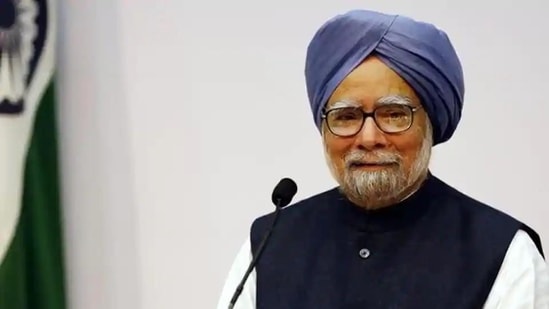
The petition filed by five individuals led by Neeraj Shanker Saxena claiming to be followers of Sanatan Vedic Dharm said, “The notification dated March 9, 2005 issued from the office of Prime Minister nowhere mentions that same was being issued after any Cabinet decision. Thus, it is clear that the then Prime Minister on his own whims issued the direction appointing the Committee to enquire into the social, economic and educational status of Muslim community whereas by virtue of Articles 14 and 15 no religious community can be treated separately.”
The committee headed by former Delhi High Court Chief Justice Rajender Sachar submitted its report to the Government of India on November 17, 2006 suggesting a host of recommendations to improve the education, employment and economic standards of Muslims keeping in mind their low representation in government jobs.
“The appointment of Sachar Committee was made in violation of Article 77 of the Constitution of India and is unconstitutional and illegal,” said the petition filed through advocate Vishnu Shankar Jain. It also sought an order to restrain the Government from acting upon the report. “The power to appoint a commission to investigate into the conditions of socially and educationally backward classes vests with the President of India under Article 340 of the Constitution of India,” it added.
{{/usCountry}}“The appointment of Sachar Committee was made in violation of Article 77 of the Constitution of India and is unconstitutional and illegal,” said the petition filed through advocate Vishnu Shankar Jain. It also sought an order to restrain the Government from acting upon the report. “The power to appoint a commission to investigate into the conditions of socially and educationally backward classes vests with the President of India under Article 340 of the Constitution of India,” it added.
{{/usCountry}}A separate petition filed by the same petitioners challenging the constitutional validity of National Commission for Minorities Act,1992 and special schemes launched by Centre is pending consideration before the top court. In that matter, the Centre filed an affidavit stating that special schemes were decided in pursuance of Sachar Committee report. The petitioners then decided to challenge the validity of the Sachar Committee report after a gap of almost 15 years.
The plea argued that Muslims as a religious community cannot be treated as a special class for benefits available to backward classes as this violates fundamental rights of similarly placed Hindus whose conditions were not gone into by the Sachar Committee. The petitioners claiming to be small businessmen repeated some misconceptions about Muslims. “The Committee has shown undue favour to Muslim community. It is matter of fact that Muslim community does not believe in family planning, and they are not very interested to impart education to their children in schools whereas all these aspects go to the root of the matter but the same have not been considered .”
Tracing the constitutional policy on this subject, the petition pointed out the Constituent Assembly in its meeting held on October 14, 1949 discussed a proposal on the status of religious communities but accepted the amendment moved by K.M Munshi for appointment of Special Officer by the President only for Schedule Castes and Schedule Tribes to investigate all matters relating to safeguards provided to them in the Constitution.
“A proposal which was considered and rejected by the Constituent Assembly cannot be enforced by indirect extra constitutional methods by issuing an order by the PMO,” the petition said. Again, in May 1949, Sardar Vallabh Bhai Patel, the President of the Advisory Committee on Minorities and Fundamental Rights informed that “recommendations relating to providing reservation to minorities would be inappropriate and lead to certain degree of separatism and against the concept of secular democratic State”.
The petition also claimed that the economic conditions of Muslims had changed for the better -- and pointed to some of Bollywood’s top actors, and senior government officials and politicians as evidence of this. “Therefore, no special provision can be made in favour of Muslim community as the same being based on religion is clearly forbidden by Article 15 (1) of the Constitution of India.” Article 15 promises that no citizen shall be discriminated on grounds of religion, race, caste, sex or place of birth.