Prime Minister Narendra Modi will on Saturday inaugurate Bharat Sanchar Nigam Limited’s (BSNL) Swadeshi 4G network, developed entirely in India, which the government claims can seamlessly integrate with 5G in the future. PM Modi will also commission over 97,500 mobile 4G towers spread across the country, built at a cost of ₹37,000 crore.
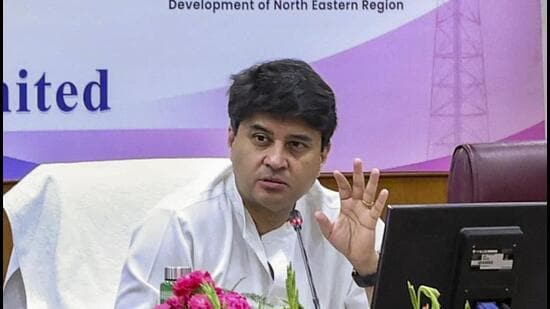
At a press conference on Friday, communications minister Jyotiraditya Scindia said that the PM will be making the announcement from Jharsuguda in Odisha. He added that the initiative reinforces India’s telecom self-reliance at a time when only four other countries have their own 4G technology stack, namely Sweden, South Korea, China and Finland.
“India is now the fifth country and the sixth company [C-DOT] to produce telecom equipment in the history of the world,” said Scindia. The network uses Radio Access Network (RAN) developed by Tejas Network, a core network from C-DOT (Centre For Development Of Telematics), and is integrated by Tata Consultancy Services, with being fully upgradable to 5G.
Alongside the 4G stack, the government will also launch the Digital Bharat Nidhi-backed 4G saturation project. Over 4,723 towers have been funded by private operators Reliance Jio, and Bharti Airtel, and another 14,180 towers from BSNL’s indigenous 4G stack, which together cover 26,700 remote and border villages, reaching an estimated two million new users. Scindia added that “no part of India will be left untouched.”
“In 2020, he [PM Modi] took a very bold decision, where tenders were put out for 4G equipment, and instead of purchasing foreign equipment, we would produce our own 4G stack in India. His often-repeated goal - ‘har chunauti mein avsar dhoondna hoga’ (we must find opportunity in every challenge) was applied to the telecom sector as well. And over a record 22 months, a country that was historically dependent on foreign technology innovated and engineered its own domestic 4G stack,” said Scindia.
{{/usCountry}}“In 2020, he [PM Modi] took a very bold decision, where tenders were put out for 4G equipment, and instead of purchasing foreign equipment, we would produce our own 4G stack in India. His often-repeated goal - ‘har chunauti mein avsar dhoondna hoga’ (we must find opportunity in every challenge) was applied to the telecom sector as well. And over a record 22 months, a country that was historically dependent on foreign technology innovated and engineered its own domestic 4G stack,” said Scindia.
{{/usCountry}}After three years of development and large-scale trials, BSNL began rolling out the first towers in Punjab in 2023. By now, the network is carrying traffic for about 22 million subscribers and 4 petabytes of data every single day, claims the government. Officials present at the Friday event also noted that 18,903 of the new 4G sites are solar-powered, making it the largest deployment of green telecom towers in India. The network has been built to allow a swift upgrade to 5G and eventually 6G.
“India was always known for things like yoga, Bollywood, and cricket… And telecom gets added to that list today,” said telecom secretary Neeraj Mittal. “We are the second largest market. About 770 million 5G users are expected [in India] by 2028. We are roughly about 300, 400 [million] today. We consume 27 GB of data per month per user…India is really positioned to shape the global telecom standards with indigenous solutions as we move forward towards 6G.”
For BSNL, which is celebrating its 25th anniversary on October 1, the project is being described as a turnaround moment after years of losses and outdated infrastructure. BSNL has shown back-to-back quarterly profits of ₹262 crore and ₹280 crore, with the subscriber numbers rising from 8.7 crore to 9 crore, and 4G users jumping from 0.8 crore to 2 crore, said the government.
“India has arrived. She has arrived in the arena of global leadership in telecom, under the leadership of PM Narendra modi, just as she has in the arena of space with Chandrayaan 2, Gaganyaan, Aditya L1,” said minister Scindia at the curtain raiser event on Friday.