E-Paper



Poll rhetoric casts shadows on Delhi’s Bengali migrants
In Delhi's Nizamuddin Basti, residents face police scrutiny over immigration status, causing fear and uncertainty among Bengali-speaking families.


Afroza Khatun’s makeshift home in south Delhi’s Nizamuddin Basti is a patchwork of desperation and ingenuity. A sheet of corrugated tin separates an already cramped room into two pigeonholes where neither sunlight nor the haunting qawwalis wafting from the dargah next door are permitted to enter. The roof is a precarious arrangement of tin, tarpaulin, and occasional concrete slab, often sagging under the weight of monsoon water or accumulated debris and waste. Outside, electrical wires hug buildings like desperate lifelines crisscrossing structures. Khatun doesn’t own any curtains but a line of faded fabrics creates an illusion of a canopy. A domestic worker, she has been saving up to buy a cotton curtain to hang on what she calls her front door. Some day.
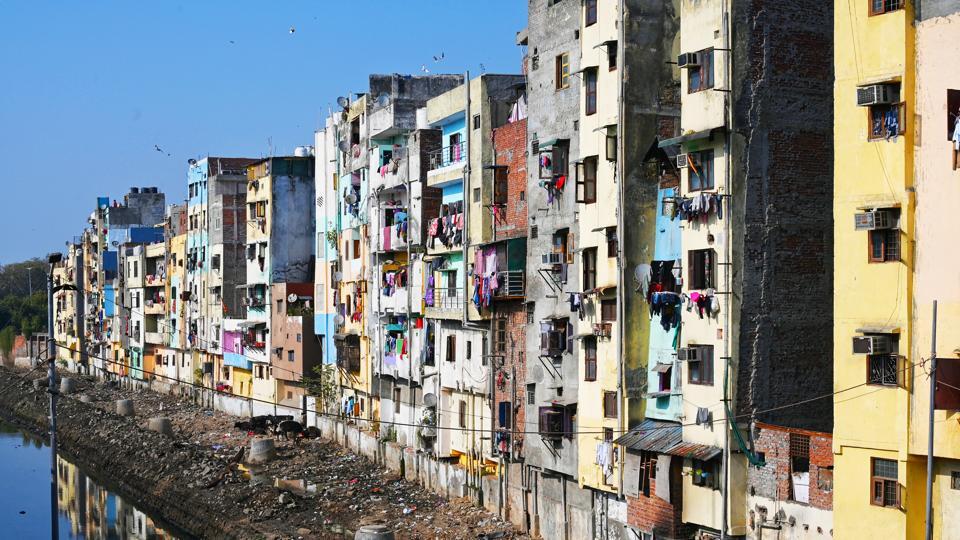
This winter, though, hopes of a more dignified life evaporated as Khatun saw with trepidation the police march through the basti with authorities in tow, demanding to see paperwork from many of her neighbours and taking away people at the slightest hint of suspicion. Her two children were puzzled by the sudden buzz of activity but Khatun, originally a resident of West Bengal’s Malda district, was not surprised. “Amra Bangali toh (We’re Bengalis, no). Someone must have called us Bangladeshi again,” she said, resigned. Khatun has now stitched inner pockets in her blouse, and in her children’s clothes where they carry their Aadhaar cards all the time. Familiar with the biases that come from the confluence of her appearance, faith and tongue, Khatun is not complaining. “We have our cards in one place. We are lucky,” she said.
Some others are not as lucky. Kashim Ali, a ragpicker, said he was picked up by police from the street outside the basti around midnight on January 15 and taken to the Tughlaq Road police station. “I didn’t know what was happening. I was kept in jail for over 10 hours. Later, my wife found me and we gave them proof that we are not illegal immigrants. We just lived in Bengal,” he said. Now, his wife and two children barely step out of the house. “It was scary since I didn’t know what was happening…Now, I carry my Aadhaar card in my pocket,” he said.
Stories such as these are scattered across poorer neighbourhoods in the Capital, exacerbated since the police announced a special drive to remove undocumented Bangladeshi immigrants from the city on the orders of the lieutenant governor. Despite its minor scale – police estimate fewer than 1,500 undocumented Bangladeshis live in a city of 25 million and have arrested around 80 after a two-month operation – the issue has cast an outsized shadow on the Delhi assembly elections. In a sharply divided polity, this is an issue with rare multi-party agreement that has seen leaders vying to outdo each other in rhetoric and bombast on the campaign trail. HT visited two neighbourhoods where the maximum raids have happened to document its fallout.
2
In the Rangpuri Pahari neighbourhood near Vasant Kunj, narrow lanes wind like arteries through a maze of misshapen buildings. Here, police say more than a dozen Bangladeshi nationals were caught from the area and neighbouring Bangali Colony since December on the basis of forged Aadhaar and voter identity cards.
Shubh Bagchi, who runs a clinic in the area, said four policemen, on January 14 and 15,were walking up the street checking the dozen-or-so meat shops, and entered his clinic. “Doctor…chalo dikhao apna card (show your card). You have an Aadhaar? Need a Voter ID too – that’s what they told me,” he said.
Bagchi said he told the policemen he didn’t have any ID on him at the moment and was threatened with arrest. He called his mother who frantically searched the house as Bagchi was being taken to the Vasant Kunj police station. Luckily, the Aadhar card was found and Bagchi was released within the hour. “I have run this clinic for four years. Everyone knows me here. But I was humiliated because I speak Bengali,” he said.
Krishna, who goes by a single name, runs a spice shop in the area. He said the raids were “frequent” in December and continued till the middle of January. “Many people had to flee. I know a neighbour who was living on rent. He has a six-month-old baby girl. So, he left with his family for Faridabad,” he said.
Simul Adhikari, a student from Assam, said he was not “screened” but many of his neighbours were. “They all left since they thought the police would come again. Police asked for their Aadhar card, electricity bills, house rent receipts and voter ID. Many didn’t have any of these and were asked to make calls back to their hometowns and fetch some ID. One of my neighbours told me that the local police in his hometown were called to check on his family…He left after police released him,” said Adhikari.
3
The undocumented Bangladeshi is an old bogie in Indian politics, one that first reared its head in Assam in the turbulent 1970s and 1980s when violent agitations broke out against illegal immigrants. Over the past decade, almost every political party has raised the issue when elections near, often using the much-maligned Rohingya refugees as a trope; this sustained rhetoric has slowly transformed what is largely a question of economic and distress migration to a source of demographic anxiety. In Delhi, for example, both principal parties – the Aam Aadmi Party and the Bharatiya Janata Party – have repeatedly blamed each other for allowing “illegal Bangladeshis” to settle in the Capital and have submitted lists of neighbourhoods where they allegedly have to the Election Commission.
At Nizamuddin Basti, which figured on both party’s lists, the raids started in December, when hundreds of Bengali-speaking residents, tenants, shopkeepers and workers were screened. Mohammad Naushad, who works in a paint factory and also drives a garbage truck, was one . “My friends and cousins were picked up randomly from the streets or their homes and their IDs were checked. It took us time to gather all our IDs. Now, we roam with Aadhaar cards wherever we go…Police usually ask for hometown details, IDs and electricity bills,” he said.
Local residents said that police would drop in till 8-9 pm for raids. Sufeda Khatoon runs a tyre puncture stall with her husband Naushad. “We also do rag-picking work. We still do not have a house and are trying to help our family. When the police came to us, I was scared. We are from Uttar Pradesh and have been here for over 10 years but I didn’t have an Aadhar card. Luckily, my brother has a voter ID,” she said.
4
The drive began after an announcement from L-G VK Saxena on December 10, when he issued a directive to the Delhi Police asking them to conduct a special two-month drive to identify undocumented Bangladeshi immigrants and take action against them. The L-G’s office said the decision was triggered by a representation made by a delegation of Muslim clerics and leaders from Hazrat Nizamuddin who expressed “deep concern” over the attack on Hindus and other minority communities in Bangladesh.
According to the L-G office, the delegation sought that “illegal Bangladeshi infiltrators” should neither be given houses on rent nor employment by any establishment; their children not be given admission in any school; “infiltrators” be removed from roads, footpaths, parks and other government land “forcefully encroached” upon; and identity documents such as Aadhaar Card, Voter IDs “acquired illegally” by them be cancelled.
Since then, police say they have arrested around 80 people. “The arrests are made following inputs from locals and informers. The police screen people, check documents and only make arrests after due procedure. Most of the people we arrested had clearly forged voter IDs which looked fake. They were first taken to the police station. After due legal proceedings, they were shifted to Sewa Sadan in Delhi and then to FRRO office. From there, the person(s) are deported,” said Surendra Choudhary, deputy commissioner of police (southwest).
DCP (central) Harsha Vardhan said 21 persons were arrested with expired or forged Indian passports and Aadhaar cards. “Most of them had overstayed in India and had expired IDs...18 of the total have been deported. (For instance) We were told about three persons residing in Paharganj on rent. The accused earlier tried showing their fake IDs. They had both Indian and Bangaldesh passport. One of them was here for over 20 years with a forged Indian passport. The accused usually change names and make IDs to protect themselves,” he said.
The total number of such undocumented people, police say, is around 1,500. “Based on inputs from RWAs, locals, informers and agents (who make fake IDs), we identified over 1,500 illegal Bangladeshi nationals residing in northeast, southeast, central and South Delhi,” said a senior police officer who asked not to be named.
The first inputs often come from local residents and office-bearers of the neighbouring RWA. And to be sure, even those who were harassed mentioned that some people with forged documents were found. Rangpuri resident Rishi Pal said that in December, the police picked up four to five families – all living on rent. “Since most of the Bangladeshi men are ragpickers and the women work as domestic workers, they return home from 3-6 pm. That’s when the police strike. They also harassed many Assamese people who didn’t have an Aadhaar card.”
Ashwini Kumar, another resident, said his sister’s friend was picked up because she used a forged Aadhaar card. And HT found a ragpicker at Bangali Colony who refused to give his name but admitted that he was from Bangladesh. “There are not many of us left here. …I just come here to do my work and leave. The government should understand that we came here for a reason. Where do we go?” he asked.
5
When the police drive was launched, it quickly became one of the planks of the Delhi assembly elections campaign. The AAP blamed the BJP for allowing the settlements and chief minister Atishi wrote to Union home minister Amit Shah, accusing the Centre of having illegally settled “Rohingyas” and “Bangladeshis”. The BJP has hit back, accusing the AAP of manipulating voter rolls by adding Bangladeshis. In rallies, UP chief minister Yogi Adityanath has personally blamed AAP chief Arvind Kejriwal for “settling” Bangladeshi and Rohingya immigrants. No side has offered any proof.
In the run-up to the February 5 polls, BJP MP Sambit Patra cited a controversial study to again hit out at AAP. BJP spokesperson Praveen Shankar Kapoor said the party stood with Patra’s statement, which said “illegal immigrants, Bangladeshis, and Rohingyas” were thriving under “the patronage of AAP and Congress with criminal connections”.
The AAP blames the BJP, pointing out that law-and-order in the city is under the L-G. Repeated calls and text messages to the AAP did not receive a response till the time of going to print.
The Congress said the drive was a way to target minorities. “They harass locals and want to impose Aadhaar cards on everyone without realising that many don’t have it. Thousands of immigrants have been living here for years. Are proper checks being made ? There’s no data…” said a Congress spokesperson.
Despite the high-decibel rhetoric, in the battle for the seats of Bijwasan and Jangpura – where Rangpuri and Nizamuddin fall, respectively – there is little echo of the Bangladeshi bogey. In Bijwasan, the AAP has dropped its incumbent lawmaker who has joined the BJP and given the ticket to Surender Bhardwaj. The BJP has fielded former minister and AAP turncoat Kailash Gehlot. And the Congress has fielded former AAP legislator Devinder Sehrawat. Conversation has focussed on questions of civic amenities, jobs, and competitive welfare promises in a low-income seat dominated by the Jat community. Similarly, in Jangpura, AAP heavyweight Manish Sisodia dominates the political arena, fighting for the seat against former Jangpura MLA Tarvinder Singh from the BJP. In this middle-class neighbourhood, the balance of power is held by slum clusters and working class populations who are talking about sops, jobs and the condition of roads.
Afroza Khatun is relieved that despite the bustle in the closing hours of campaigning, no one touched upon the Bangladeshi issue. But she fears the damage is done. “Will they now call my children Bangladeshi? Will I lose my cleaning job? Ami Indian kintu bhoy lage (I am Indian but scared),” she said. She is now focussed on getting as many identification papers together, putting money together to pay off touts. Her dream of a curtain? That’ll have to wait.
 ABOUT THE AUTHORJignasa Sinha
Jignasa Sinha is a Special Correspondent at Hindustan Times in New Delhi. With more than six years of reporting experience, she covers crime and policing in the national capital. Her beats also include Delhi prisons, the Delhi Fire Services and Delhi courts, while she regularly reports on gender, labour and social justice. Over the course of her career, Jignasa has reported on major criminal investigations, international crime syndicates, high-profile cyber fraud cases, law-and-order developments, protests, disasters and public institutions. Her reporting combines breaking news with in-depth, long form, human interest stories that examine the human impact of public policy, policing and the criminal justice system. In addition to reporting for the newspaper, she contributes to the Hindustan Times website and app, and plays an active role in coordinating on-ground coverage of major developments and breaking news across Delhi. Before joining Hindustan Times, Jignasa worked at The Indian Express newspaper in New Delhi, where she spent five years covering crime, Delhi airport, courts and health. She began her journalism career as an intern at an AI magazine in Bengaluru while pursuing her postgraduate diploma in multimedia journalism at the Indian Institute of Journalism and New Media.Read More
- ABOUT THE AUTHORDhrubo Jyoti
Dhrubo works as an edit resource and writes at the intersection of caste, gender, sexuality and politics. Formerly trained in Physics, abandoned a study of the stars for the glitter of journalism. Fish out of digital water.Read More