E-Paper



Postal ballot dispute: Madras HC restrains Tiruppattur MLA-elect from floor test
Periyakaruppan moved the high court last week claiming that the election officials wrongly sent a postal ballot to another Tiruppattur constituency

 Prefer HTon Google


The Madras High Court, in an interim order on Tuesday, restrained Tamilaga Vettri Kazhagam (TVK) MLA elect Seenivasa Sethupathi, who won from the Tiruppattur constituency in Tamil Nadu this assembly elections, from participating in the State legislative Assembly and the floor test and confidence motion in the Assembly on May 13.
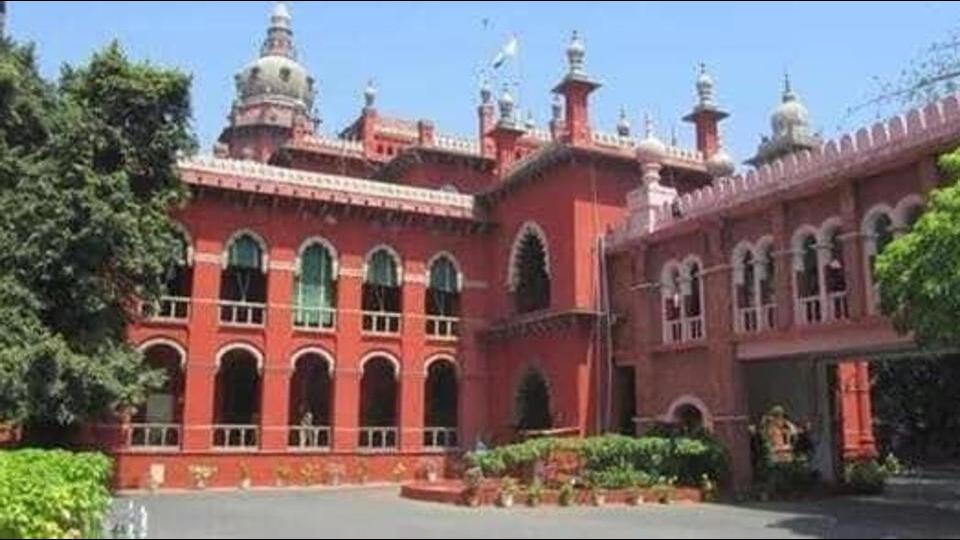
A bench of Justices L Victoria Gowri and N Senthil Kumar passed the interim order restraining Sethupathi following a dispute over a postal ballot from the Tiruppattur Assembly constituency.
It also directed preservation of all counting records, postal ballots, rejected ballot covers, EVM records, and videographic footage connected to the elections.
Within hours of the order though, Sethupathi moved the Supreme Court challenging the High Court’s direction.
His plea was mentioned for urgent hearing before the Chief Justice of India Surya Kant by Senior Advocate Abhishek Manu Singhvi and the Apex Court agreed to list it for hearing on Wednesday, May 13.
During the previous hearing before the Madras High Court on May 11, the Election Commission of India (ECI) had argued that the poll body had no jurisdiction to act on Dravida Munnetra Kazhagam (DMK) leader KR Periyakaruppan’s complaint over a disputed postal ballot after the declaration of results in the Tiruppattur assembly constituency election. It had also said that the DMK candidate should have filed an election petition instead of a writ.
The court however, said the allegations made by Periyakaruppan pertained to an administrative failure by election authorities to return a wrongly sent postal ballot to the correct constituency before counting ended. Since election law provides no immediate mechanism to correct such an error, the case fell “within a rare and exceptional constitutional situation warranting limited judicial intervention,” it said.
The court held that therefore, the writ petition was maintainable not to bypass the bar on courts interfering in elections under Article 329(b) of the Constitution, but to ensure “preservation of the disputed ballot, video evidence, and other electoral records so that the petitioner’s eventual election challenge does not become meaningless because crucial evidence is lost or destroyed.”
Periyakuppan had moved the High Court last week claiming that the election officials allegedly mishandled one postal ballot in the Tiruppattur assembly seat, which he lost to Sethupathi by a single vote.
He claimed that a postal ballot meant for the Tiruppattur constituency in Sivagangai district mistakenly went to another Tiruppattur constituency in Tirupattur district because both constituencies share the same name. According to him, officials in the other constituency rejected the ballot instead of forwarding it to the correct constituency for counting.
The DMK candidate’s counsel, senior advocate NR Elango argued that if the ballot was valid and counted in his favour, the election result would end in a tie.
The ECI had opposed the petition and told the Court that Periyakaruppan had not produced any evidence to establish his claim. It also said that ECI ceased to have any role after the declaration of results.
Senior counsel G Rajagopalan, who appeared for ECI, also told the Court that Periyakaruppan had produced no evidence to substantiate the allegation that election officials had sent a postal ballot to the wrong Tiruppattur constituency.
He argued that Periyakaruppan’s claim rested solely on the version of an election agent and that the DMK candidate had not produced any evidence to support his allegation.
ECI also disputed the suggestion that the error in postal ballots had in fact occurred at all. Calling it “a matter of evidence,”
The High Court however, said in its order that there existed a “strong prima facie case” for issuing interim directions restraining Sethupathy.
It also clarified that Tuesday’s directions must not be mistaken as the Court having ordered a recounting of votes for the seat.
“The floor test is not an ordinary legislative sitting. Participation in a floor test may determine the survival or fall of a Government. If the sixth respondent (Sethupathy) participates in such proceedings and his vote becomes decisive, the consequence may travel far beyond the constituency and affect the constitutional governance of the State,” the High Court said.
The Court also criticised the election commission authorities for the “disturbing lapse” in handling a postal ballot that allegedly belonged to another constituency. It said the officials failed in their constitutional duty by “mechanically rejecting the ballot instead of taking prompt corrective steps to send it to the competent returning officer.”