
 E-Paper



Probe team submits preliminary report into Air India crash that killed 260: Report
Air India plane crash: It is still not known what conclusion the investigators have arrived upon into the crash that resulted in the death of 260 people.

 Prefer HTon Google


The team investigation the Ahmedabad Air India plane crash has submitted its preliminary report to the civil aviation ministry, news agency ANI reported citing sources. It is still not known what conclusion the investigators from Aircraft Accident Investigation Bureau have arrived upon into the crash that resulted in the death of 260 people.
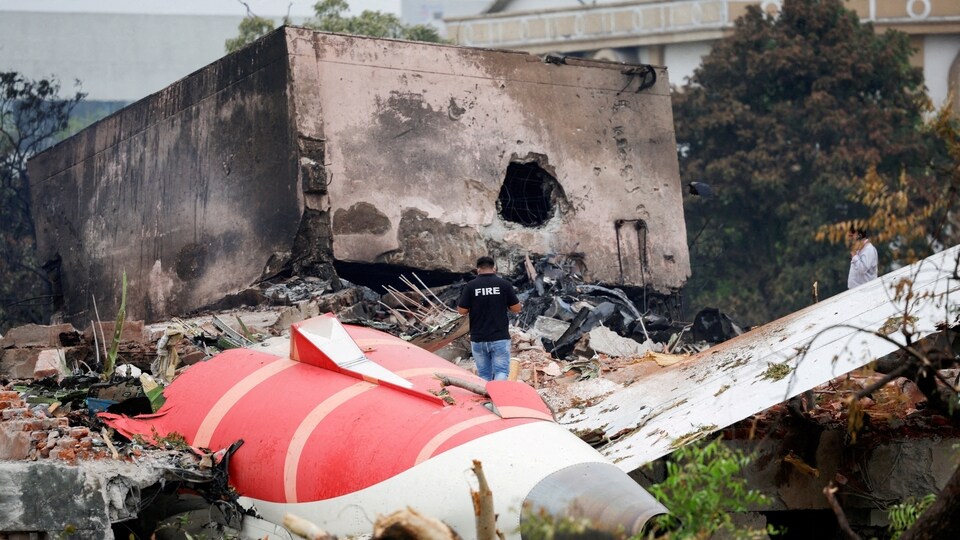
A London-bound Air India flight crashed into a hostel complex in the Meghaninagar area moments after taking off from Sardar Vallabhbhai Patel International Airport in Ahmedabad on June 12, killing 241 on board and several others on the ground. One passenger miraculously survived.
According to the Ministry of Civil Aviation, the Crash Protection Module (CPM) from the front black box was safely recovered, and on June 25, 2025, the memory module was successfully accessed and its data downloaded at the AAIB Lab. Sources told ANI that a duplicate black box—known as a “golden chassis”—was used to verify the successful recovery of the data. One black box was found on the rooftop of a building at the crash site on June 13, and the second was retrieved from the wreckage on June 16.
The investigation is being led by AAIB officials and includes technical experts from the Indian Air Force, Hindustan Aeronautics Limited (HAL), and the US National Transportation Safety Board (NTSB), which represents the country where the aircraft was designed and manufactured.
The probe is being overseen by the Director General of AAIB. The investigation team also includes an aviation medicine specialist and an Air Traffic Control officer. Sources confirmed that the NTSB team is currently based in Delhi and working closely with Indian authorities at the AAIB Lab. Representatives from Boeing and GE are also in the capital to support the technical analysis.
Previously, black boxes from Indian aircraft accidents were typically sent abroad for decoding, to facilities in countries such as the UK, USA, France, Italy, Canada, and Russia. India lacked the infrastructure to analyze black box data from major crashes domestically. However, this has changed with the establishment of a fully equipped AAIB Lab in Delhi, now capable of decoding both Cockpit Voice Recorders (CVR) and Flight Data Recorders (FDR) within the country.
In earlier incidents, black box data was mostly analyzed overseas. For example:
- In the 1996 Charkhi Dadri crash, decoding was done in Moscow and the UK.
- In the 2010 Mangalore crash, the recorders were processed by the NTSB in the US.
- In the 2015 Delhi crash, decoding was handled by Canada’s Transportation Safety Board.
- In the 2020 Kozhikode crash, while the CVR and FDR were downloaded in India at the DGCA’s facility, data processing was assisted by the NTSB.


