The Economic Survey has struck a realistic note while listing the challenges involved in India becoming a developed country by 2047, a stated objective of the current government, even as it acknowledges the progress made over the past decade.
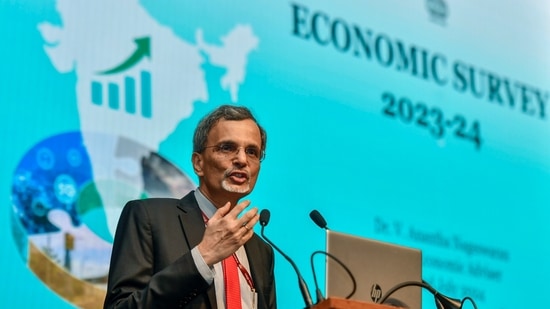
In chapter five, which talks about medium term outlook on the Indian economy, the survey is unambiguous about India having to navigate the most critical part in its economic transformation trajectory at a time when global conditions are anything but conducive. It also highlights the internal challenges -- from a skills gap to the need to make agriculture competitive and strengthen small enterprises.
Budget 2024 Live Updates: Nirmala Sitharaman to present Modi 3.0's first Budget
The period marked till 2047 will be marked by “significant growth limiting impact” of “increasing geoeconomic fragmentation” in an “environment of global trust deficit” and “limited policy space” for countries, it says. India will have to make sure that it does all it can to generate productive employment before its working age population peaks in 2044. This will require correcting the skill-education mismatch which has created a situation where almost half of India’s youth is deemed unemployable. To be sure, education is not the only challenge when it comes to ensuring that India’s demographic dividend is exploited fully. The survey flags the growing challenge of adult and child obesity in India; the rise in latter, it says is among the steepest in the world, and argues that for India to “reap the gains of its demographic dividend, it is critical that its population’s health parameters transition towards a balanced diet”.
India’s economic rise, the survey argues will not come from big ticket manufacturing projects alone. It will have to pay more attention to growth and income generation potential of the agriculture sector as well as creating a robust and dynamic MSME sector.
{{/usCountry}}India’s economic rise, the survey argues will not come from big ticket manufacturing projects alone. It will have to pay more attention to growth and income generation potential of the agriculture sector as well as creating a robust and dynamic MSME sector.
{{/usCountry}}Also Read | High-value produce key to bolstering farm incomes: Economic Survey
The former will require not just factor market reforms but also giving up the urge to worsen the terms of trade of agriculture in the name of controlling inflation. In what will amount to setting the cat among the (monetary policy) pigeons, the survey has also called for revisiting India’s inflation targeting framework. “It is worth exploring whether India’s inflation targeting framework should target the inflation rate excluding food. Hardships caused by higher food prices for poor and low-income consumers can be handled through direct benefit transfers or coupons for specified purchases valid for appropriate durations”, it says.
In case of the MSME sector, the survey makes a case for deregulation and sector-wise targeted and tailored interventions. To be sure, India’s growth challenge is not just about fixing the problems in India’s small farms and enterprises. The survey also talks about the need for deepening the corporate bond market to provide a multitude of financing options beyond banking to finance India’s investment needs. Similarly, the survey also calls for a strategic reevaluation of India’s engagement with China. “Striking the right balance between the trilemma of trade with China, investment by China, and India’s territorial and non-territorial integrity and security” is key to ensuring a robust growth for Indian economy, the survey argues.
Also Read | ‘AI could slow BPO sector growth’: Chief Economic Advisor V Anantha Nageswaran
To be sure, the survey does acknowledge the progress the economy has made in over the three decades of economic reforms and especially the past ten years under the current government and calls for a change of gears and direction going forward. “The structural reforms of the last decade, focused on the supply side of the economy, have to give way to nextgen reforms that are bottom-up in nature to yield strong, sustainable, balanced, and inclusive growth”, it says. While it does suggest various things the government needs to do to meet its medium-term objectives, it has also introduced a note of caution about the both the political and intellectual enormity of the challenge.
“Satisfaction with past progress fades away from memory quickly, and newer expectations take their place. The measurement of achievements in the present against rising aspirations leaves society appear restless and discontented. But, this is creative and not destructive. The latent energy of such aspirations needs to be harnessed even as they have to be met. This has to be carried out in a country of India’s size and within a democratic framework. There are no historical precedents and templates to follow for the complexity it entails. What has brought the economy to its present state from where it was three decades ago may not take us to the next destination”, it says.