
 E-Paper



Offence not serious to warrant disqualification: Rahul Gandhi’s lawyer to Guj HC
Gandhi’s counsel Abhishek Manu Singhvi pleaded for a stay on the conviction in a case that is “neither serious in nature nor of moral turpitude” and is a “non-cognizable and bailable offence”

 Prefer HTon Google


The offence for which Congress leader Rahul Gandhi was handed a maximum sentence of two years in jail was not a serious matter that warranted his disqualification from contesting elections for eight years, his lawyer argued in the Gujarat high court on Saturday.
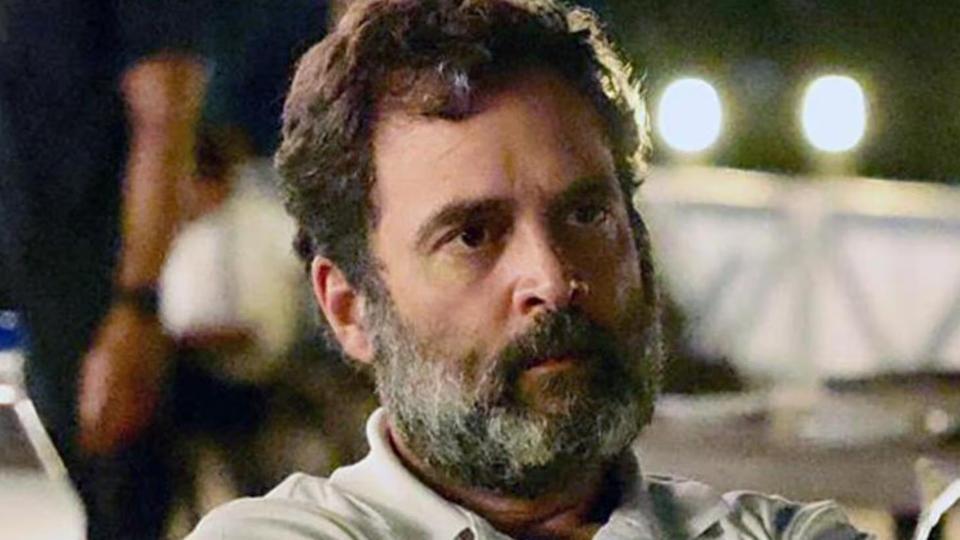
The court began hearing the case on Gandhi’s plea seeking a stay on his conviction in the Modi surname criminal defamation case.
Gandhi’s counsel Abhishek Manu Singhvi pleaded for a stay on the conviction in a case that is “neither serious in nature nor of moral turpitude” and is a “non-cognizable and bailable offence”. The state government argued that Gandhi’s offence was of a serious nature and the complainant, Purnesh Modi, a Gujarat Bharatiya Janata Party (BJP) MLA, questioned the maintainability of Gandhi’s application, claiming that the plea was filed under the wrong provisions of the law.
Also Read: Rahul mounts fresh attack against govt ahead of Karnataka elections
After a sessions court in Surat refused to stay the March 23 conviction by a magisterial court that sentenced the Congress leader to the maximum permissible punishment of two years imprisonment, Gandhi moved the high court.
When Singhvi argued that Gandhi is facing irreversible damage, losing his seat in Parliament and his disqualification as an MP, the judge commented that greater duty is cast on him towards the people at large, and he should make statements within limits.
The lawyer stressed much on the consequences of the conviction and submitted that Gandhi’s political career is at stake. He argued the conviction could be reversed in the future, but after losing a place in the Parliament and if re-election is announced for the Wayanad constituency in Kerala, the acquittal would be a “hollow victory” for Gandhi.
“If a bypoll was conducted for the Wayanad constituency which Gandhi represented before he was disqualified, its result cannot be undone even if the Congress leader won his appeal against the conviction,” Singhvi said.
After hearing Singhvi’s arguments, the high court adjourned the hearing for May 2 as advocate Nirupam Nanavati and lawyer Purnesh Modi sought time to file a reply.
Justice Hemant Prachchhak on Saturday began hearing Gandhi’s revision application against the Surat sessions court’s April 20 order declining a stay to his conviction for criminal defamation over his `why all thieves have the Modi surname” remark.
Singhvi questioned the locus of the state government to oppose Gandhi’s plea and said Purnesh Modi’s insistence on opposing it at this stage is to see that Gandhi remains disqualified and thus, these efforts bring the matter into the “political sphere”.
Gandhi had not named Purnesh Modi in his speech at the election rally at Kolar in Karnataka on April 13, 2019, where he made the remark in question, Singhvi said. Under section 499 of the Indian Penal Code (criminal defamation), the complainant must be an aggrieved person, which was not the case here, he argued.
Also, there is no “identifiable class of Modi community so as to maintain a complaint”, he said, adding that no one from the 13 crore strong so-called community can file a complaint against Gandhi unless that person was specifically named.
The judge asked the public prosecutor to make submissions on the provisions under which Gandhi’s plea has been filed. Later, Modi’s counsel, Nirupam Nanavati, submitted that Gandhi could not have filed his plea under multiple provisions and hence his plea was not maintainable.
Justice Prachchhak asked the parties to make final submissions on Tuesday. “I will complete this matter because I am going out of India on May 5,” he said.


