
 E-Paper



Rajiv Gandhi assassination: CBI officer says he omitted recording crucial details of Perarivalan’s confession
Perarivalan was sentenced to death by a trial court for being a part of a larger conspiracy to kill Gandhi. The Supreme Court converted his death penalty to a life sentence.


Twenty-six years after the assassination of former Prime Minister Rajiv Gandhi, the CBI’s investigating officer in the case, V Thiagrajan, has filed an affidavit before the Supreme Court admitting that he omitted certain crucial facts while recording the confessional statement of AG Perarivalan.
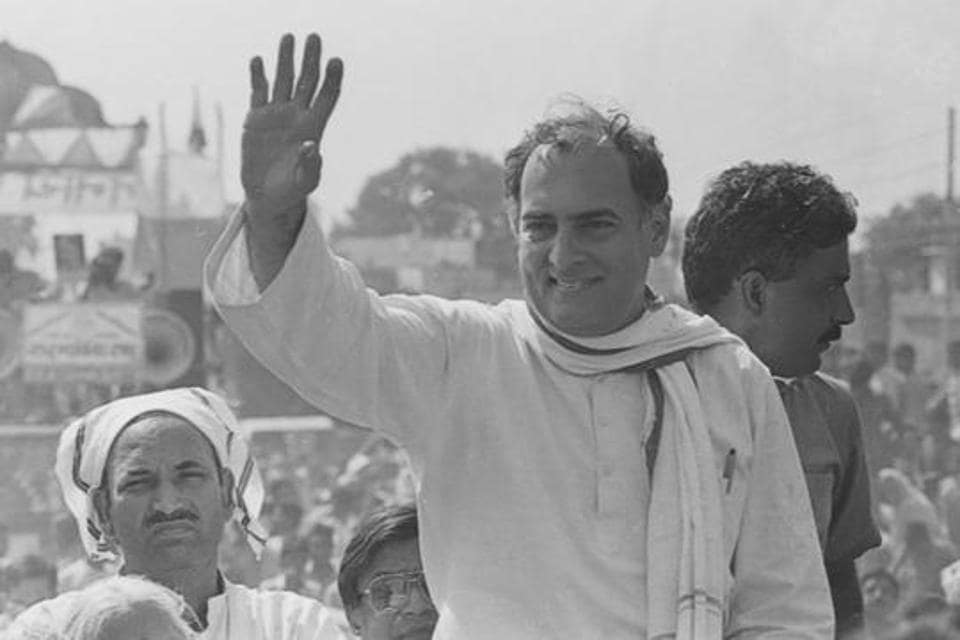
Perarivalan was convicted for being a part of the larger conspiracy to kill Gandhi.
Serving life term in the case, he was charged with supplying two nine-volt batteries used to make the bomb that killed Gandhi during a public rally at Sriperumbudur in Tamil Nadu in 1991. Perarivalan was sentenced to death by the trial court, which the Supreme Court converted to life.
Perarivalan – who was 19 when he was went to jail – has filed a petition before the apex court alleging the lack of an effective probe into the “larger conspiracy” behind the assassination.
Read | Rajiv Gandhi case: SC seeks govt’s reply on plea to suspend sentence
Investigating officer Thiagrajan had recorded Perarivalan’s confession under the repealed Terrorist and Disruptive Activities (Prevention) Act (TADA) – a stringent anti-terror law that made an accused’s statement to an investigating officer during a probe admissible evidence – and stated in his affidavit: “Perarivalan expressly stated he was not aware at the time of purchasing the batteries; he had no idea as to what purpose would they be used for.” Thiagrajan was the superintendent of police with the Central Bureau of Investigation (CBI) when the incident took place.
“Even the knowledge that the battery was used in the bomb explosion was only speculation after the event,” read the affidavit. Since the investigation was still in progress, the probe team was not sure about Perarivalan’s particular statement.
Thiagrajan said the reason why he did not record Perarivalan’s claim of being in the dark about the conspiracy was because it was an exculpatory system and the purpose of recording his confession would have been lost. Also, the CBI’s probe into the conspiracy behind the making of the bomb was pending at that point. The investigation, he said, is still on.
Quoting the affidavit, Perarivalam’s counsel, Gopal Sankaranarayanan, told the bench that the LTTE’s chief arms procurer of the time is lodged in a Sri Lankan prison. “Probe agencies are still trying to question this man. They have still not questioned him. This boy, who bought two batteries, has been languishing in solitary confinement for 26 years.”
On a reading of Thiagrajan’s affidavit, Sankaranarayanan said it was all speculative that the batteries his client purchased was used to make the bomb.
On the basis of this revelation, Perarivalam has sought the suspension of his life sentence. To this, a bench of justice Ranjan Gogoi and justice Navin Sinha has asked the government and the CBI to respond to the plea. The bench also fixed December 6 for the next hearing.
Thiagarajan referred to a wireless message from May 7, 1991, from mastermind Sivarasan to LTTE’s top operative, Pottu Amman, in which the former said the conspiracy behind the killing was known to just three persons, including him. He said the “mere act” of providing nine-volt batteries would not make Perarivalan privy to the conspiracy. Thiagrajan, who retired as DGP (training), Orissa, said he took a considered decision to come forward to the Supreme Court and put the facts pertaining to Perarivalam’s case in proper perspective so as to facilitate the court to render justice.
Perarivalam wants the top court to suspend his sentence until the Multi Disciplinary Monitoring Agency (MDMA) – constituted to unearth the larger conspiracy behind the assassination and find out the origin of the explosive – is complete.
“...even after 18 years, the CBI could not conclude its investigation with relation to the IED, its origin and make due to one reason or the other. However, on the other hand, the petitioner herein has already undergone the punishment of 26 years of actual imprisonment and that too 16 years on death row on the main charge of supplying two nine-volt batteries, which was assumed to be used in the IED,” read Perarivalam’s fresh application.


