
 E-Paper



Reconciliation after legislation could be an uphill climb in Kashmir | Analysis
Legislations alone do not resolve complex issues inherited from history. It is the people who untangle Gordian knots, laying the basis for legal architectures to sustain accords and arrangements.

 Prefer HTon Google


The contentious provisions of Article 370, which accorded special status to Jammu and Kashmir, stand nullified. It’s over now to the court of the people and the courts of law. One would decide its acceptability in the now-bifurcated region, the other its constitutionality.
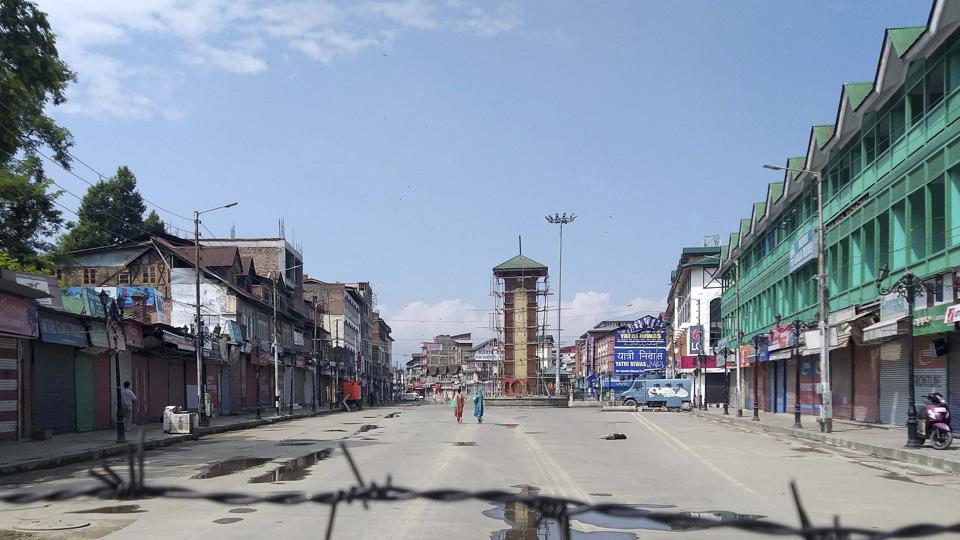
Legislations alone do not resolve complex issues inherited from history. It is the people who untangle Gordian knots, laying the basis for legal architectures to sustain accords and arrangements. From the Peoples Democratic Party’s (PDP) self-governance to the National Conference’s (NC) idea of autonomy, what Jammu and Kashmir has now is a centrally controlled Union Territory status. Ladakh has been lopped off from it as another UT.
The erosion of 370 is being celebrated in most of India besides Jammu and Ladakh. But it’ll take New Delhi some effort and time to make the people in the Kashmir Valley reconcile, if at all, to the new terms of engagement. Normally, political ground is prepared -- and a body of opinion nurtured -- before a paradigm shift of the kind legislated for the border state.
The extraordinary situation in the territory that borders Pakistan and China could have been the reason why the Centre put the cart before the horse. It now has to dress up as reasonable the fait accompli.
The enormity of the political challenge is a no-brainer. The Centre has to build bridges and set up dialogues amid fears of a demographic transplant of the Kashmiri Muslims identify with the Bharatiya Janata Party’s (BJP) Hindutva. In that limited sense, the existence of Article 35A was an assurance against replication on the Indian side of what Pakistan has done --by way of social engineering -- in the area under its occupation.
On a parallel track, New Delhi will have to rapidly develop happiness-enhancing infrastructure to prove that 370 indeed was a hindrance in the way of development and gainful opportunities for the people. For any measure of success in the difficult endeavour, the caravan of hope will have to pass through the promenade of trust of which Narendra Modi spoke in the wake of his renewed 2019 mandate: “Sabka saath, sabka vikas, sabka vishwas.”
The void that has forever existed between the Centre and the people of the Valley got deeper and wider in recent years. The reasons for that are many, some of which have to do with vigilantism directed at Kashmiri students and traders and Muslims in mainland India, especially in the Hindi-heartland states.
There’s no dearth of cases in which vigilantes appeared to receive protection or were let off unpunished. The ‘psychological secession’ of the Valley from India was reinforced with each incident of miscarriage of justice and demonisation of Kashmir and its people on the electronic media. As chief minister, Mehbooba Mufti often pleaded with the Centre and Delhi-based journalists to put a stop to what she felt was the “daily prime time vilification” of Kashmir.
One heard even the moderates asking whether there was space for Kashmiri Muslims in Modi’s India? The query rose from the belief that the ferment in the Valley helped the BJP polarise opinion for electoral gains in the rest of the country.
Some of the negative press the PDP leader and her peers in the National Conference (NC) got wasn’t undeserved. Having sought votes for keeping the BJP out of Kashmir, the coalition she ran with the saffron party was a politico-administrative disaster. Unable to balance local sentiments with the coalition’s Pan-Kashmir and national obligations, she fell between two stools.
To her constituents, she came across as a dishonest broker, complicit as she was with the very forces she had made them despise. Her loss of power and credibility was inevitable.
The contrast between Mehbooba and her predecessors, including her father Mufti Sayeed, was hard to miss. Historically, successive chief ministers of J&K kept their political relevance by pretending to fight the Centre on behalf of the people.
Seen as being in cahoots with the Centre in the post-Burhan Wani phase, she cut a tragic figure needing help rather than being in a position to help her people. That was also the period when a section of the ratings-driven electronic media went all guns booming after Kashmir-centric parties and politicians. Their targets were those who opposed or refused to endorse New Delhi’s Kashmir narrative.
Albeit with some justification, these broadly pro-India leaders have been denounced by home minister Amit Shah and governor Satya Pal Malik for using Article 370 as a cover to hide the deeds of their profligate families. The allegations virtually disqualify them as interfaces the Centre could use when time is ripe for a political process.
Denying the Muftis and the Abdullahs (Farooq and Omar) a role in future negotiations could turn them into adversaries, if it hasn’t already on being painted as villainous beneficiaries of the special status. Here, Dr Karan Singh’s advise to keep them on board makes eminent sense. Raising a new crop of leaders with whom the Centre could engage will not be easy, at least not in the obtaining climate of suspicion.
For the first time in the state’s protracted history of discords, the peace-seeking population feels abandoned by the people of India who, in the past, stood by them amid Srinagar’s face-offs with New Delhi.
In its Mission Reconciliation, the Centre might get a good start by reaching out to such reasonable sections, without feeding hyper-nationalist television warriors. For co-option and disapprobation cannot happen side by side.


