The reopening of schools cannot be considered a normal “return to schools” and lack of a comprehensive approach at this time may deepen the existing education inequality, the National Coalition on the Education Emergency, a group of academics and educationists, said in a report on Tuesday.
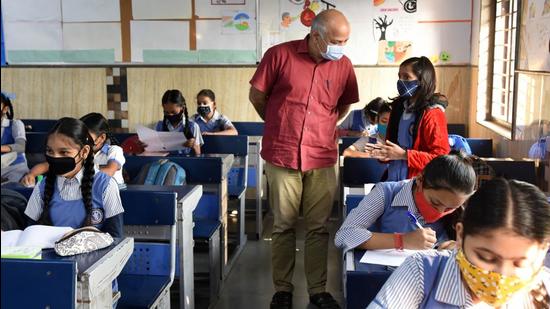
The report titled “A Future at Stake – Guidelines and Principles to Resume and Renew Education” outlined a set of recommendations to help with the reopening of schools after over 18 months.
“An overwhelming majority of India’s 250 million children who are now returning to schools had no regular contact with teachers or structured learning opportunities during the pandemic, leading to an education emergency of incalculable proportions. Yet, state governments are re-opening schools as if nothing serious occurred, students have been moved up by two grades and the normal syllabus is being followed, often after a short remedial course to bring them up to grade level,” the report said.
The education ministry on Tuesday said 22 states and Union territories (UTs) have reopened schools for classes 1 to 12. Six states and UTs have reopened them from classes 9 to 12 and six for classes 6 to 12.
The report said special efforts need to be made to recover language and mathematics competencies and for adopting a socio-emotional development approach. “This will allow students to make progress across multiple subjects. It means adjustment to the syllabus and timetable to give adequate time to these curricular areas,” the report said.
{{/usCountry}}The report said special efforts need to be made to recover language and mathematics competencies and for adopting a socio-emotional development approach. “This will allow students to make progress across multiple subjects. It means adjustment to the syllabus and timetable to give adequate time to these curricular areas,” the report said.
{{/usCountry}}It highlighted the loss of the most basic language and mathematics skills among children of the rural and urban poor, Dalits, Adivasis, minorities and migrant labourers, leading to millions of drop-outs.
“Children have lost the habit of reading and writing. Treating our children’s return to school as business-as-usual would be an irreparable loss to children and their lives and puts India’s future at stake,” said Shantha Sinha, former head of the National Commission for Protection of Child Rights and a member of the coalition.
Also Read: Delhi govt to provide free coaching to 15,000 students this year
Among the recommendations made are regular coaching and mentoring of teachers, provision for additional learning materials for the reorganised curriculum, back to school enrolment drives, health and nutrition for children, regular and simple two-way communications with parents, school management committee members, teachers, members of local authorities and other primary stakeholders, and proactive management through district education emergency units and additional funds.
Sajitha Bashir, another member and former global adviser for education to the World Bank, said, “Several countries across the world are modifying the curriculum and teaching methods to enable children to re-engage with education, focusing on core competencies, and providing extra resources and budgets, instructional time and effort to help the disadvantaged.”