Shaili Chopra was a well-known business journalist, working for outlets such as NDTV Profit and ET Now, before she decided to leave prime-time journalism and become an entrepreneur, launching a new digital media platform — SheThePeople.tv, dedicated to telling the untold stories of women in India and around the world. On this week’s episode of “Grand Tamasha”, a podcast co-produced by Hindustan Times and the Carnegie Endowment for International Peace, she tells host Milan Vaishnav that she quit television journalism in the prime of her career to do something radically different.
“At one point, when I realised I had done close to 14 years reporting on business and economy, I asked myself: where are the women?” Chopra recounts on this week’s episode. “I had done some 267 interviews, of which some 37 were women and the rest of them were men… Half the country that is employed in this economy wears black suits and the rest is ignored because they don’t. This was one issue that was nagging me.”
Chopra is the author of a new book, Sisterhood Economy: Of, By, For Wo(men), which distils many of the lessons that she has learned over the past eight years since leaving broadcast journalism. The book is based on conversations with more than 500 women across India and touches on questions from love and marriage to livelihoods and the economy to business and Bollywood.
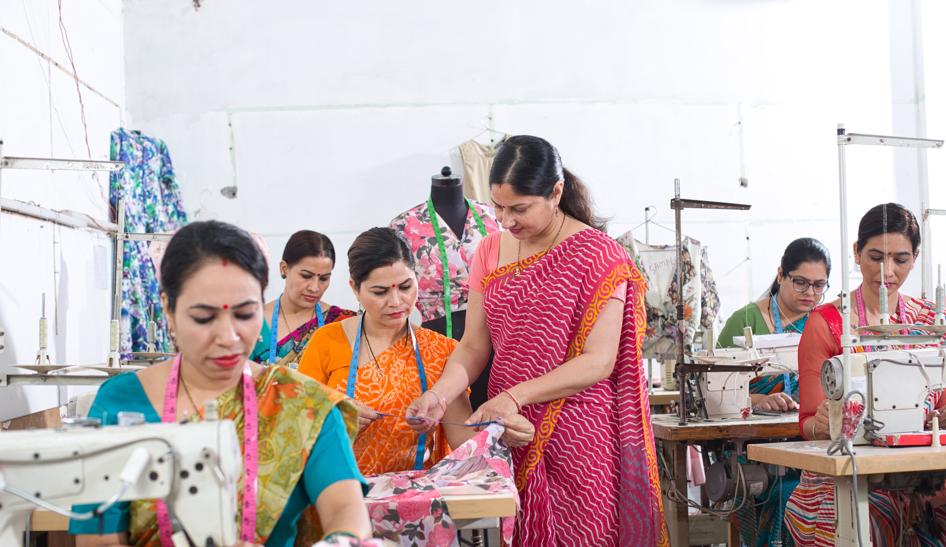
On the question of India’s low and declining rate of female labour force participation, Chopra notes that the available government statistics seriously undercount women’s work in the Indian economy. “Women in India are often outside of the organised labour market because we define labour in a very specific way,” Chopra notes, adding that much of women’s work is misclassified as domestic duties. But she warns that even the official statistics should be a huge cause of concern for policymakers and ordinary citizens.
{{/usCountry}}On the question of India’s low and declining rate of female labour force participation, Chopra notes that the available government statistics seriously undercount women’s work in the Indian economy. “Women in India are often outside of the organised labour market because we define labour in a very specific way,” Chopra notes, adding that much of women’s work is misclassified as domestic duties. But she warns that even the official statistics should be a huge cause of concern for policymakers and ordinary citizens.
{{/usCountry}}“We are accepting that one of the most vibrant, large economies of the world is functioning at subpar because half of its population is nearly out of the [formal] workforce. That is massively problematic,” Chopra says.
In recent years, women’s electoral participation has surged, as evidenced by a convergence between male and female voter turnout rates in recent assembly elections and the 2019 general elections. Chopra says that parties and politicians are now retooling their campaigns to attract the so-called “women’s vote”.
To go beyond mere tokenism, however, Chopra notes that politicians have to stop and listen to what women want. “What men and women want from governments is very different,” Chopra explains. “Women want cleanliness, food on the table, higher nutrition, better hospital services during pregnancy, nutrition services, free education for their sons and daughters, better bathrooms — I’ve never heard men have these conversations.”