
 E-Paper



₹90 lakhs for H-1B visa? Trump's new $100k move may increase troubles for Indians
Under this proclamation, the high fees will ensure that the applicants brought in by companies are highly skilled and non-replaceable by American workers.

 Prefer HTon Google


Amid the ongoing woes regarding immigration and US visas, President Donald Trump has introduced a new $100,000 fee for H-1B visas. As per the official announcement from the White House, this new proclamation will increase the fee that companies pay to sponsor H-1B visa applicants to $100,000, which is nearly ₹90 lakhs.
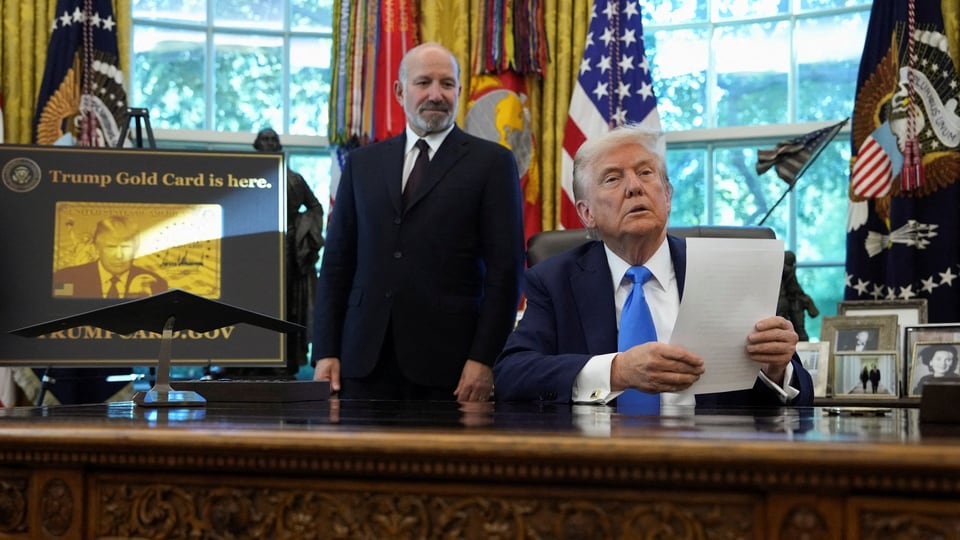
Speaking during a press briefing at the Oval Office on Friday, the Trump administration stated that this new measure will ensure that the applicants brought in by companies are highly skilled and non-replaceable by American workers.
Also Read | Trump Platinum Card: POTUS' latest visa and immigration move after H-1B fee hike
"They [companies] need workers, we need great workers. This proclamation ensures that America will now get good workers," said Trump as he signed the deal in the Oval office on Friday.
The H-1B visa is among the highly sought visas for entry into the United States. Thousands of Indians in the US enter through this work visa, which is sponsored by American companies, mainly in the IT sector.
As per the White House, these restrictions will protect American workers and ensure that companies have "a pathway" to hire highly skilled workers to bring to the US.
"The idea is that no more will these big companies, tech companies, train foreign workers. They have to pay the government $100k and then the employee, so it's just not economic. If you are going to train somebody, you are going to train the recent graduates from one of the great universities across our land," said US Secretary of Commerce Howard Lutnick, adding that the proclamation will stop foreign workers from coming in and "taking American jobs."
The matter was first reported by Bloomberg news citing a White House official familiar with the matter. Bloomberg further reported that this hike is part of the Trump administration's effort to curb visa overuse.
As per Bloomberg, this yearly $100,000 (approximately ₹90 lakhs) payment will be made in addition to the current fees. The fees directly tied to the H-1B visa application currently include a $215 fee to register for the lottery alongside and a $780 charge for Form I-129, along with other filing fees.
Ahead of this rollout, Senator Jim Banks introduced the American Tech Workforce Act— a bill which called for an increase in the H-1B wage floor from $60,000 to $150,000; abolish the OPT programme for foreign students, and to replace the visa lottery with a system favouring the highest bidders.
India accounts for most H-1B visas
India was the largest beneficiary of H-1B visas last year, accounting for 71% of approved beneficiaries, while China was a distant second at 11.7%, according to government data.
In the first half of 2025, Amazon.com and its cloud-computing unit, AWS, had received approval for more than 12,000 H-1B visas, while Microsoft and Meta Platforms had over 5,000 H-1B visa approvals each.
Lutnick said on Friday that "all the big companies are on board" with $100,000 a year for H1-B visas.
"We've spoken to them," he said.
Many large US tech, banking and consulting companies declined to comment or did not immediately respond to requests for comment. The Indian embassy in Washington and the Chinese Consulate General in New York also did not immediately respond to requests for comment.
Shares of Cognizant Technology Solutions, an IT services company that relies extensively on H-1B visa holders, closed down nearly 5%. US-listed shares of Indian tech firms Infosys and Wipro closed between 2% and 5% lower.
New H1-B visa to add to visa hurdles
From 2020 to 2023, Indians received nearly 71 percent of all H-1B visas. However, with the current changes being rolled out to the US immigration system, the new fees will add to the woes faced by Indians while trying to obtain a US visa.
Apart from the increased fees to sponsor H-1B visa candidates, the US government is also set to roll out a more demanding test for citizenship applicants from October 2025 onwards. Under this, the number of questions will be increased to 128, and applicants must give at least 12 correct answers out of 20.
Amid all the changes, the USCIS has also increased background checks for applicants to "moral character" and "neighbourhood interviews," if an immigrant wishes to become a US citizen.
Additionally, the US State Department also issued a new directive on September 6, which requires applicants to file for non-immigrant visas such as visitor (B1/B2), employment (H-1B and O-1) and student (F1) only from their respective country where the applicants reside or are citizens of.


