
 E-Paper



S Jaishankar’s UNGA speech hits Pakistan's double-game against India
Minister Jaishankar's response comes after India asked for modification of the 1960 Indus Water Treaty.

 Prefer HTon Google


New Delhi: On the eve of the Indian Army’s 2016 surgical strikes in occupied Kashmir, External Affairs Minister Subrahmanyam Jaishankar in his UNGA speech made it amply clear that each action of Pakistan will have a response from India which is not limited to a military option.
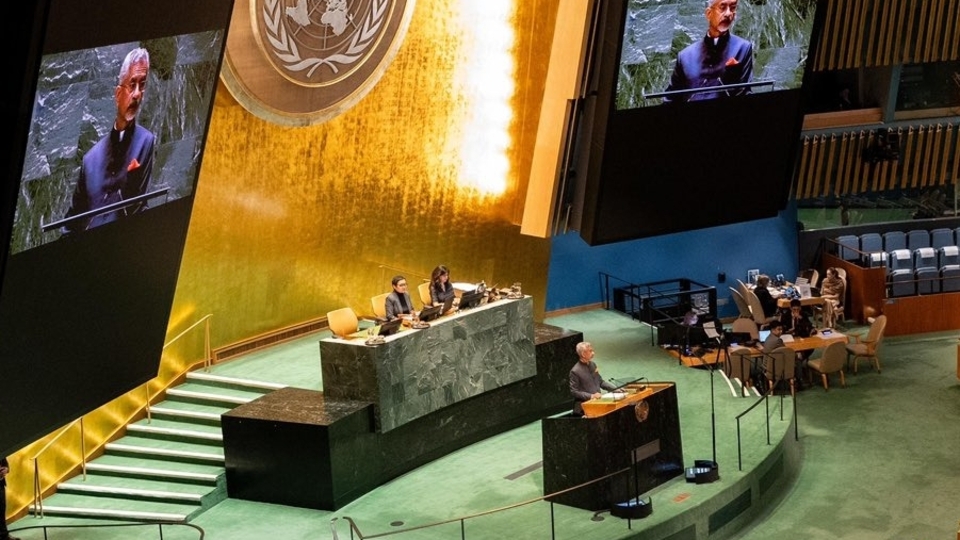
Minister Jaishankar's response comes after India asked for modification of the 1960 Indus Water Treaty, which has been impacted by persistent cross-border terrorism in Jammu and Kashmir and undermined full utilization of India’s water rights. Pakistan is yet to reply to the Indian notice served on August 30,2024.
The real reason why Pakistan Prime Minister Shehbaz Sharif got hit by a double whammy from a junior to top Indian diplomat was because Islamabad was using multi-lateral platforms to sharply put its position across in an escalatory mode while India was being constrained in its response. Pakistan’s UN envoy Munir Akram is a known Islamist and India baiter.
While Shehbaz Sharif hit out at India by trying to link Gaza with Kashmir, Jaishankar cut down the untenable Pak narrative by first asking a first secretary to tear down the Gaza-Kashmir construct and then he delivered the blunt message to the Islamic radicalized state. By saying that Pakistan’s GDP was now measured in extent of religious radicalization and that the Indian agenda was reclaiming occupied Kashmir and emasculating the Pak terror machine, Jaishankar defined the bottom line before his expected visit to Pakistan next month for the SCO summit. The SCO Heads of Government summit takes place in Islamabad on October 15-16.
Also read: Big story: India demands modification of INDUS WATERS TREATY
Jaishankar’s speech was also designed to convey to Pakistan and their supporters in India that the Modi government understands Islamabad’s double game clearly and nothing will go unpunished. Over the past decades, Islamabad has been trying to convey that even though its hands are tied on Kashmir, they want a dialogue with India. Using this as a ruse, the Pakistani leaders have been hitting at India sharply without yielding a centimeter on their stated political positions against India notwithstanding whichever party was in power. So from hereon, the Indian response will be sharp and biting and not confined to a junior diplomat response at any multilateral fora.
Also read: 'Gaza war acquiring wider ramifications': Jaishankar's 'world can't be fatalistic' warning at UNGA
While Pakistan’s hand in protests over killing of Hezbollah terrorist Hassan Nasrallah by Israel in the Valley are evident, Jaishankar has yet again defined end of cross border terrorism by Pakistan in UT as a pre-condition to any bilateral dialogue. He hooked Pakistan for a six when he said that it was ‘Karma’ that had reduced Pakistan to a pauper state.
Also read: ‘Karma for Pak, GDP now measured in radicalisation’: Jaishankar at UNGA| Top 10 quotes
Jaishankar’s UNGA address after Indian diplomat’s trashing of Sharif speech shows that the Modi government has no illusions about Pakistan, whose existence is defined by hating India and its people.


